
The financial landscape for independent traders has undergone a fundamental shift in recent years. No longer restricted to the high-barrier entry of institutional trading floors, thousands of retail traders are now leveraging proprietary trading firms to access significant capital. This model allows skilled traders to operate with funds provided by a firm, sharing the resulting profits while minimizing their own personal financial risk.
However, the rapid expansion of this industry—which saw a surge between 2020 and 2026—has created a complex marketplace. For a trader, navigating prop firm trading is no longer just about finding a high profit split; it is about distinguishing between sustainable institutional models and high-risk “funded account” programs. As the industry moves from what some describe as a “Wild West” era toward a more regulated reality, the criteria for choosing a partner have become more stringent.
Selecting the ideal match requires a deep dive into the firm’s operational backbone, its drawdown rules, and its regulatory standing. With reporting indicating that only 7% of funded traders ever receive a withdrawal
according to a Q1 2026 Census Report by Proptradingvibes, the stakes for choosing the wrong firm are high. The difference between a successful career and a wasted challenge fee often comes down to how well a trader’s strategy aligns with a firm’s specific risk parameters.
Understanding the Prop Firm Ecosystem in 2026
To find an ideal match, one must first understand the two primary types of proprietary trading available today. Traditional prop trading typically involves a firm hiring a professional trader as an employee or contractor, providing them with an office, advanced tools, and a direct line to institutional liquidity. In this model, the firm’s primary goal is the growth of its own capital through the expertise of the trader.
Contrastingly, the modern “funded account” model has democratized access. These firms offer an evaluation process—essentially a series of tests—where traders pay a fee to prove their skills in a simulated environment. Once the trader meets specific profit targets without breaching risk rules, they are granted a “funded” account. While these accounts are often simulated, the payouts are backed by the firm’s proprietary capital according to ThinkCapital.
The core appeal of these programs is the ability to trade high purchasing power without risking life savings. However, the operational structure differs: traditional firms seek long-term talent, while many retail funded programs rely heavily on the fees paid by traders during the evaluation phase. Understanding which model you are entering is the first step in navigating prop firm trading effectively.
The Decision Framework: How to Find Your Ideal Match
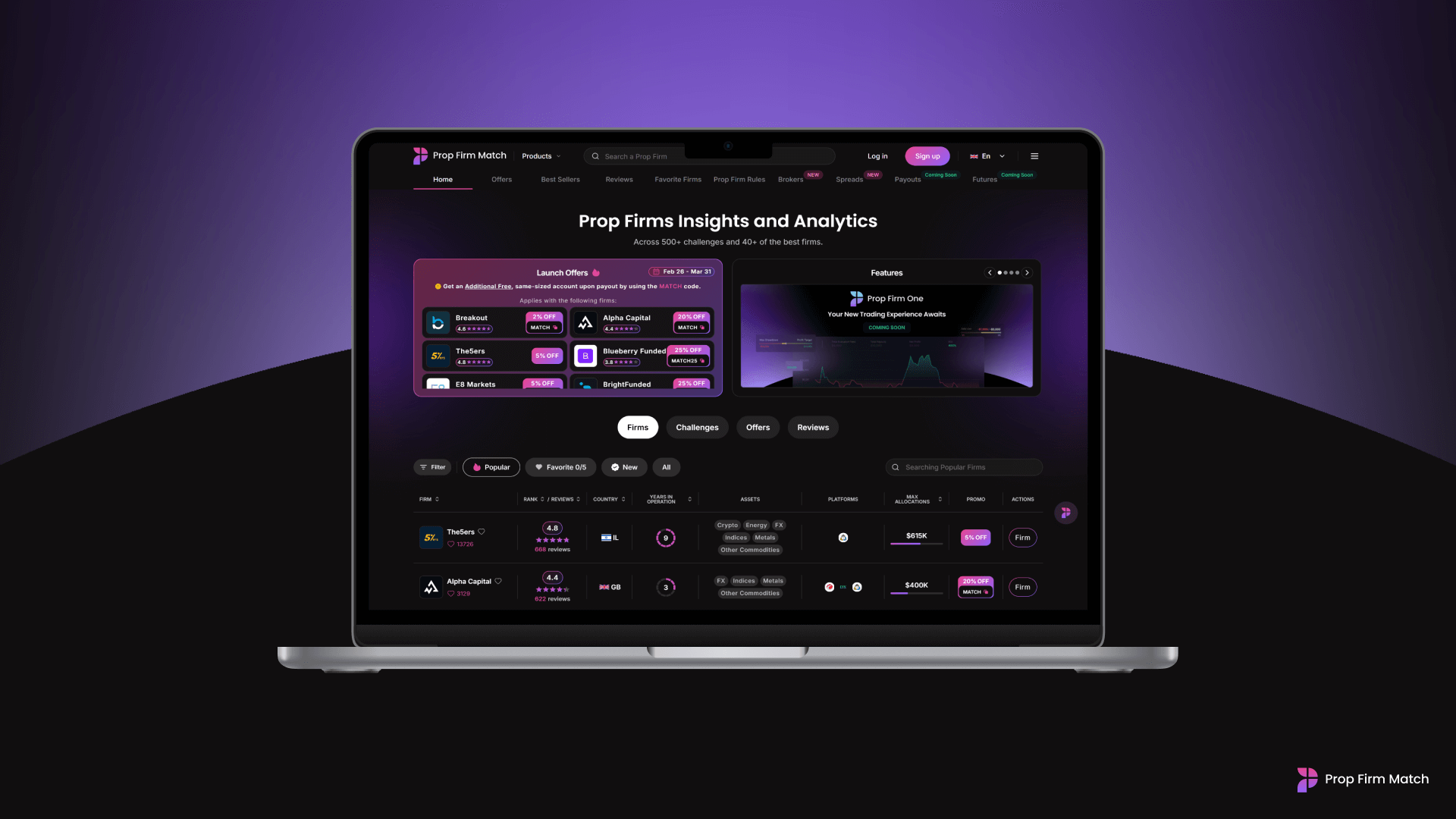
Matching a trading style to a firm’s rules is the only way to ensure long-term viability. A scalper who relies on high-frequency, small-gain trades will fail in a firm that prohibits high-frequency trading or imposes strict consistency rules. According to guidance from DealPropFirm, the best match depends on three primary factors: trading style (scalping, day trading, or swing), preferred instruments (forex, futures, or crypto), and the available budget for challenge fees, which typically range from $100 to $600 per challenge.
Evaluating Risk and Drawdown Rules
The most critical technical detail in any prop firm contract is the drawdown rule. Here’s the maximum amount a trader can lose before the account is closed. There are three main types of drawdown that drastically change the difficulty of a challenge:
- Static Drawdown: The loss limit is based on the initial starting balance of the account. This is generally the most trader-friendly option.
- Trailing Drawdown: The loss limit moves upward as the account balance increases. If a trader reaches a new peak and then pulls back, they may hit the drawdown limit even if the account is still in overall profit.
- Relative Drawdown: A hybrid model where the limit is calculated based on the highest balance reached at the end of the trading day (EOD) or in real-time (intra-day).
Traders must verify whether the drawdown is calculated in real-time or at the end of the day. An intra-day trailing drawdown is significantly more restrictive and can lead to account failure during a volatile swing, even if the trade eventually closes in profit.
Profit Splits and Payout Reliability
While many firms advertise profit splits between 70% and 90%, the headline number is often less important than the reliability of the payout. Payout reliability is cited as the number one factor in firm evaluation by Proptradingvibes. Traders should look for firms with a proven track record of timely payments and transparent withdrawal processes. Red flags include firms that suddenly change payout terms or those with an excessive number of “consistency rules” designed to prevent traders from withdrawing large, single-trade gains.
The Regulatory Shift: Moving Toward Oversight
For years, the retail prop trading industry operated with minimal oversight. However, 2025 and 2026 have marked a turning point. Global regulators are converging on the industry following a wave of firm collapses and trader complaints in 2023 and 2024. In the United Kingdom, the Financial Conduct Authority (FCA) has been active in reforming frameworks; for instance, new rules regarding commodity derivatives are scheduled to come into force on July 6, 2026, as detailed in FCA Policy Statement PS25/1.
This shift toward regulation is intended to protect traders from “scam” firms that operate as Ponzi schemes—using new challenge fees to pay out traditional traders rather than actually trading the markets. A regulated or transparent firm is more likely to provide a sustainable environment. Traders are encouraged to check for transparency infrastructure and verified track records before committing capital to a challenge fee.
Comparison of Trading Models
To help traders distinguish between their options, the following table outlines the core differences between the primary paths to funded trading.
| Feature | Traditional Prop Firm | Retail Funded Program | Self-Funded Trading |
|---|---|---|---|
| Capital Source | Firm’s Institutional Capital | Firm’s Proprietary Capital | Trader’s Personal Savings |
| Entry Barrier | High (Interview/Experience) | Moderate (Challenge Fee) | Low (Deposit) |
| Risk to Trader | Low (No personal capital) | Low (Fee only) | High (Total loss of deposit) |
| Profit Split | Negotiated Salary/Bonus | Fixed % (Typically 70-90%) | 100% to Trader |
| Regulation | Highly Regulated | Increasingly Regulated | Broker-Regulated |
Common Pitfalls in the Evaluation Process
Many traders fail their evaluations not due to the fact that they lack a strategy, but because they fail to manage the specific constraints of the prop firm. The “evaluation trap” often involves traders attempting to hit profit targets too quickly, leading to oversized positions that breach the daily drawdown limit.
Successful traders typically employ a “risk-first” approach. Instead of focusing on the profit target, they focus on the distance to the drawdown limit. If a firm has a 5% daily loss limit, a professional trader will rarely risk more than 0.5% to 1% of the account per trade. This ensures that a losing streak does not result in an immediate account termination.
Another common pitfall is the failure to read the fine print regarding “restricted trading days” or “minimum trading days.” Some firms require a minimum number of days to be active before a payout can be requested, regardless of whether the profit target was hit in a single day. Failure to account for these rules can lead to unexpected delays in receiving funds.
Final Checklist for Choosing a Firm
Before paying a challenge fee, a trader should be able to answer the following questions with certainty:
- Is the drawdown static or trailing? (Trailing is significantly harder).
- Is the drawdown calculated intra-day or at the end of the day?
- What is the actual payout history of the firm? (Look for third-party verified reviews, not just testimonials on the firm’s website).
- Does the firm allow my specific strategy? (e.g., news trading, hedging, or holding trades over the weekend).
- What is the profit split after the evaluation phase?
The goal of navigating prop firm trading is to find a partnership where the firm’s risk appetite matches the trader’s execution style. In an era of increasing volatility and shifting regulations, the most successful traders are those who treat the choice of a prop firm as a critical business decision rather than a gamble on a “acquire rich quick” opportunity.
The industry continues to evolve, with the next major regulatory milestones expected in mid-2026 as the FCA and other global bodies implement new commodity and derivative frameworks. Traders should monitor official regulatory announcements to ensure their chosen firm remains compliant.
Do you have experience with a specific prop firm or a strategy that has worked for you in 2026? Share your insights in the comments below to help other traders navigate the market.
Worth a look