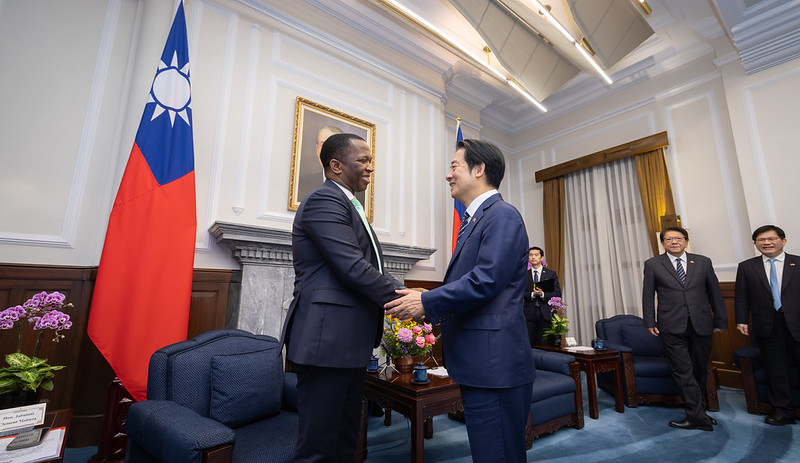
Taiwanese President Lai Ching-te has arrived in the Kingdom of Eswatini for a state visit, marking a significant diplomatic effort to strengthen ties with one of Taiwan’s few remaining formal diplomatic allies in Africa. The visit, characterized by high-level receptions and bilateral discussions, underscores Taiwan’s ongoing strategy to maintain its international visibility and secure partnerships despite increasing pressure from the People’s Republic of China.
A notable detail of the trip that has drawn attention from observers is the logistics of the President’s travel. President Lai traveled to Eswatini aboard a special government aircraft provided by the Kingdom of Eswatini. This gesture of hospitality is a common diplomatic practice for state visits, but it has sparked discussions regarding the return journey and whether the President will utilize the same aircraft for his trip back to Taipei.
The visit comes amid a climate of heightened tension between Taipei and Beijing. The Chinese government has historically reacted with hostility toward Taiwan’s diplomatic outreach, often employing economic pressure or diplomatic maneuvers to persuade allies to switch recognition to Beijing. The state visit to Eswatini serves as a public assertion of Taiwan’s commitment to its sovereign partnerships and its desire to engage with the global community on a platform of shared values and mutual respect.
Diplomatic Objectives and the Eswatini Partnership
The primary objective of President Lai’s visit is to reinforce the bilateral relationship between Taiwan and Eswatini, focusing on cooperation in agriculture, healthcare, and technology. Eswatini, a small landlocked monarchy in Southern Africa, has maintained formal diplomatic ties with Taiwan for decades, making it a critical anchor for Taiwan’s presence in the region. According to the Office of the President, the visit is intended to demonstrate Taiwan’s determination to walk firmly toward the world and enhance its international standing.
During the visit, President Lai has emphasized the importance of justice and rationality in the face of external pressure. In official statements, he noted that Taiwan remains committed to its role as a force for good in the international community, providing aid and expertise to its partners regardless of the political headwinds. This approach is designed to frame Taiwan not just as a political entity seeking recognition, but as a reliable partner in sustainable development.
The partnership with Eswatini is particularly strategic given the volatility of diplomatic recognition in Africa. Several nations have shifted their recognition to Beijing in recent years, often following substantial investment promises from China. By conducting a state visit, President Lai is signaling to both Eswatini and other potential partners that Taiwan is invested in these relationships for the long term.
Beijing’s Reaction and the Rhetorical Clash
As is typical with high-profile Taiwanese diplomatic activity, the visit has triggered a sharp response from Beijing. The Taiwan Affairs Office (TAO) of the People’s Republic of China issued statements criticizing President Lai’s trip, using caustic language to describe his diplomatic efforts. Beijing officials characterized the visit as an exercise in futility, suggesting that such trips do not change the fundamental reality of the “One China” principle.
The rhetorical escalation did not stop at the TAO. Reports indicate that Chinese officials used derogatory metaphors to describe the President’s international outreach, comparing the experience to that of a social outcast. This aggressive posture is part of a broader strategy by Beijing to isolate Taiwan and discourage other nations from maintaining formal ties with Taipei.
In response to these attacks, Taiwan’s Mainland Affairs Council (MAC) dismissed the Chinese government’s comments as baseless and unprofessional. MAC officials described the TAO’s rhetoric as akin to “street fighting” or “shouting like a shrew,” labeling the criticisms as boring and irrelevant. The MAC maintained that Taiwan’s diplomatic activities are legitimate expressions of its sovereignty and its right to engage with other nations.
Logistical Significance of the Special Flight
The use of a special aircraft provided by Eswatini is more than a mere convenience; it is a symbolic act of diplomatic friendship. In the world of high-level diplomacy, the provision of transport by a host nation is a sign of respect and a gesture of close cooperation. For President Lai, arriving on an Eswatini-provided plane underscores the warmth of the welcome and the strength of the current bilateral bond.
Though, the focus on the return flight reflects the complexities of Taiwanese travel. Due to the lack of formal diplomatic recognition in most countries, Taiwanese leaders often face significant hurdles regarding airspace access, landing rights, and refueling stops. The question of whether President Lai will return on the same aircraft is a matter of logistical interest for analysts tracking the operational details of the visit.
Observers note that the ability to secure seamless transport for a head of state is often a barometer of the host country’s willingness to defy pressure from Beijing. If the Kingdom of Eswatini continues to provide comprehensive logistical support for the duration of the visit, it reinforces the perception that the monarchy remains steadfast in its alliance with Taiwan.
The Broader Context of Taiwan’s Global Strategy
President Lai’s visit to Eswatini is part of a wider effort to diversify Taiwan’s diplomatic portfolio. By strengthening ties with allies in Africa, the Caribbean, and the Pacific, Taiwan seeks to create a network of support that can withstand the “salami-slicing” tactics of Chinese diplomacy. This strategy involves not only high-level visits but also the implementation of concrete development projects that provide tangible benefits to the local populations.
The focus on “rationality” and “justice” mentioned by the President reflects a shift in how Taiwan presents itself to the world. Rather than focusing solely on the struggle for recognition, Taipei is increasingly positioning itself as a champion of democratic values and a leader in technical innovation. This “soft power” approach is intended to produce Taiwan an indispensable partner in sectors such as semiconductor technology, smart agriculture, and public health.
The international community’s attention to these visits is often mediated by major news agencies and diplomatic observers who analyze the stability of these alliances. The fact that international press agencies are monitoring the visit indicates that the world views the Taiwan-Eswatini relationship as a key indicator of the broader geopolitical struggle for influence in the Global South.
Key Implications for Future Relations
The outcomes of this state visit will likely be measured by the specific agreements signed and the joint statements issued. Key areas of interest include:
.jpg/120px-Mainland_Affairs_Council_from_VOA_(1).jpg "State Visit Amid International Attention Mainland Affairs Council")
- Agricultural Cooperation: Taiwan’s expertise in tropical agriculture is highly valued in Eswatini, and new initiatives in crop diversification and irrigation are expected.
- Healthcare Infrastructure: Continued support for Eswatini’s healthcare system, including the provision of medical equipment and training for professionals.
- Technical Exchange: Potential partnerships in digital governance and the application of AI in public administration.
Beyond the technical agreements, the visit serves as a psychological boost for Taiwan’s diplomatic corps. In an era where the number of formal allies is dwindling, a successful state visit to a sovereign nation provides a visible counter-narrative to the claim that Taiwan is becoming internationally isolated.
The reaction from the Mainland Affairs Council suggests that Taiwan is prepared for a prolonged period of rhetorical warfare with Beijing. By framing China’s attacks as “boring” and “unprofessional,” Taipei is attempting to signal that it is no longer intimidated by traditional pressure tactics and will continue to pursue its foreign policy goals with confidence.
As President Lai concludes his visit, the focus will shift to the implementation of the promises made during the trip. The durability of the Taiwan-Eswatini bond will depend on the ability of both nations to translate diplomatic warmth into sustainable economic and social development.
The next confirmed checkpoint for the administration’s diplomatic schedule will be the official release of the joint communiqué following the conclusion of the state visit, which will detail the specific bilateral agreements reached during the trip.
We invite our readers to share their perspectives on Taiwan’s diplomatic strategies in the comments below. How should Taipei navigate the pressures of global diplomacy? Share this article to join the conversation.