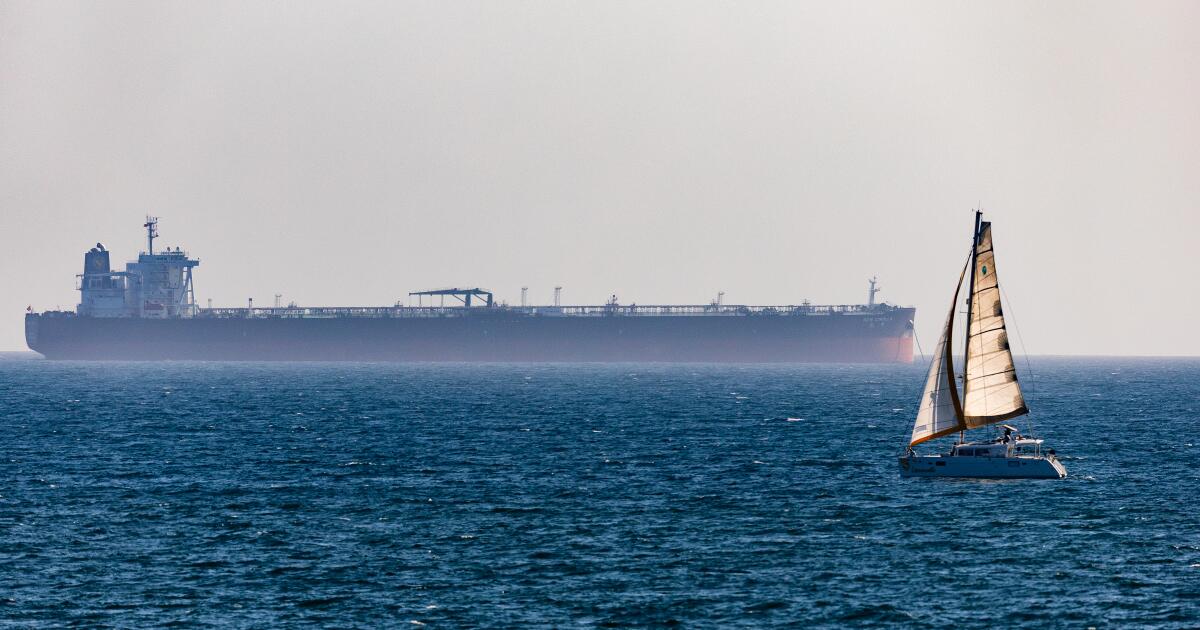
California is facing a critical energy juncture as the final shipment of Persian Gulf crude oil arrives at the Port of Long Beach, marking the complete of a strategic buffer that has shielded the state’s economy from the volatility of a widening conflict in the Middle East. The cessation of these deliveries leaves the state struggling to replace approximately 200,000 barrels of oil per day, a deficit that threatens to destabilize fuel prices and stress an already fragile refining infrastructure.
The disruption is the direct result of the ongoing U.S.-Israeli war on Iran, which has severely constrained oil flows through the Strait of Hormuz. For weeks, California has relied on a 45-day supply buffer to maintain stability, but as that reserve evaporates, the state is now forced to seek alternative, and often more expensive, sources of crude to keep its refineries operational.
The Geographic Vulnerability of the West Coast
While the United States as a whole has reached historic levels of domestic oil production, pumping more than 13.5 million barrels per day, that security does not extend uniformly across the country. For the 39 million residents of California, energy independence is largely a geographic fiction
, as the state lacks the pipeline infrastructure necessary to transport crude from the Permian Basin or the Midwest to West Coast refineries in sufficient volumes.
This isolation makes California uniquely susceptible to disruptions in the Strait of Hormuz. According to analysis from R-Squared Energy, the specific configurations of California’s refineries are designed to process the heavy, sour crudes typical of the Persian Gulf. Shifting to alternative sources requires not only finding available barrels but ensuring those barrels are chemically compatible with existing refinery equipment.
The impact has already begun to manifest. Reports from Reuters indicate that California has been hit by significantly higher oil prices as the conflict stresses refiners, who are now increasingly dependent on costlier fuel imports from Asia. Because West Coast refineries account for approximately 50% of Middle East crude imports to the U.S., the region bears a disproportionate share of the economic burden when Persian Gulf shipments cease.
Replacing 200,000 Barrels: The Logistics of a Crisis
The immediate challenge for state officials and energy executives is the replacement of the 200,000 barrels of oil per day that previously flowed from the Gulf. This volume is not merely a statistic; it represents a significant portion of the feedstock required to produce gasoline, diesel, and jet fuel for the state’s massive transportation network.
Refiners are currently exploring several avenues to plug the gap, though each comes with inherent risks:
- Asian Markets: Refiners are pivoting toward imports from Asia, but these barrels are often more expensive due to high demand in that region, leading to a price spike for alternative crudes.
- Domestic Diversion: Efforts to divert more domestic crude to the West Coast are hampered by the lack of transcontinental pipelines, requiring expensive and slow shipments via rail or tankers around the tip of South America.
- Strategic Reserves: While the federal government manages the Strategic Petroleum Reserve (SPR), the release of oil into the market does not automatically solve the localized logistical problem of getting that oil into California’s specific refinery “slates.”
The timing of this shortfall is particularly precarious. As reported by KQED, the end of the 45-day buffer coincides with threats from Iran to further disrupt trade in the Red Sea if the U.S. Continues its blockade of Iranian ports. This creates a compounding effect where the loss of Persian Gulf oil is coupled with a broader instability in global shipping lanes.
Economic Implications for California Consumers
For the average Californian, the arrival of the last shipment in Long Beach is likely to translate into higher prices at the pump. The “California premium”—the already higher cost of fuel in the state due to environmental regulations and taxes—is expected to rise further as refiners pass the cost of more expensive Asian imports onto consumers.
Beyond gasoline, the shortage affects the broader supply chain. Diesel fuel is critical for the trucking industry that delivers food and consumer goods to the state’s urban centers. A sustained deficit in crude oil could lead to increased shipping costs, contributing to inflationary pressure on essential goods across the state.
Key Factors Driving the Energy Uncertainty
| Factor | Impact | Primary Cause |
|---|---|---|
| Daily Volume Loss | ~200,000 barrels/day | Cessation of Persian Gulf shipments |
| Infrastructure Gap | High | Lack of pipelines from U.S. Interior to West Coast |
| Price Driver | Increasing | Shift to costlier Asian crude imports |
| Buffer Status | Exhausted | End of the 45-day protection window |
What Happens Next?
The state’s energy stability now depends on the ability of refiners to secure long-term contracts with alternative suppliers and the potential for a diplomatic resolution to the conflict in the Middle East. However, in the short term, the focus remains on the immediate logistical scramble to avoid refinery shutdowns, which would trigger a much more severe fuel shortage.
Industry analysts are watching closely to see if the U.S. Government will implement further emergency measures to facilitate the movement of domestic crude to the West Coast or provide additional subsidies to mitigate the price shock for consumers.
The next critical checkpoint will be the upcoming monthly energy outlook report from the U.S. Energy Information Administration (EIA), which will provide the first comprehensive data on how the loss of Persian Gulf oil has impacted West Coast refinery utilization rates and fuel inventories.
World Today Journal encourages readers to share this story and join the conversation in the comments below regarding the impact of global conflicts on local energy costs.
Related reading