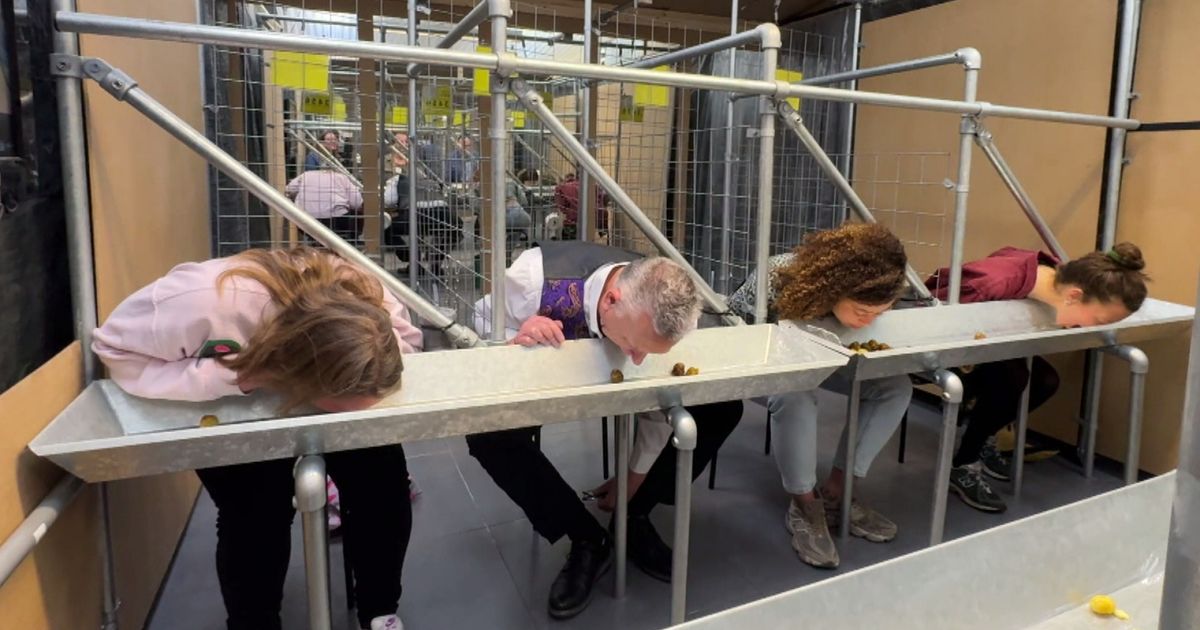
Walking into a museum usually involves a degree of curated distance—you seem at an object, you read a plaque, and you move on. But at the Food Museum in The Hague, the boundary between the observer and the exhibit is intentionally blurred, sometimes in ways that are deeply uncomfortable. In one of its most provocative installations, visitors are not merely spectators of the food chain; they are placed directly inside it, experiencing what it feels like to be fed like livestock.
This immersive approach is the cornerstone of the Food Museum’s mission to challenge how humans perceive their relationship with what they eat. By stripping away the autonomy of the diner, the museum forces a visceral confrontation with the realities of industrial farming. For many, the experience is a jarring wake-up call regarding the systemic detachment between the modern consumer and the origin of their calories.
As a technology editor, I find the intersection of sensory design and social commentary here particularly striking. The museum doesn’t rely solely on text or traditional displays; it leverages environmental psychology and immersive staging to trigger an emotional response that a brochure simply cannot achieve. It is a calculated use of experiential architecture
to drive home a message about sustainability and ethics.
The Psychology of the Feeding Station
The installation that has captured international attention is designed to mimic the sterile, efficient, and dehumanizing nature of industrial animal husbandry. Visitors are guided into a space where they are effectively treated as cattle. Rather than choosing their meal or sitting at a table, they are positioned in a way that removes their agency, receiving food in a manner that mirrors the automated systems used in large-scale livestock operations.

The goal is to evoke a sense of powerlessness. By placing the human in the position of the animal, the museum highlights the efficiency-over-empathy model of the modern food industry. The physical sensation of being fed
rather than eating serves as a metaphor for the loss of connection to the natural world and the biological processes of food production.
This specific exhibit is part of a broader narrative arc within the museum that examines the transition from traditional farming to the industrial complex. It asks a fundamental question: if we find the experience of being fed like livestock degrading, why do we accept it as the standard for the animals that sustain us?
Merging Technology and Taste
Beyond the provocative feeding experience, the Food Museum functions as a high-tech laboratory for food education. The facility utilizes an array of interactive technologies to map out the complexities of the global food system. From digital installations that track the carbon footprint of a single burger to augmented reality experiences that visualize the future of protein, the museum treats food as a data point as much as a nutrient.
One of the most significant aspects of the museum’s tech integration is its focus on the protein transition
. As the world grapples with the environmental impact of meat production, the museum showcases the science behind lab-grown meats, insect-based proteins, and plant-based alternatives. These displays are not merely static; they are interactive journeys that explain the molecular biology and the engineering required to replicate the taste and texture of animal proteins without the environmental cost.
The use of immersive media allows the museum to present complex data—such as water usage in almond farming or the methane output of cattle—in a way that is visually digestible. By turning statistics into spatial experiences, the museum ensures that the information is felt, not just read.
A Call for Food System Sovereignty
The underlying theme of the Food Museum is the concept of food sovereignty and the urgent demand for a sustainable transition. The exhibits argue that the current global food system is fragile and ecologically unsustainable. By highlighting the waste inherent in the current chain—where significant percentages of food are lost between the farm and the fork—the museum advocates for a more circular economy.

The experience in The Hague is designed to move the visitor through three distinct phases: shock, education, and empowerment. The cattle feeding
serves as the shock; the interactive tech installations provide the education; and the final sections of the museum offer practical pathways for the visitor to change their consumption habits.
This pedagogical structure is essential because shock without a solution often leads to apathy. By providing the scientific context and the technological alternatives, the museum transforms a moment of discomfort into a catalyst for behavioral change.
Key Themes Explored at the Food Museum
| Theme | Objective | Method of Delivery |
|---|---|---|
| Industrialization | Expose the dehumanization of food production | Immersive “cattle” simulation |
| Sustainability | Visualize environmental impact | Data-driven digital installations |
| Future Proteins | Normalize alternative food sources | Interactive science displays |
| Waste Reduction | Highlight systemic inefficiency | Comparative visual exhibits |
The Global Context of Provocative Museums
The Food Museum is part of a growing trend of provocation museums
—institutions that use discomfort to trigger social reflection. Similar to how some museums use immersive art to discuss the Holocaust or the transatlantic slave trade, the Food Museum uses the biological necessity of eating to discuss the ethics of the Anthropocene.
For a global audience, this approach is particularly relevant. The food system is one of the few truly global networks, connecting a soy farmer in Brazil to a consumer in the Netherlands. By centering the experience on the physical act of eating, the museum transcends language barriers and speaks to a universal human experience.
Critics of such immersive experiences sometimes argue that the “spectacle” can overshadow the “message.” However, in the case of the Food Museum, the spectacle is the message. The absurdity of a human being fed like a cow is the most direct way to illustrate the absurdity of the industrial food system itself.
Visiting the Experience
Located in the heart of Den Haag, the Food Museum is designed for a diverse audience, from school groups to tech enthusiasts and foodies. The museum encourages visitors to engage with the exhibits critically, often providing prompts that ask them to reflect on their own dietary choices before and after the experience.
For those planning a visit, the museum emphasizes that the experience is designed to be challenging. The transition from being a consumer to being the “consumed” (or the livestock) is intended to be jarring, and the museum suggests that visitors enter with an open mind and a willingness to be questioned.
The Food Museum continues to update its installations to reflect the latest in food science and sustainability data, ensuring that the technology used to educate visitors remains as cutting-edge as the food alternatives it promotes.
The next phase of the museum’s evolution involves deeper integration of personalized data, where visitors may soon be able to see the specific impact of their own dietary habits mapped against the global exhibits in real-time. This shift toward personalized sustainability metrics marks the next step in the museum’s mission to turn awareness into action.
Do you think immersive discomfort is an effective way to teach ethics, or does the spectacle distract from the science? Share your thoughts in the comments below or share this article with someone who loves provocative art and technology.
Worth a look