
Thinking Global Podcast: How Migration Redefines Borders and Human Rights
In a world where borders are increasingly contested and migration has become a defining global issue, Professor Vicki Squire offers a provocative examination of how these dynamics reshape humanitarian ethics, scholarly responsibility, and the particularly concept of global citizenship. In a recent episode of the Thinking Global podcast, titled Thinking Borders, Squire—Professor of International Politics at the University of Warwick—discusses her groundbreaking research on migration governance, the normalization of border deaths, and the urgent need for solidarity activism in Europe’s so-called “migrant crisis.”
The conversation, hosted by Marianna Karakoulaki, delves into Squire’s latest book, Making and Unmaking Global Citizenship: Lived Experiences of Precarious Migration, published by Edinburgh University Press. The discussion also touches on her collaborative works, including Europe’s Migration Crisis: Border Deaths and Human Dignity (Cambridge University Press) and Reclaiming Migration: Voices from Europe’s ‘Migrant Crisis’ (Manchester University Press). These texts challenge conventional narratives about migration, emphasizing instead the lived experiences of those navigating precarious journeys and the ethical dilemmas faced by policymakers, scholars, and activists alike.
Squire’s work stands at the intersection of migration studies, humanitarian ethics, and border politics. Her research interrogates how migration is governed—from the policies that shape movement to the humanitarian practices that often reinforce exclusion. The podcast episode, now available on all major platforms, serves as both a critical analysis and a call to action for those engaged in migration scholarship and advocacy.
The Normalization of Border Deaths: A Humanitarian Crisis
One of the most pressing issues Squire addresses is the normalization of deaths at borders—a phenomenon she describes as a “silent crisis” that has become increasingly visible in Europe. Her research highlights how border enforcement policies, often justified in the name of security, have led to a rise in fatalities among migrants attempting to cross into Europe. According to Squire, these deaths are not isolated incidents but a systemic outcome of policies that prioritize border control over human dignity.
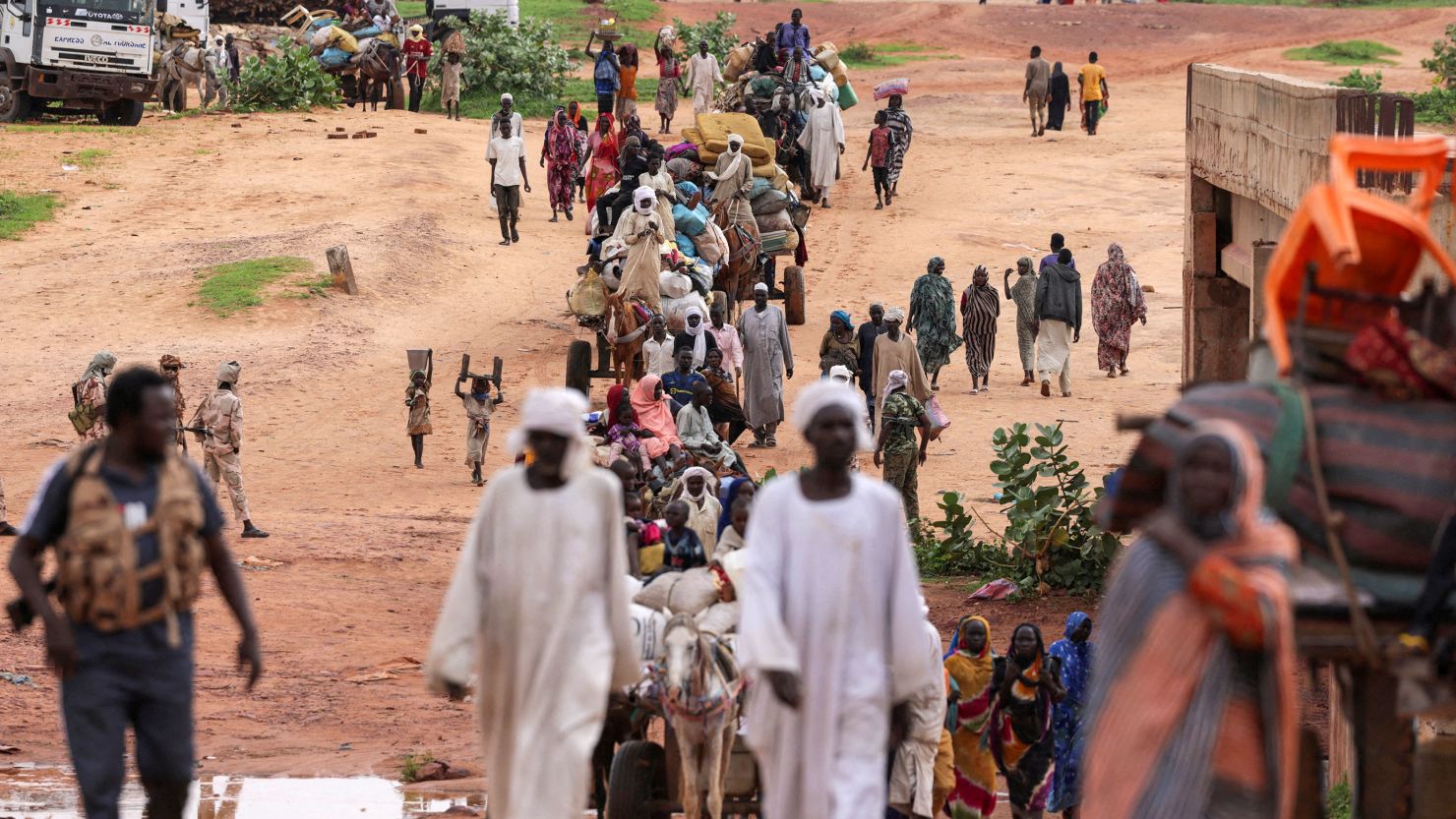
“We have reached a point where the deaths of migrants at borders are treated as an inevitable consequence of migration itself,” Squire states in the podcast. “This normalization is a moral failure—not just of governments, but of the academic and activist communities that should be holding them accountable.” Her work in Europe’s Migration Crisis documents how border deaths have become a “statistical reality,” often reported in dry policy documents rather than as individual tragedies with names, families, and stories.
Squire’s critique extends to the humanitarian sector, which she argues often operates within the same frameworks that produce suffering. In her co-authored paper, “You already know enough: Certainty and Ignorance in Data-Driven Humanitarianism”, she and colleague B. Jones examine how data-driven approaches in humanitarian work can inadvertently reinforce exclusionary practices. “The challenge,” Squire explains, “is to move beyond the assumption that more data equals better humanitarian outcomes. Sometimes, the data we collect is used to justify inaction or further restriction.”
Global Citizenship in an Age of Precarious Migration
Squire’s latest book, Making and Unmaking Global Citizenship, shifts the focus from policy to lived experience. She argues that global citizenship is not a static identity granted by states but a dynamic process shaped by migration, displacement, and resistance. The book draws on interviews with migrants, activists, and scholars to illustrate how precarious migration—defined by uncertainty, legal limbo, and vulnerability—both erodes and redefines notions of belonging.

“Global citizenship is not something you are given; it is something you claim, often in the face of institutional rejection,” Squire notes. “The migrants I’ve worked with don’t see themselves as beneficiaries of humanitarian aid. They see themselves as agents who are reclaiming their right to move, to belong, and to be recognized as full members of the global community.”
This perspective challenges traditional understandings of citizenship, which are often tied to nationality or legal status. Squire’s research suggests that global citizenship is increasingly defined by solidarity networks, activism, and the collective struggle against exclusion. Her work with organizations like the University of Warwick’s Department of Politics and International Studies has led to collaborations with grassroots groups in Greece, Italy, and France, where migrants and activists are pushing back against restrictive policies.
The Ethical Responsibilities of Scholars and Activists
A recurring theme in Squire’s work—and in her podcast interview—is the ethical responsibility of scholars and academics in migration studies. She argues that researchers must move beyond detached analysis and engage directly with the communities they study. “Academia has a duty to translate research into action,” she says. “If we produce knowledge that contributes to the suffering of migrants, we are complicit in that suffering.”
This stance is reflected in her collaborative projects, such as Reclaiming Migration, which centers the voices of migrants themselves. The book is co-authored with N. Perkowski, D. Stevens, and N. Vaughan-Williams, and it emerged from years of fieldwork with migrants in Europe. Squire emphasizes that these voices are often excluded from policy debates, yet they hold the key to understanding the human dimensions of migration.
For activists, Squire’s work offers a framework for ethical engagement. She highlights the importance of building alliances between migrants, scholars, and advocates to challenge restrictive policies. “Solidarity is not just a moral imperative; it’s a political strategy,” she argues. “The most effective activism comes from those who are directly affected by these policies, working alongside those who can amplify their voices.”
Key Takeaways from the Podcast Episode
- Borders as Sites of Violence: Squire frames borders not just as physical barriers but as sites where state power intersects with humanitarian crises, often with deadly consequences.
- Data and Ethics: The use of data in humanitarian work can reinforce exclusion if not critically examined. Squire advocates for “data justice” that centers human dignity over statistical efficiency.
- Global Citizenship as Resistance: Citizenship is not granted by states but claimed through collective action, particularly by migrants navigating precarious conditions.
- Scholarly Accountability: Academics must engage with activism and policy to ensure their research contributes to justice rather than complicity.
- The Role of Solidarity: Effective migration advocacy requires alliances between migrants, scholars, and activists to challenge systemic exclusion.
What Happens Next? Tracking the Conversation
Squire’s work continues to evolve, with ongoing research into the intersection of migration, climate change, and humanitarian response. Her next book project, tentatively titled Climate Migration and the Limits of Humanitarianism, will explore how rising temperatures and environmental displacement are reshaping global migration patterns. While no official release date has been announced, Squire has indicated that early findings will be shared in upcoming conferences, including the European International Studies Association (EISA) Annual Convention in September 2026.
For those interested in engaging with these themes, Squire encourages listening to the full Thinking Global podcast episode and exploring her publications. She also invites readers to share their own experiences or research by emailing [email protected], with contributions potentially featured in future episodes.
As the global conversation on migration intensifies, Squire’s work serves as a vital reminder that behind every policy and statistic are human stories—stories of resilience, resistance, and the unyielding demand for dignity.
Worth a look