
Pakistan’s financial leadership is signaling a cautious but firm optimism regarding the nation’s trajectory toward Pakistan economic growth and IMF support. In a high-stakes briefing before the National Assembly’s Standing Committee on Finance and Revenue, the Ministry of Finance and the State Bank of Pakistan (SBP) presented a unified front, asserting that the country is on track to meet its fiscal and current account targets despite the volatility of a challenging regional landscape.
The current sentiment is bolstered by the anticipated approval of disbursements exceeding $1.2 billion from the International Monetary Fund (IMF), expected this Friday. This infusion of capital is not merely a lifeline but a strategic component of a broader effort to stabilize foreign exchange reserves and restore international investor confidence in one of South Asia’s most complex economies.
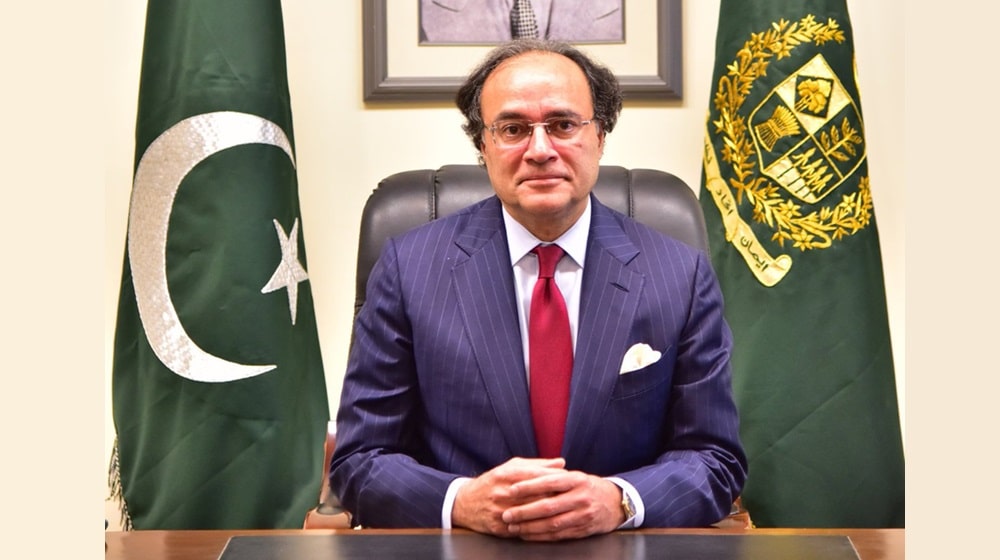
As Chief Editor of Business at World Today Journal, I have tracked Pakistan’s cyclical relationship with the IMF for years. The current phase is particularly critical because the government is attempting to pivot from emergency stabilization to sustainable, long-term growth. The testimony provided by Finance Minister Muhammad Aurangzeb and SBP Governor Jameel Ahmed suggests a strategy rooted in diversifying debt instruments and tightening fiscal management to avoid the pitfalls of previous decades.
The intersection of geopolitical risk—specifically the ongoing crises in the Middle East—and domestic economic reform creates a precarious balancing act. However, the official narrative is clear: the combination of prudent fiscal discipline and strategic external borrowing is beginning to yield measurable results in the form of rising reserves and improving trade indicators.
Strengthening the Fortress: Foreign Exchange Reserves and IMF Tranches
Central to the government’s optimism is the projected health of the nation’s foreign exchange reserves. SBP Governor Jameel Ahmed informed the committee that the State Bank has been aggressively managing market liquidity, purchasing approximately $27 billion from the market over the last three years to fortify the central bank’s holdings. This includes $4.5 billion acquired so far in the current year alone.
The imminent $1.2 billion IMF disbursement is expected to act as a catalyst, pushing foreign exchange reserves beyond the $17 billion mark by the end of the current fiscal year. From a macroeconomic perspective, this threshold is significant as it provides roughly three months of import cover—a critical benchmark for currency stability and a signal to global markets that Pakistan can meet its short-term external obligations without immediate crisis.

Governor Jameel further noted that reserves have been growing on a weekly basis, a feat achieved even while the country navigated approximately $5 billion in repayments over the past five months. This suggests a tightening of the monetary grip and a more efficient management of inflows, though the reliance on IMF tranches remains a primary pillar of this stability.
The IMF’s role extends beyond immediate liquidity. A staff mission is scheduled to visit Islamabad on May 15 to begin consultations for the 2026–27 fiscal year budget. This visit will involve coordinated efforts between the Ministry of Finance, the SBP, the Federal Board of Revenue (FBR), and the Ministry of Energy’s Power and Petroleum Divisions, ensuring that the next budget aligns with the structural benchmarks required by the fund.
Diversifying Debt: The Strategic Shift to Panda Bonds and Eurobonds
One of the more intriguing developments discussed during the committee meeting is Pakistan’s move to diversify its borrowing portfolio. Finance Minister Muhammad Aurangzeb revealed that Pakistan has received regulatory approval from China for the inaugural launch of a “Panda bond.” These are yuan-denominated bonds issued by foreign entities in the Chinese domestic market, allowing the issuer to tap into a different pool of liquidity and potentially secure more favorable terms than those available in traditional Western markets.
The Panda bond, which had faced delays of more than four months, is expected to be launched in the Chinese capital market within the next 10 days. By diversifying its debt across different currencies and jurisdictions, Pakistan aims to reduce its vulnerability to a single currency’s volatility or the whims of a single lending bloc.
This strategy complements the government’s recent success in the international capital markets, where it raised a $750 million Eurobond last month. The ability to return to the Eurobond market is often viewed by economists as a “vote of confidence” from international institutional investors, suggesting that the perceived risk of default has decreased sufficiently to make Pakistani debt attractive once again.
Minister Aurangzeb attributed these successes to a policy of “prudent fiscal management” and a concerted effort to enhance macroeconomic stability. By combining multilateral support from the IMF with bilateral instruments like Panda bonds and commercial instruments like Eurobonds, the administration is attempting to build a more resilient financial architecture.
Growth Projections and the “War Risk” Import Burden
On the growth front, the figures presented by the SBP are surprisingly bullish. Governor Jameel indicated that third-quarter economic growth, which is currently being finalized, is estimated to be over 4%. This growth is reportedly driven by a rebound in large-scale manufacturing and a general uptick in overall economic activity.
While the Governor cautioned that growth might slow during the post-conflict phase of regional tensions, he projected that the annual growth rate would still land around 3.04%, which remains higher than the previous year’s performance. This suggests that the economy is beginning to breathe again after a period of severe contraction and high inflation.
However, this growth is being challenged by external shocks. Minister Aurangzeb acknowledged that the national import bill has risen, primarily due to the increased cost of petroleum products. He specifically pointed to the “war risk premium,” insurance costs, and fluctuating global oil prices, estimating the combined additional impact at no more than $1 billion per month.
Despite this headwind, the Finance Minister maintained that the overall current account would remain in surplus. This stability is being supported by three key drivers:
- Export Growth: An upward trend in exports observed over the last 10 months, including a notable increase in April.
- Remittances: Sustained growth in funds sent home by overseas Pakistanis, which remains a vital source of hard currency.
- IT Sector: A continued rise in IT exports, reflecting the country’s growing footprint in the global digital services market.
The Counter-Narrative: Growth vs. Slowdown
Despite the optimistic data, the meeting was not without its skeptics. MNA Syed Naveed Qamar, while acknowledging the positive indicators, raised a critical concern: the possibility that these fiscal gains are being achieved at the cost of a broader economic slowdown. This is a classic tension in IMF-mandated programs, where austerity measures—such as cutting subsidies and increasing taxes to meet fiscal targets—can stifle domestic consumption and industrial growth.

In response, Minister Aurangzeb emphasized that his consistent policy stance has been to pursue “sustainable economic growth” rather than short-term statistical wins. The challenge for the current administration is to ensure that the “prudent fiscal management” required by the IMF does not inadvertently trigger a recession or alienate the domestic business community.
The Standing Committee members echoed this sentiment, stressing that long-term resilience cannot be built on IMF tranches alone. They urged the government to focus on strengthening exports, diversifying the destinations to which Pakistan sells its goods, and addressing supply-side constraints—such as energy instability and regulatory hurdles—that hinder industrial productivity.
Analysis: What In other words for the Global Investor
From a market perspective, the focus on Pakistan economic growth and IMF support reveals a transition toward a more sophisticated debt management strategy. The move into the Chinese Panda bond market is a tactical hedge, while the return to Eurobonds indicates a thawing of relations with global credit markets.
For the global audience, the key metric to watch is the “three months of import cover.” In the world of emerging market finance, this is often the line between stability and a balance-of-payments crisis. If Pakistan can consistently maintain reserves above $17 billion, it will likely see a reduction in the risk premiums associated with its sovereign debt, potentially lowering the cost of future borrowing.
However, the “war risk premium” mentioned by the Finance Minister serves as a reminder that Pakistan’s economy is not an island. Its stability is inextricably linked to the security of the Middle East and the fluidity of global energy markets. Any significant escalation in regional conflict could easily wipe out the gains made through fiscal discipline.
The upcoming IMF visit on May 15 will be the next major litmus test. The budget formulation for 2026–27 will reveal whether the government is willing to implement deeper structural reforms—such as broadening the tax base and privatizing inefficient state-owned enterprises—or if it will continue to rely on a combination of borrowing and tactical adjustments.
Next Checkpoint: The market will be watching for the official IMF Board approval of the economic review this Friday, followed by the outcomes of the IMF staff mission’s visit to Islamabad on May 15.
Do you believe Pakistan can break its cycle of IMF reliance through these new debt instruments, or are the regional risks too high? Share your thoughts in the comments below.
Related reading
- Bonoloto Results and Winning Numbers for Sunday, August 9, 2026
- KOSPI Trading Value Plunge to Impact Brokerage Earnings in Second Half
- Lessons on Faith and Growth from the Juneau Pioneer Home (news-usa.today)
- SK Hynix Massive Investments and Q2 Growth Amid South Korea Market Crash (world-today-news.com)