
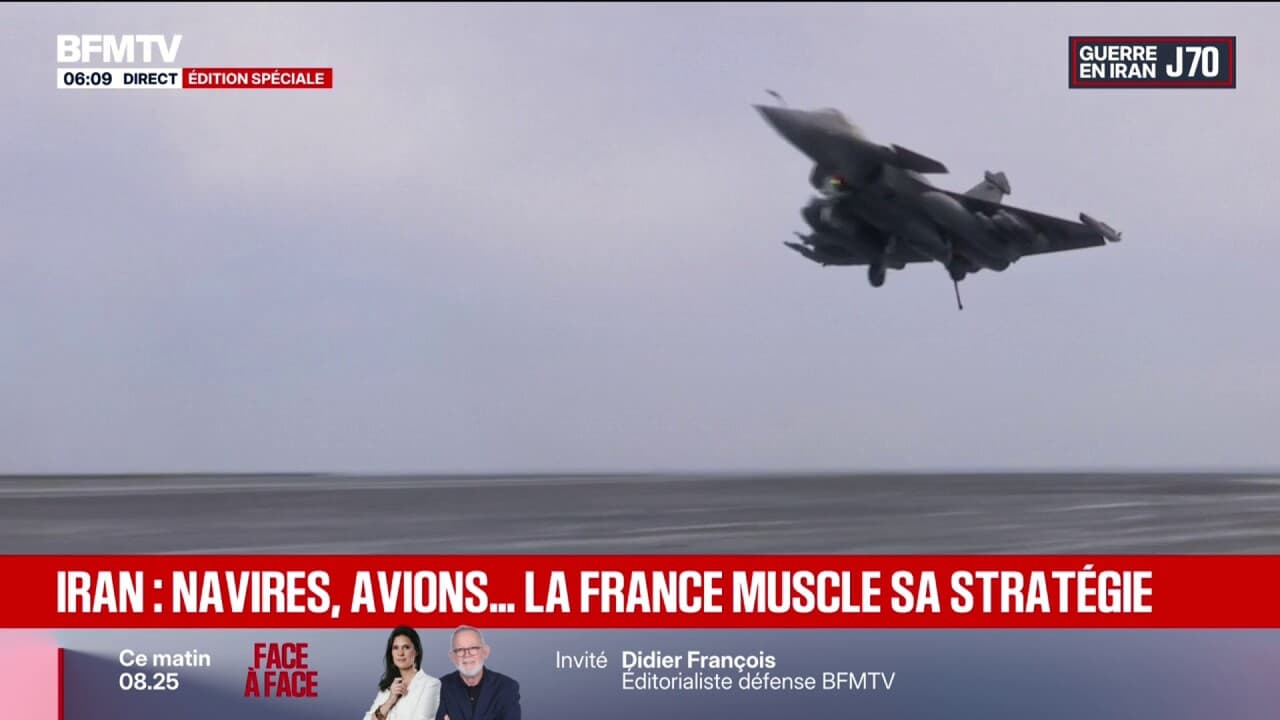
The geopolitical landscape of the Middle East is undergoing a fundamental transformation, forcing a comprehensive French military adaptation in the Middle East to counter a new generation of asymmetric and state-sponsored threats. As regional volatility increases, the French Armed Forces are shifting their operational posture from the counter-insurgency models that defined the last decade toward a strategy of high-intensity deterrence and hybrid warfare management.
For years, France’s presence in the region was primarily defined by the fight against extremist groups. However, the emergence of sophisticated unmanned aerial vehicles (UAVs), cyber-attacks, and the influence of regional proxies has rendered traditional counter-terrorism tactics insufficient. The French Ministry of the Armed Forces is now prioritizing “strategic readiness,” ensuring that its personnel and equipment can withstand conflicts that blend conventional military strength with irregular, non-linear tactics.
This shift is not merely tactical but structural. By integrating advanced electronic warfare capabilities and rethinking its logistics in the Levant and the Persian Gulf, France aims to maintain its influence and security interests without becoming bogged down in protracted, low-intensity conflicts. The objective is clear: create a flexible, tech-driven force capable of reacting to rapid escalations while maintaining a diplomatic bridge between competing global powers.
The Evolution of Threat Landscapes: Beyond Counter-Terrorism
The primary driver of the current French military adaptation in the Middle East is the proliferation of “hybrid threats.” Unlike the centralized command structures of traditional armies, today’s threats often come from non-state actors equipped with state-level technology. The use of “kamikaze” drones and long-range precision missiles by proxy groups has changed the risk calculus for French installations and naval assets.
France has recognized that the era of purely “low-intensity” conflict is over. The French Ministry of the Armed Forces has emphasized the need to prepare for “high-intensity” engagements—conflicts involving peer or near-peer adversaries where the scale of casualties and the pace of operations are significantly higher. This requires a move away from small-unit patrols toward integrated brigade-level operations supported by heavy intelligence and surveillance assets.
the digital battlefield has become as critical as the physical one. Cyber-attacks targeting military communications and the use of disinformation to destabilize local partnerships have forced the French army to integrate cyber-defense units directly into its regional command structures. The goal is to ensure “information dominance,” allowing French commanders to see the battlefield clearly while denying the same advantage to adversaries.
Tactical Shifts: Redefining Operation Chammal
Operation Chammal, the French contribution to the Global Coalition against Daesh, serves as the primary vehicle for these adaptations. Originally focused on airstrikes and training local forces to dismantle the Islamic State, the operation is evolving to address the broader instability of the region. The focus is shifting from the total eradication of a specific group to the stabilization of territories to prevent the vacuum that allows new threats to emerge.
One of the most critical adaptations is the implementation of Counter-Unmanned Aircraft Systems (C-UAS). The French military is deploying a layered defense strategy that combines electronic jamming, kinetic interception, and AI-driven detection to protect its bases and personnel. These systems are designed to identify and neutralize drones before they can reach their targets, a necessity in an environment where low-cost UAVs can threaten multi-million dollar assets.
France is rethinking its “footprint” in the region. Rather than maintaining large, static bases that serve as easy targets for asymmetric attacks, the army is moving toward a more agile, mobile posture. This involves the use of rapid-reaction forces that can deploy, achieve an objective, and extract quickly, reducing the long-term vulnerability of French troops on the ground.
Technological Integration and Strategic Autonomy
To support this adaptation, France is investing heavily in strategic autonomy—the ability to act independently of allies when necessary. What we have is particularly evident in the development of indigenous military technology. By reducing reliance on foreign systems for critical intelligence and strike capabilities, France ensures that its operational decisions are not constrained by the political whims or technical limitations of third-party providers.

The integration of Artificial Intelligence (AI) into battle management systems is a cornerstone of this effort. AI is being used to process vast amounts of data from satellites, drones, and signals intelligence in real-time, providing commanders with a “common operational picture.” This reduces the time between detecting a threat and neutralizing it, which is vital when dealing with the high speeds of modern missile and drone warfare.
Naval adaptation is equally critical. The French Navy is enhancing the capabilities of its aircraft carriers and frigates to operate in contested waters, particularly in the Strait of Hormuz and the Eastern Mediterranean. This includes upgrading anti-ship missile defenses and improving the coordination between naval assets and land-based air cover to ensure the freedom of navigation in vital shipping lanes.
The Diplomatic Tightrope: Military Power as a Tool for Stability
France’s military adaptations are inextricably linked to its diplomatic strategy. Unlike some of its allies, France often seeks a “third way,” maintaining dialogue with a wide array of regional actors to prevent total escalation. The military’s role is to provide the credible threat of force that makes this diplomacy possible. When the French army demonstrates it can adapt to new threats, it gains leverage at the negotiating table.
The challenge lies in balancing this deterrence with the risk of provocation. By focusing on “defensive” adaptations—such as C-UAS and cyber-defense—France signals that It’s prepared to protect its interests without necessarily seeking to expand its combat footprint. This calibrated approach is designed to avoid the pitfalls of “mission creep” that characterized previous interventions in the region.
France continues to emphasize the importance of multilateralism. While pursuing strategic autonomy, it remains a key pillar of NATO and EU defense initiatives. The adaptation of the French army serves as a blueprint for other European nations facing similar threats, promoting a standardized approach to hybrid warfare and drone defense across the continent.
Key Takeaways of French Military Adaptation
- Shift to High-Intensity: Moving from counter-insurgency to preparing for conflicts against state-level or well-equipped proxy adversaries.
- C-UAS Priority: Deployment of layered drone defense systems to protect personnel and infrastructure from asymmetric aerial threats.
- Cyber Integration: Embedding cyber-defense and electronic warfare capabilities directly into regional command structures.
- Agile Footprint: Transitioning from static bases to mobile, rapid-reaction forces to reduce vulnerability.
- Strategic Autonomy: Increasing reliance on indigenous technology to ensure independent operational decision-making.
What Happens Next: The Path to 2030
The ongoing adaptation is part of a longer-term vision detailed in France’s national strategic reviews. The focus for the coming years will likely be the full integration of “multi-domain” operations, where land, sea, air, space, and cyber assets are coordinated through a single, seamless command structure. This will allow France to respond to threats with a speed and precision that was previously impossible.
As regional powers continue to modernize their arsenals, the French military will likely increase its focus on long-range strike capabilities and advanced stealth technology. The goal is to maintain a “credible deterrence” that prevents conflict by making the cost of aggression prohibitively high for any adversary.
The success of these adaptations will be measured by France’s ability to maintain stability in the Middle East without incurring unsustainable losses. In a region where the lines between war and peace are increasingly blurred, the ability to adapt is not just a military advantage—it is a strategic necessity.
The next official update on the strategic posture of French forces in the region is expected during the upcoming annual defense budget review and the subsequent parliamentary hearings on national security.
Do you think France’s shift toward high-intensity deterrence is the right move for Middle East stability? Share your thoughts in the comments below or share this analysis with your network.