
The landscape of modern interactive entertainment is often defined by a few visionary architects, and for over four decades, Takashi Tezuka has been one of the most influential. Nintendo has confirmed that the legendary designer and director, whose fingerprints are found on nearly every foundational pillar of the company’s success, will retire from the organization this summer.
Tezuka is set to officially leave Nintendo on June 26, 2026, according to a company financial document. His departure marks the end of an era that began in 1984, spanning a career that saw him evolve from a graphics designer into a game director and, eventually, an executive officer. For those who grew up with a controller in their hand, Tezuka’s influence is not just a matter of corporate record; it is woven into the very mechanics of how we play.
As a technology editor who has spent years analyzing the intersection of software engineering and creative design, I view Tezuka’s retirement as more than just a personnel change. It is the closing of a chapter on a specific philosophy of game design—one that prioritizes “feel,” intuition, and an uncompromising commitment to polish. His work helped transition the medium from simple arcade distractions into complex, narrative-driven experiences that resonate across generations.
From the meticulous placement of blocks in the Mushroom Kingdom to the expansive mysteries of Hyrule, Tezuka’s career is a masterclass in iterative design. His ability to translate abstract ideas into tangible joy is what helped Nintendo maintain its dominance in an increasingly crowded global market.
The Architect of Nintendo’s Golden Age
Takashi Tezuka’s journey at Nintendo began in 1984, a pivotal moment in the history of computing and gaming. He started his career in the trenches of graphics design, specifically creating sprites for the original Punch-Out!!. In the early days of the industry, the constraints of hardware were immense; every pixel had to serve a purpose. Tezuka’s early proficiency in visual communication made him an indispensable asset to the development teams.
He quickly moved into leadership roles, serving as an assistant director alongside Shigeru Miyamoto. This partnership became one of the most productive collaborations in the history of software development. Together, they worked on titles that defined the 8-bit and 16-bit eras, including Excitebike, the original Super Mario Bros., and the first The Legend of Zelda. During this formative period, Tezuka was often credited under the nickname “Ten Ten,” a nod to his early contributions to the company’s foundational library.
While Miyamoto is often the public face of Nintendo’s creativity, Tezuka was frequently the one refining the vision. He eventually took the helm as the main director for Super Mario Bros. 2 (known in Japan as Super Mario Bros.: The Lost Levels), where he began to experiment with more complex level design and varied gameplay mechanics. This willingness to deviate from established patterns became a hallmark of his directorial style.
The 1980s and early 90s saw Tezuka lead some of the most critically acclaimed projects in gaming history. He directed and designed Super Mario Bros. 3, a title that expanded the scope of the platforming genre, and Super Mario World, which perfected the formula for the Super Nintendo Entertainment System. Perhaps most significantly, he directed The Legend of Zelda: A Link to the Past, a game that established the structural blueprint for almost every action-adventure game that followed.
Defining a Legacy: Yoshi and the Leap to 3D
One of Tezuka’s most enduring contributions to pop culture is the creation of Yoshi. Collaborating with Shigefumi Hino, Tezuka co-created the lovable dinosaur who first appeared in Super Mario World. Yoshi was not just a character; he was a gameplay mechanic that introduced a new layer of interaction to the Mario universe, allowing players to eat enemies and flutter-jump across gaps. This addition demonstrated Tezuka’s ability to blend character design with functional utility.
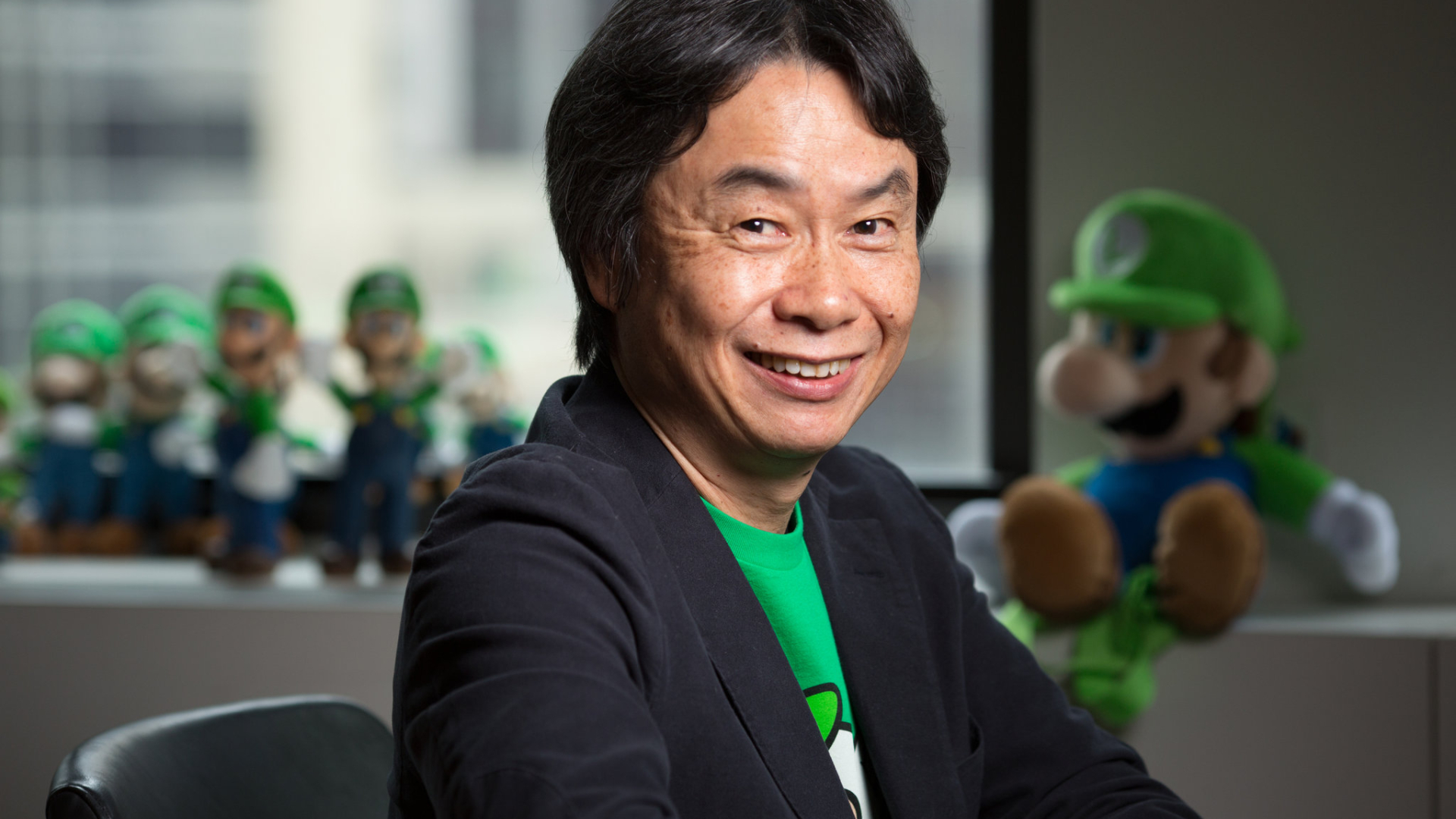
The mid-90s presented the industry with its greatest challenge: the transition from two-dimensional sprites to three-dimensional polygons. This shift required a complete reimagining of how players navigated virtual spaces. Tezuka was central to this evolution, and his final credit as a designer came with the release of Super Mario 64 in 1996. This title effectively taught the world how to move a camera and a character in a 3D environment, setting the standard for every 3D game that followed.
Following his tenure as a primary designer, Tezuka transitioned into higher-level production and supervision. In this capacity, he ensured that the spirit of Nintendo’s core franchises remained intact even as technology advanced. He provided oversight and guidance for the Super Mario, The Legend of Zelda, Animal Crossing, and Pikmin series, acting as a bridge between the company’s legacy and its future.
Innovation Through Internal Tools
Tezuka’s impact extended beyond the games he directed; he also recognized the value of empowering the community to create. This philosophy was evident in the development of Super Mario Maker. In a 2014 interview, Tezuka explained that the idea for the game didn’t come from a top-down corporate mandate, but from the ground up. He noted that internal game designers had expressed how much fun they had using Nintendo’s own internal course-making tools.
By recognizing that the act of creation was as rewarding as the act of playing, Tezuka helped launch a title that turned millions of players into designers. This move mirrored the broader tech trend of “democratizing” software tools, allowing non-programmers to engage with the logic of game design. It was a testament to his ability to identify a spark of joy within a technical process and scale it into a commercial success.
What Tezuka’s Retirement Means for Nintendo
The departure of an executive officer and creative pillar like Takashi Tezuka creates a significant vacuum in Nintendo’s leadership. For 42 years, Tezuka has been a guardian of the “Nintendo Way”—a philosophy that prioritizes gameplay innovation over raw graphical power. His retirement comes at a time when the industry is grappling with the rise of generative AI and the shift toward service-based gaming models.

The primary challenge for Nintendo will be maintaining the intuitive, polished feel of its first-party titles without Tezuka’s direct supervision. However, the company has a long history of internal mentorship. The designers who worked under Tezuka during the development of the Switch era have likely inherited the principles he championed: simplicity, surprise, and a relentless focus on the player’s experience.
For the global gaming community, Tezuka’s legacy is found in every “hidden block” and every carefully timed jump. He helped prove that video games could be a sophisticated form of art, capable of evoking nostalgia, wonder, and a sense of discovery. While the industry continues to evolve toward hyper-realism and complex simulations, Tezuka’s work remains a reminder that the most powerful tool in a developer’s arsenal is a simple, great idea.
Key Career Milestones
- 1984: Joined Nintendo as a graphics designer, beginning with Punch-Out!!.
- Late 1980s: Served as assistant director on Super Mario Bros. and The Legend of Zelda.
- 1988: Directed Super Mario Bros. 3, redefining the platforming genre.
- 1991: Directed The Legend of Zelda: A Link to the Past and co-created Yoshi.
- 1996: Contributed as a designer to Super Mario 64, pioneering 3D movement.
- 2015: Oversaw the launch of Super Mario Maker, bringing level design to the public.
- June 26, 2026: Scheduled retirement from Nintendo.
As we look toward the future of gaming, the influence of Takashi Tezuka will persist in the DNA of every game that dares to be playful. His retirement is a moment for reflection on how far the medium has come—from a few flickering pixels in 1984 to the vast, immersive worlds of today.
The gaming world now awaits the official transition as June 26 approaches. Whether he chooses to consult or step entirely away from the industry, his contributions are permanently etched into the history of technology.
Do you have a favorite memory of a game directed by Takashi Tezuka? Share your thoughts in the comments below or share this article with fellow gaming enthusiasts.
Keep reading