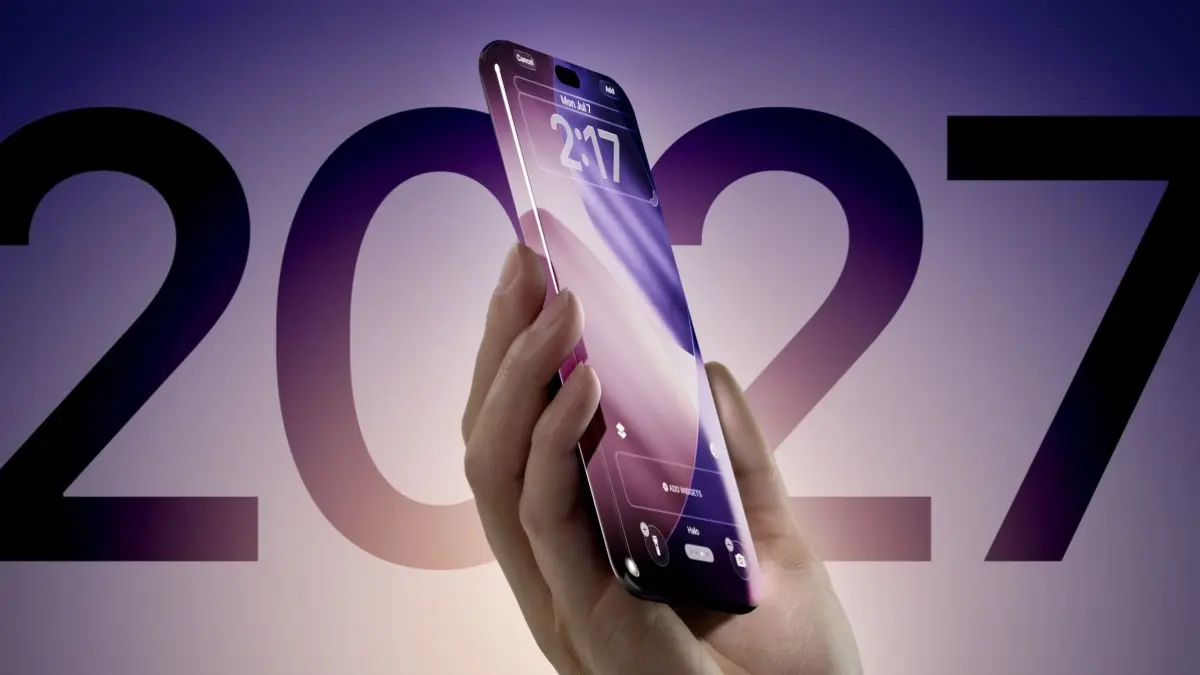
As Apple continues to refine its current hardware ecosystem, the tech industry is already looking toward a significant milestone: the 20th anniversary of the original iPhone. While the company is currently focusing on the rollout of the iPhone 17 series—which includes the iPhone 17, iPhone 17 Pro, the new iPhone Air and the iPhone 17e—whispers of a “revolutionary” anniversary model have begun to dominate enthusiast circles.
For a company that historically uses decade milestones to pivot its design language—most notably with the edge-to-edge display of the iPhone X—the anticipation for a 20th-anniversary device is high. The current discourse suggests that Apple may be planning a radical departure from the industrial design that has defined the smartphone for nearly two decades, potentially moving toward a nearly seamless, “all-glass” aesthetic.
These iPhone 20th anniversary leaks point toward a device that prioritizes minimalism and structural integration over traditional mechanical components. While Apple has not officially confirmed any specifications for a future anniversary model, the trajectory of recent patents and supply chain rumors suggests a push toward removing physical points of failure and maximizing internal volume for power.
The Push Toward a Seamless Chassis
One of the most persistent rumors circulating in tech circles is the concept of a “buttonless” iPhone. This would involve replacing traditional physical buttons—such as the volume rockers and the power button—with solid-state haptic sensors. These sensors would simulate the feel of a click using a Taptic Engine, allowing the device to be more water-resistant and durable by eliminating physical openings in the frame.

This design shift would complement reports of a “full glass” body, where the chassis is wrapped in a highly durable, next-generation glass or ceramic material. By removing the physical seams and ports, Apple could theoretically create a device that is not only more aesthetically streamlined but also significantly more resistant to dust and liquid ingress. Such a move would align with Apple’s long-term goal of simplifying the external hardware to create a “single slab” experience.
speculation has emerged regarding the removal of traditional speaker grilles. Industry analysts suggest Apple may be exploring “display audio” or vibration-based sound transmission, where the screen itself acts as a speaker. This would remove the need for the small perforations currently found at the bottom of the iPhone, further contributing to the seamless, hole-less design.
Battery Innovation and Power Management
To support a more seamless design and the demands of increasingly complex on-device AI, rumors have suggested a massive leap in battery capacity. Some unverified reports claim that a future anniversary model could feature a battery as large as 6,000 mAh. For context, this would represent a substantial increase over the capacities found in current Pro Max models, potentially extending multi-day usage for the average consumer.
Achieving this capacity without increasing the physical footprint of the phone would require a breakthrough in battery chemistry. Experts suggest that Apple may be exploring silicon-carbon battery technology, which offers higher energy density than traditional lithium-ion cells. This would allow the company to pack more power into the same internal volume, a necessity if the device is to maintain a thin profile while removing physical buttons to make room for a larger cell.
Alongside the capacity boost, there is ongoing speculation regarding “reverse charging” capabilities. This feature, already common in many Android flagship devices, would allow an iPhone to act as a wireless charging pad for other accessories, such as AirPods or an Apple Watch, simply by placing them on the back of the phone. While highly requested, Apple has yet to officially integrate this into its primary iPhone lineup.
The Evolution of the Display
The display is often where Apple makes its most visible leaps. Following the introduction of ProMotion and Always-On displays, the next frontier is the elimination of the “Dynamic Island” or any remaining punch-hole cutouts. The goal for a milestone anniversary device would likely be a truly “full-screen” experience, where the front-facing camera and Face ID sensors are hidden beneath the OLED panel.
Under-display camera technology has been a challenge for years due to the trade-off between sensor transparency and image quality. However, if Apple can solve the light-transmission issue, the 20th-anniversary model could be the first iPhone to feature a completely uninterrupted display. This would maximize the screen-to-body ratio, providing an immersive experience that aligns with the rumored “invisible bezel” design.
This evolution would likely be paired with an ultra-thin, next-generation OLED screen that offers higher peak brightness and better energy efficiency, ensuring that the larger battery is not depleted by a more power-hungry display.
What So for the Consumer
If these rumors materialize, the shift toward a buttonless, all-glass device would represent the most significant change to the iPhone’s form factor since 2007. For the user, this means a device that is more durable, easier to clean, and potentially far more capable in terms of battery life. However, it also introduces new questions about repairability. A seamless glass chassis is inherently more difficult to open and repair than a traditional metal-and-glass sandwich.

the transition to solid-state buttons requires a psychological shift for the user. The tactile “click” of a physical button provides an immediate confirmation of an action; replacing this with a haptic vibration is a transition Apple has already begun with the Taptic Engine in the Apple Watch and the MacBook trackpads, but expanding it to every primary input on the iPhone would be a bold move.
From a strategic standpoint, such a device would serve as a “halo product,” showcasing Apple’s engineering prowess and setting the design language for the next decade of smartphones. By pushing the boundaries of materials science and battery density, Apple can justify a premium price point for a milestone edition while trickling these technologies down to the standard models in subsequent years.
As we move closer to the actual 20th anniversary of the iPhone, the industry will be watching for official patents and supply chain leaks from display and battery manufacturers. For now, the iPhone 17 series remains the current benchmark for Apple’s hardware, providing the foundation upon which these future innovations will be built.
The next confirmed checkpoint for Apple’s hardware roadmap will be the official software and hardware updates typically announced during the company’s annual events. We will continue to monitor official filings and press releases for any confirmation of these design shifts.
What do you think about a buttonless, all-glass iPhone? Would you trade physical buttons for a more seamless design and a 6,000 mAh battery? Let us know in the comments below and share this article with other tech enthusiasts.
Worth a look