
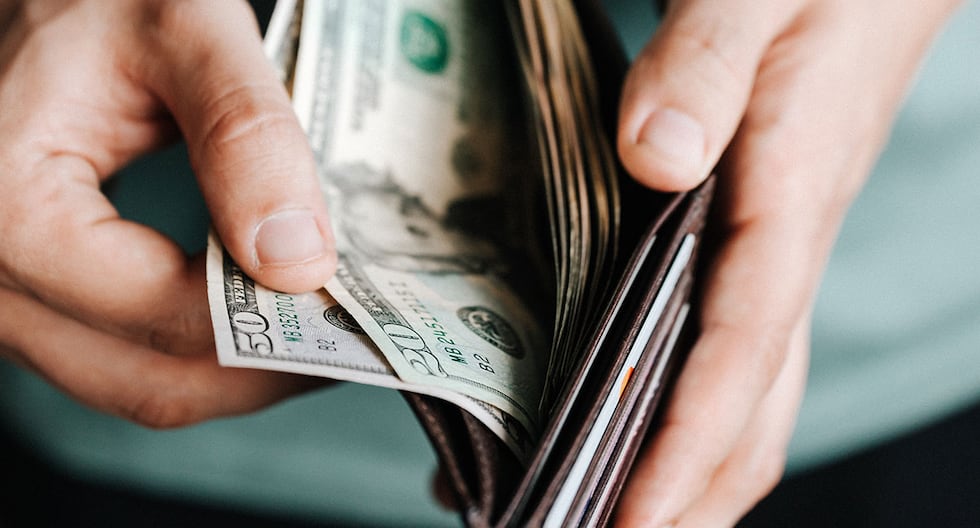
As Peru navigates the volatile waters of its 2026 electoral cycle, a familiar anxiety has returned to the households and boardrooms of Lima and beyond: the dilemma of currency exposure. For many Peruvians, the question of whether to maintain savings in the national currency, the sol, or pivot toward the US dollar is not merely a financial calculation but a strategy for survival amidst political instability.
The Peruvian sol has long been regarded as one of the most resilient currencies in Latin America, a testament to the rigorous monetary discipline of the Banco Central de Reserva del Perú (BCR). However, the inherent volatility of the country’s political landscape—characterized by frequent executive turnover and legislative friction—often triggers a “flight to safety,” driving citizens and investors to seek refuge in the greenback.
For the global observer and the local investor alike, understanding the interplay between electoral outcomes and exchange rate fluctuations is critical. While the desire to hedge against risk is a rational response to uncertainty, the decision to move assets into US dollars during a peak election window involves a complex trade-off between perceived security and the potential for missing out on stability if the market overreacts to political noise.
This analysis examines the current economic climate in Peru, the role of the Central Reserve Bank in mitigating currency shocks, and the factors that typically drive the sol-dollar exchange rate during periods of high political tension.
The Psychology of Currency Hedging in Peru
In Peru, the US dollar is more than just a foreign currency. it serves as a psychological anchor. When political uncertainty rises—whether due to contested election results, threats to institutional autonomy, or the rise of populist candidates—the demand for dollars typically spikes. This phenomenon is known as currency hedging, where individuals buy USD not necessarily for investment returns, but to protect the purchasing power of their wealth against a potential devaluation of the sol.
This behavior is rooted in historical memory. While the sol has remained remarkably stable over the last two decades, the broader regional history of Latin America is littered with examples of hyperinflation and currency collapses. The “dollarization” of savings is a deeply ingrained cultural habit in Peru, often accelerating in the months leading up to a general election.
The current uncertainty surrounding the 2026 elections has reignited this trend. When markets perceive a risk that a new administration might challenge the independence of economic institutions or implement erratic fiscal policies, the perceived risk premium of holding soles increases. This leads to a self-fulfilling prophecy: as more people buy dollars out of fear, the price of the dollar rises, which in turn encourages others to buy before the price climbs further.
The BCR: The Anchor of Monetary Stability
The primary reason the Peruvian sol has not succumbed to the volatility seen in neighboring economies is the Banco Central de Reserva del Perú (BCR). The BCR operates with a high degree of autonomy, a structural safeguard that allows it to prioritize price stability and inflation targeting over the short-term political goals of the executive branch.
The BCR employs a “managed float” exchange rate regime. This means that while the market largely determines the value of the sol, the Central Bank intervenes strategically to prevent excessive volatility. By buying or selling US dollars from its substantial international reserves, the BCR smooths out the “peaks and valleys” of the exchange rate, preventing the kind of panic-driven crashes that can devastate a domestic economy.
For those considering saving in dollars, the autonomy of the BCR is the most important variable to watch. As long as the Central Bank remains independent and its leadership is shielded from political interference, the sol is likely to remain fundamentally sound. The danger arises if an incoming government attempts to dismantle this autonomy or pressure the bank to finance public spending through currency printing—a move that would almost certainly trigger a rapid devaluation of the sol.
Analyzing the Risks: Fear vs. Fundamental Reality
When evaluating whether to move savings into US dollars, it is essential to distinguish between “political noise” and “structural risk.” Political noise includes campaign rhetoric, polling fluctuations, and social media speculation. Structural risk involves actual changes to the legal framework, the loss of institutional independence, or a collapse in foreign direct investment.
Many financial experts argue that the Peruvian market often “over-prices” political risk. Because the Peruvian economy is heavily dependent on mining and global commodity prices, the sol is sometimes more sensitive to the price of copper than it is to the identity of the president. When the global demand for minerals is strong, the sol can remain robust even in the face of domestic political chaos.
However, the risk becomes real when the electoral outcome suggests a shift toward economic policies that could alienate international markets. Potential triggers for a dollar surge include:
- Threats to the BCR: Any proposal to limit the Central Bank’s autonomy or change its mandate.
- Fiscal Irresponsibility: Plans for massive, unfunded public spending that could increase the national deficit.
- Legal Instability: Changes to property rights or contracts that could deter foreign investment.
- Social Unrest: Large-scale protests or civil instability that disrupt mining operations and exports.
Practical Strategies for Diversification
For the average saver, the choice is rarely a binary one between 100% soles or 100% dollars. Instead, professional wealth managers typically recommend a strategy of diversification. Diversification reduces the impact of any single currency’s volatility on a total portfolio.
A balanced approach often involves maintaining a “liquidity bucket” in soles for immediate domestic expenses and a “security bucket” in US dollars for long-term savings and emergency funds. This ensures that the individual benefits from the higher interest rates often available on sol-denominated savings accounts while maintaining a hedge against a worst-case political scenario.
Investors should also consider the “entry point.” Buying dollars when the exchange rate has already spiked due to election panic often means buying at the top of the market. If the election results are more moderate than feared, the dollar may drop, leaving those who panicked with a capital loss in sol terms. A more disciplined approach is “dollar-cost averaging”—buying a fixed amount of dollars at regular intervals to average out the purchase price over time.
The Global Context: The Strength of the US Dollar
It is also crucial to remember that the value of the sol-dollar pair is not solely determined by events within Peru. The US dollar’s strength is influenced by the monetary policy of the U.S. Federal Reserve. If the Fed maintains high interest rates to combat inflation in the United States, the dollar tends to strengthen globally, regardless of the political situation in Lima.

a rise in the price of the dollar in Peru may not always be a sign of local failure, but rather a reflection of global macroeconomic trends. Savvy savers must look at both the local political horizon and the global financial landscape to determine if the current price of the dollar is driven by Peruvian instability or American monetary strength.
Who Is Affected Most by Currency Volatility?
Currency uncertainty does not affect all segments of society equally. The impact is felt most acutely by three specific groups:
1. Small and Medium Enterprises (SMEs): Many Peruvian businesses import raw materials or finished goods priced in dollars but sell their products in soles. A sudden spike in the dollar increases their costs overnight, squeezing profit margins and potentially forcing price hikes for consumers, which can lead to lower sales.
2. Fixed-Income Earners: For those earning a salary in soles, a devaluation of the currency effectively reduces their purchasing power for imported goods, electronics, and international travel. This acts as a “hidden tax” on the middle class.
3. Foreign Investors: International firms investing in Peru’s mining and energy sectors are sensitive to “repatriation risk.” If the sol becomes too volatile, investors may hesitate to bring new capital into the country, fearing that their returns will be eroded by currency losses when they eventually convert their profits back into dollars.
Conclusion and Next Steps
Whether now is a “fine” time to save in dollars depends entirely on an individual’s risk tolerance and existing portfolio balance. While the Peruvian sol remains backed by a formidable Central Bank and strong mineral exports, the cyclical nature of Peruvian politics ensures that uncertainty will remain a constant factor.
The most prudent path is rarely panic, but rather preparation. By diversifying assets and monitoring the institutional health of the BCR, savers can protect themselves from the extremes of political volatility without sacrificing the stability of their domestic finances.
The next critical checkpoint for the Peruvian economy will be the official certification of the first-round election results and the subsequent announcement of the second-round candidates. These events will likely provide the market with a clearer signal of the projected economic direction of the next administration, triggering the next significant move in the exchange rate.
We want to hear from you. How are you managing your savings during this period of political transition? Share your thoughts in the comments below or share this article with your network to start a conversation on financial resilience.