
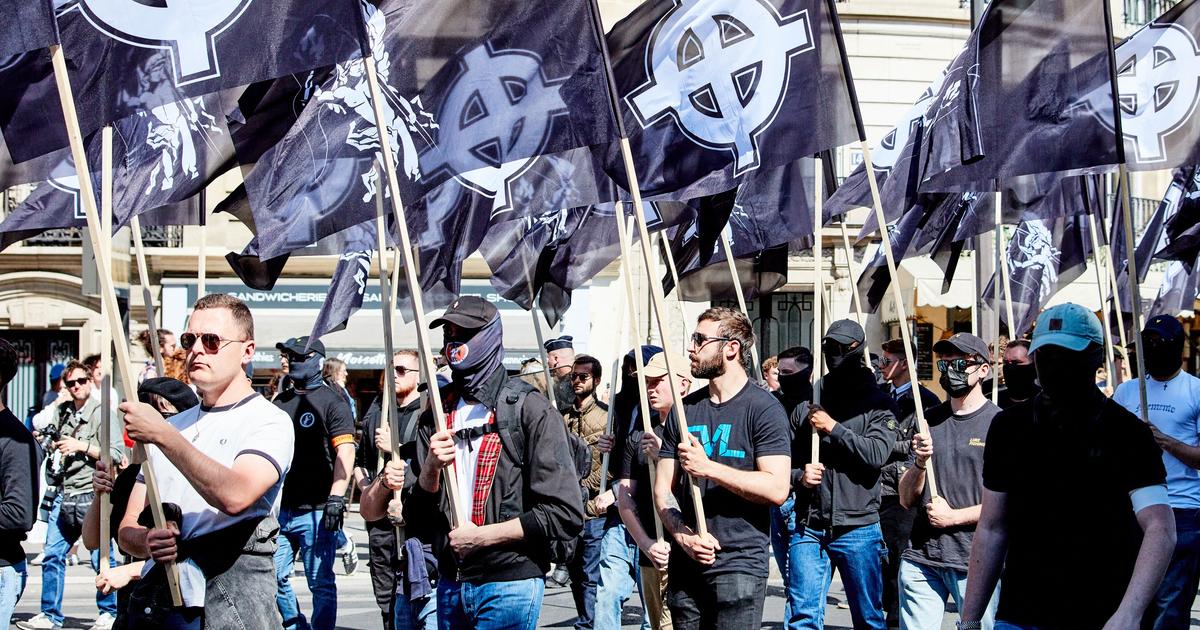
Nine far-right militants were detained by authorities in Paris on Saturday afternoon, May 9, 2026, following their attempt to hold a banned demonstration organized by the Comité du 9 Mai. The arrests occurred in the Saint-Michel district, near the designated starting point for the procession, as police moved to prevent a gathering that had been legally prohibited by the highest administrative authority in France.
The operation resulted in the seizure of several weapons, including knives, clubs, and brass knuckles. The individuals are currently in police custody, facing charges related to their participation in a group formed with the intent to commit violence or damage property. The crackdown follows a tense legal battle over the right to protest, highlighting the ongoing friction between nationalist movements and French state security apparatuses.
This incident marks a significant escalation in the state’s effort to curb far-right activity in the capital. The protest was intended to commemorate the death of Quentin Deranque, a right-wing nationalist militant who died in Lyon in February. However, the French government and law enforcement cited a history of volatility and the potential for public disorder as the primary drivers for the ban.
The Legal Battle: From Prefecture Ban to Conseil d’État
The path to Saturday’s arrests began earlier in the week when the Préfecture de Police (PP) officially banned the demonstration on Tuesday. The police prefecture’s decision was not limited to the far-right gathering; a planned anti-fascist counter-demonstration was also prohibited to prevent violent clashes between the opposing factions in the streets of Paris.
The ban was immediately contested by organizers in the administrative court system. On Friday, the administrative tribunal initially rejected the Prefecture’s ban, potentially clearing the way for the march to proceed. However, this decision was short-lived. The Conseil d’État, France’s highest administrative court, intervened the same day to overturn the lower court’s ruling and confirm the prohibition of the event.
The Conseil d’État’s confirmation provided the legal mandate for law enforcement to disperse any gathering associated with the Comité du 9 Mai. By the time Saturday arrived, the legal status of the protest was clear: any attempt to assemble at the designated starting point would be considered an illegal gathering, subject to immediate police intervention.
Arrests and Seized Weaponry in Saint-Michel
Despite the clear legal prohibitions, sympathizers of the Comité du 9 Mai attempted to organize a protest rally on Saturday afternoon. Police presence was heavily concentrated in the Saint-Michel area, the intended departure point for the march, to ensure the ban was upheld.

During the operation, police intercepted and arrested nine militants. According to the Préfecture de Police, these individuals were found in possession of an array of weapons designed for combat, including:
- Knives
- Clubs (matraques)
- Brass knuckles (gants coqués)
The discovery of these items underscored the police’s concerns regarding the potential for violence. The nine suspects were placed in garde à vue (police custody) and are being investigated for “participation à un groupement en vue de commettre des violences ou des dégradations”—a specific legal charge involving the formation of a group with the intent to commit violence or destruction.
The Ideological Backdrop and the Legacy of Quentin Deranque
The Comité du 9 Mai’s efforts to march in Paris are tied to the memory of Quentin Deranque, a right-wing nationalist militant whose death in Lyon in February became a rallying point for far-right circles across France. For these groups, the anniversary of such events serves as a primary vehicle for mobilization and public visibility.
However, the state’s reluctance to allow these gatherings is rooted in previous conduct. Law enforcement officials pointed to the 2025 processions organized by the Comité du 9 Mai, during which multiple Nazi salutes were observed within the crowd. Such displays are illegal under French law, which strictly prohibits the public exhibition of symbols or gestures associated with organizations that committed crimes against humanity.
The combination of the 2025 incidents and the current possession of weaponry by militants has led the Préfecture de Police to treat the Comité du 9 Mai as a high-risk entity. The decision to ban both the nationalist march and the anti-fascist counter-protest reflects a “zero-tolerance” strategy aimed at preventing the capital from becoming a battlefield for ideological conflict.
The current situation highlights a broader trend in French domestic security, where the state is increasingly utilizing the Conseil d’État to expedite bans on demonstrations that are deemed likely to incite hatred or lead to systemic urban violence.
The nine detained individuals remain under investigation. The next confirmed checkpoint in this case will be the conclusion of their police custody period, at which point prosecutors will determine whether they will be formally indicted and brought before a judge.
World Today Journal encourages readers to share this report and leave their comments below regarding the balance between the right to protest and public safety in urban centers.