
For years, the trade-off in cloud computing has been a choice between the agility of the public cloud and the absolute control of on-premises hardware. For governments, national security agencies and highly regulated industries, this gap has often been an insurmountable hurdle. The need for “digital sovereignty”—the ability of a nation or organization to maintain jurisdictional control over its own data, operations, and dependencies—has shifted from a niche requirement to a global mandate.
In a move to address this tension, Microsoft has announced that its Microsoft Sovereign Private Cloud now scales to support deployments of up to thousands of servers within a single sovereign environment. This expansion is powered by Azure Local, the foundational technology that allows organizations to run cloud-consistent infrastructure on hardware they own and operate, ensuring that sensitive workloads remain strictly within their own sovereign boundaries.
This scaling capability is designed for organizations managing national infrastructure, mission-critical services, or heavily regulated workloads. As regulatory requirements tighten globally, the ability to scale local infrastructure without sacrificing the operational model of the cloud is becoming essential for maintaining data residency and compliance.
By allowing deployments to grow from hundreds to thousands of servers within a single boundary, Microsoft is enabling a new tier of localized computing. This allows large-footprint datacenters, industrial environments, and edge locations to handle massive workloads while ensuring that no data or control mechanism leaves the customer’s designated jurisdiction.
Defining the Sovereign Boundary with Azure Local
At the heart of this strategy is Azure Local, which serves as the architectural bedrock for the Sovereign Private Cloud. Unlike traditional cloud models that rely on remote data centers, Azure Local enables organizations to maintain full ownership of the physical hardware. This setup ensures that the “sovereign boundary”—the legal and physical perimeter where data is stored and processed—is entirely controlled by the user.

One of the most critical features of this architecture is its flexibility regarding connectivity. Azure Local supports deployments across connected, intermittently connected, or fully disconnected environments. This is a vital requirement for high-security government installations or remote industrial sites where a constant link to the public internet is either impossible or a security risk.
In fully disconnected operations, customers do not lose the ability to manage their systems. They retain local control over policy enforcement, role-based access control (RBAC), auditing, and compliance configurations. This means the infrastructure can be secured, updated, and configured locally, regardless of whether the system has a connection to the public cloud.
Scaling for National Infrastructure and Resiliency
Scaling a private cloud to thousands of nodes introduces significant complexity, particularly regarding stability. When a system grows to this size, a single hardware failure cannot be allowed to trigger a widespread service outage. To mitigate this, Microsoft has introduced expanded fault domains and infrastructure pools.
These resiliency features ensure that mission-critical services remain operational even during hardware failures. By isolating faults and distributing workloads across diversified pools, organizations can expand their infrastructure to meet growing demand without needing to perform a complete architectural redesign. This “grow-as-you-go” approach is particularly beneficial for national agencies whose data needs evolve rapidly.
This scale also unlocks the ability to run data-intensive AI inference and analytics entirely within a private environment. By supporting high-performance graphics processing unit (GPU) infrastructure, the Sovereign Private Cloud allows organizations to deploy sensitive AI models and process operational data without the risk of that data leaking into a public training set or being processed outside of the sovereign boundary.
Real-World Applications: From Telecom to Land Registries
The practical utility of this scaled sovereign infrastructure is already being realized by several global organizations managing sensitive data and critical operations.
AT&T, one of the world’s largest telecommunications operators, is utilizing Azure Local to run mission-critical infrastructure on its own hardware. The objective is to maintain full operational control while operating at the massive scale required by a global telecom business. Sherry McCaughan, Vice President of Mobility Core Services at AT&T, noted that the consistency of the Azure operating model delivered on their own infrastructure is key to their modernization efforts while maintaining reliable customer services.
In Europe, Kadaster, the official land registry and mapping agency of the Netherlands, uses Azure Local to protect some of the country’s most sensitive public data. For a government agency, the priority is knowing exactly where data lives and how It’s governed. Maarten van der Tol, General Manager at Kadaster, emphasized that as their workloads grow in complexity, the platform has grown with them, providing a consistent foundation for sovereign control.
Similarly, Italy’s digital network operator FiberCop is deploying Azure Local across its edge locations. The goal is to bring sovereign cloud and AI services to organizations throughout Italy, ensuring that data sovereignty and compliance are maintained at the edge. Fabio Veronese, Chief Information & Technology Officer at FiberCop, stated that the platform supports their mission to drive Italy’s digital future by bringing cloud capabilities to edge workloads while keeping compliance where it matters most.
The Hardware and Silicon Foundation
A sovereign cloud is only as strong as the hardware it runs on. To ensure enterprise-grade performance, Azure Local is available through a network of validated compute and enterprise storage partners. These include Dell Technologies, HPE, Lenovo, NetApp, Hitachi Vantara, DataON, and Everpure.
This partner ecosystem allows organizations to integrate existing Storage Area Networks (SAN) and preserve previous investments, while still allowing compute and storage resources to scale independently within the sovereign environment.
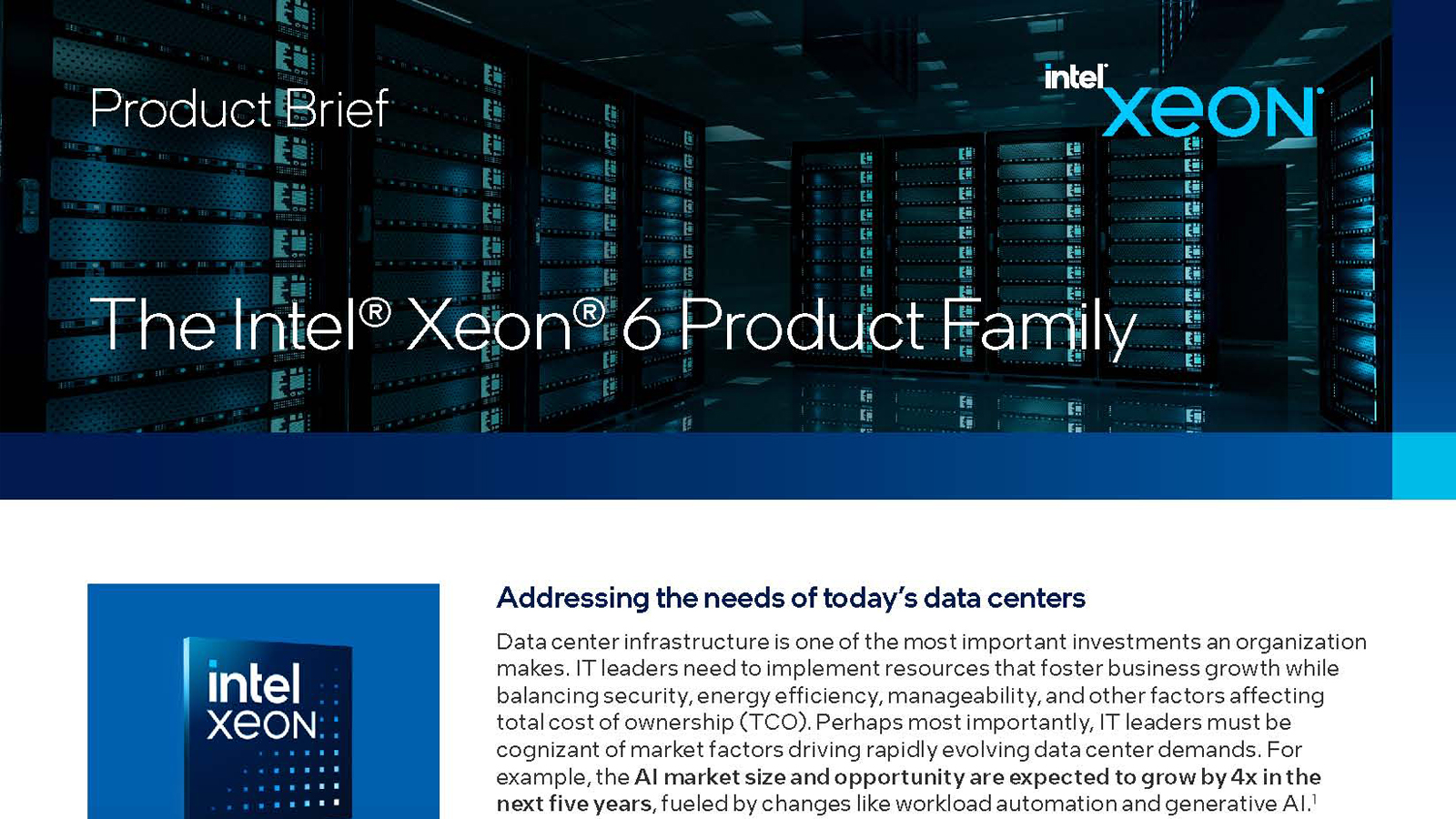
At the silicon level, the platform leverages Intel Xeon 6 processors. These processors are designed for the density and performance requirements of modern enterprise workloads. A key advantage of the Xeon 6 is the integration of Intel AMX (Advanced Matrix Extensions), which provides built-in AI acceleration.
The inclusion of Intel AMX means that organizations running generative AI or inference workloads within their sovereign environment do not necessarily need to introduce separate, specialized AI infrastructure. The compute foundation itself can handle these tasks, ensuring that AI execution remains within the customer-controlled environment.
Key Takeaways: Microsoft Sovereign Private Cloud
- Massive Scale: Now supports deployments of up to thousands of servers within a single sovereign boundary.
- Total Control: Runs on customer-owned hardware, ensuring jurisdictional control over data and operations.
- Connectivity Flexibility: Operates in connected, intermittently connected, or fully disconnected modes.
- AI Ready: Supports high-performance GPUs and Intel Xeon 6 processors with built-in AI acceleration (Intel AMX).
- Resiliency: Uses expanded fault domains and infrastructure pools to prevent service outages at scale.
As digital sovereignty becomes a cornerstone of national security and corporate governance, the ability to merge the scale of the cloud with the security of private hardware will be a defining trend in enterprise IT. For the organizations currently navigating these regulatory waters, the shift toward thousand-node sovereign environments represents a path toward modernization without the compromise of jurisdictional risk.
Further updates regarding the expansion of the Azure Local solution catalog and new hardware validations are expected as more sovereign cloud partners integrate with the platform. For organizations looking to evaluate these capabilities, official documentation and solution catalogs are available through Microsoft’s sovereign cloud portal.
Do you think the shift toward sovereign clouds will unhurried the adoption of public AI tools in government? Share your thoughts in the comments below.
Worth a look