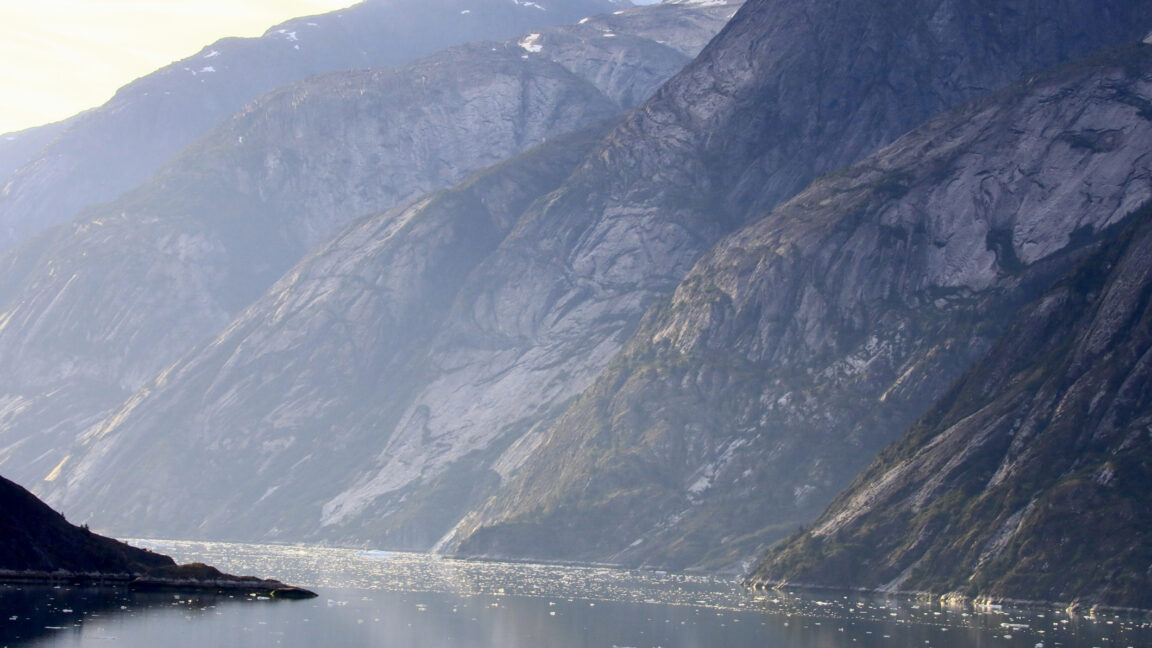
A massive landslide in a remote Alaskan fjord has triggered what scientists are calling the second-tallest tsunami ever recorded in history. The event, which occurred in August 2025, sent a wall of water nearly 500 meters high surging across the landscape, serving as a stark reminder of the volatility of glacial regions in a warming climate.
The Alaska megatsunami was generated when a colossal volume of rock—approximately 64 million cubic meters—collapsed into the waters of Tracy Arm Fjord. To put the scale of this displacement into perspective, the volume of rock that plunged into the sea is equivalent to roughly 24 Great Pyramids of Giza according to a recent scientific analysis.
While the sheer power of the event was catastrophic to the local geography, the disaster resulted in no reported injuries or fatalities. Experts attribute this outcome to the timing of the collapse, which occurred in the early hours of the morning, effectively sparing the tourist cruise ships that frequently navigate the region’s icy waters.
The Anatomy of a Megatsunami
Unlike traditional tsunamis, which are typically triggered by large-scale tectonic shifts or underwater earthquakes in the open ocean, this event was a “megatsunami” caused by a localized landslide. These events occur when a massive amount of debris—such as loose rock or ice—suddenly enters a confined body of water, like a narrow fjord, displacing the water column with extreme violence.

In this specific instance, the rockfall occurred near the South Sawyer Glacier in Southeast Alaska. The sudden plunge of 64 million cubic meters of rock into the deep waters created a localized but devastating wave that reached a height of almost 500 meters as reported by the BBC. Because these waves are generated by landslides rather than seismic shifts, they tend to be more localized and dissipate more quickly than the trans-oceanic tsunamis that can strike distant coastlines.
A ‘Close Call’ for the Tourism Industry
Tracy Arm Fjord is a major draw for international tourists, known for its sheer cliffs and dramatic icy terrain. The fact that the landslide occurred when the fjord was largely empty of vessels is being viewed by geologists as a stroke of luck.
Dr. Bretwood Higman, an Alaskan geologist who inspected the damage at the site, described the event as a “close call.” Highlighting the danger to human life, Higman noted that some individuals were very nearly in the wrong place at the wrong time. “I’m quite terrified that we’re not going to be so lucky in the future,” Higman stated in an interview regarding the devastation.
Climate Change and Glacial Instability
The August 2025 event has sparked renewed concern among scientists regarding the stability of mountain slopes in glacial regions. As glaciers melt due to rising global temperatures, the ice that once provided structural support to the surrounding rock walls disappears, leaving behind steep, unstable cliffs prone to collapse.

This process increases the risk of landslide-generated tsunamis in fjords across the Arctic and Antarctic regions. The Tracy Arm event, while remaining largely unreported when it first happened, has now become a critical case study for researchers analyzing how melting glaciers contribute to geological hazards.
By reconstructing the event through scientific analysis, researchers hope to better predict which areas are most at risk. The scale of this wave—ranking as the second tallest ever recorded—underscores the potential for sudden, high-impact events in regions that are increasingly accessible to tourism and industry.
For those traveling to or working in the Alaskan wilderness, officials recommend staying updated on geological advisories and following all local safety guidelines regarding fjord navigation and coastal proximity.
As scientific analysis continues to unfold, the global community awaits further data on slope stability in the region to determine if similar risks exist in other high-traffic tourist fjords. We encourage readers to share this story and leave their thoughts in the comments section below.
Keep reading