
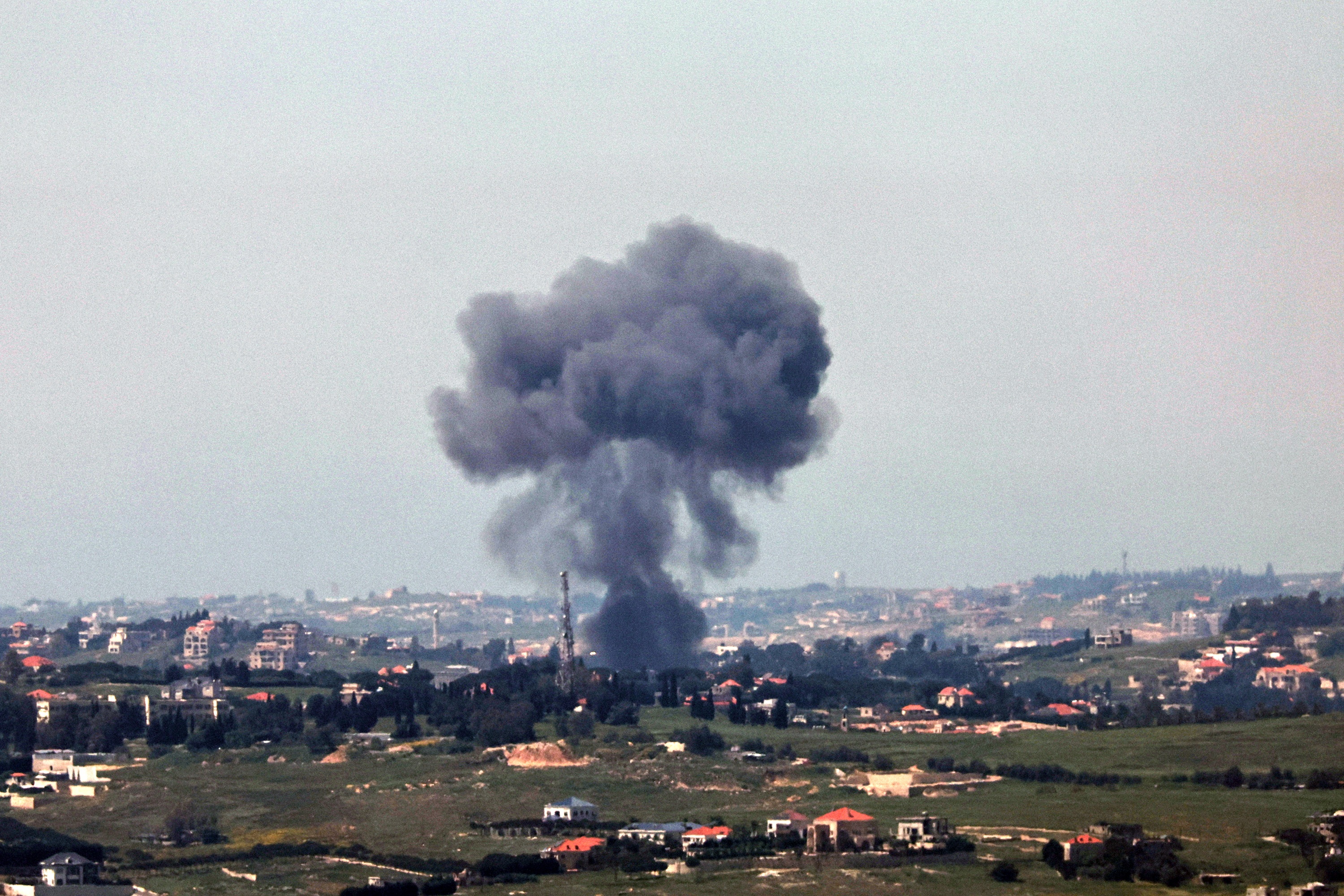
The fragile security landscape in the Southern Levant has deteriorated sharply this week as a surge of Israeli airstrikes targeted multiple locations across southern and eastern Lebanon. These operations, which have intensified over the last 48 hours, signal a significant erosion of the U.S.-mediated ceasefire that had briefly paused the hostilities between the Israel Defense Forces (IDF) and Hezbollah.
Reports from the ground indicate that the strikes have not been limited to known militant strongholds but have extended into residential areas and eastern border villages. The escalation has triggered a new wave of displacement, as the IDF issued urgent evacuation orders for residents in several southern localities, citing imminent military operations. This pattern of “warn and strike” has become a recurring feature of the conflict, yet the scale of the current displacement suggests a shift toward more aggressive territorial objectives.
The human cost of this latest escalation is stark. According to reports from Lebanese health officials, at least six people were killed in the recent wave of attacks. Most concerning to international observers is the death of two paramedics who were targeted while providing emergency medical assistance to wounded civilians. The killing of first responders is a grave development that risks further destabilizing the region and complicating humanitarian efforts in the conflict zones.
As the diplomatic efforts to maintain the ceasefire falter, the cycle of retaliation has accelerated. Hezbollah has claimed responsibility for three separate operations targeting Israeli military positions in response to the airstrikes. This tit-for-tat dynamic suggests that neither side currently sees a viable diplomatic off-ramp, leaving the civilian populations of southern Lebanon and northern Israel in a state of constant peril.
Escalation in Southern Lebanon: A Fragile Ceasefire Under Fire
The current volatility is not an isolated incident but the result of a systemic failure in the recent ceasefire agreement. For weeks, international mediators, led by the United States, attempted to establish a sustainable boundary that would prevent Hezbollah from launching rockets while curbing Israeli incursions. However, the recent strikes in the south and east of Lebanon demonstrate that the “de-escalation” phase has effectively collapsed.

The geography of the attacks is particularly telling. While southern Lebanon has long been the primary theater of conflict, the extension of strikes into eastern regions suggests that the IDF is attempting to disrupt Hezbollah’s logistics and supply chains, which are often routed through the Bekaa Valley and eastern border corridors. By expanding the target zone, Israel appears to be attempting to create a wider “buffer” of instability to prevent the group from reorganizing its frontline defenses.
Military analysts suggest that these strikes are likely intended to degrade Hezbollah’s command-and-control capabilities before a potential larger-scale ground operation. The precision of the strikes, combined with the breadth of the targeted areas, indicates a high level of intelligence integration and a willingness to risk a total collapse of the diplomatic process to achieve tactical military goals. Recent reports from Reuters highlight how this shift in strategy has left regional diplomats scrambling to prevent a full-scale war.
Forced Displacement and IDF Evacuation Orders
One of the most disruptive elements of the current escalation is the IDF’s demand for the immediate evacuation of nine specific towns in southern Lebanon. These evacuation orders are typically delivered via social media, leaflets, or direct warnings, urging civilians to leave their homes to avoid becoming “collateral damage” in upcoming strikes.
While the IDF frames these orders as a humanitarian measure to protect non-combatants, the reality on the ground is one of chaos. Thousands of civilians are once again fleeing their homes, often with nothing more than the clothes on their backs, heading north toward Beirut or the Bekaa Valley. This creates an immense burden on Lebanon’s already crippled infrastructure and healthcare system, which is struggling to accommodate a growing population of internally displaced persons (IDPs).
The psychological impact of these orders is profound. For many residents of the south, this is the third or fourth time in recent years they have been forced to abandon their land. The recurring cycle of evacuation and return has eroded the social fabric of these border villages, turning once-thriving agricultural communities into ghost towns. Associated Press reporting emphasizes that the lack of safe corridors for evacuation often leaves civilians trapped between advancing military lines and active strike zones.
- Ceasefire Collapse: A U.S.-mediated ceasefire has largely eroded following a wave of Israeli strikes in southern and eastern Lebanon.
- Civilian Displacement: The IDF has ordered the evacuation of nine southern towns, leading to renewed mass displacement of civilians.
- Casualty Reports: At least six deaths have been confirmed, including two paramedics, raising alarms over the protection of first responders.
- Retaliatory Cycle: Hezbollah has responded with three distinct operations against Israeli positions, maintaining a cycle of escalation.
- Strategic Shift: The expansion of strikes into eastern Lebanon suggests a broader effort to disrupt Hezbollah’s logistics.
The Toll on First Responders and Civilians
The death of two paramedics during the recent strikes marks a dangerous escalation in the conduct of hostilities. Under international humanitarian law, medical personnel and facilities are granted special protection, provided they are not used for military purposes. The targeting of first responders not only increases the death toll but also creates a “chilling effect” that prevents aid from reaching the wounded.
Local health authorities in Lebanon have expressed outrage over the incident, stating that the paramedics were operating in clearly marked ambulances. When first responders are killed, the survival rate for other wounded civilians drops precipitously, as rescue teams become hesitant to enter “red zones” where strikes are ongoing. This creates a vacuum of care in the most affected villages, leaving the elderly and the disabled particularly vulnerable.
Beyond the immediate casualties, the strikes have caused significant damage to civilian infrastructure. Reports indicate that homes, roads, and local utility grids in the south and east have been hit. The destruction of electricity and water pumping stations exacerbates the humanitarian crisis, making the remaining villages nearly uninhabitable. The Lebanese Health Ministry has urged the international community to intervene to ensure the safety of medical convoys and the protection of hospitals in the conflict zone.
Hezbollah’s Response and the Strategic Stalemate
Hezbollah has not remained passive in the face of the intensified airstrikes. The group has claimed to have launched three separate operations, utilizing a combination of rocket fire and drone strikes against Israeli military installations along the border. These operations are designed to demonstrate that despite the airstrikes, the group maintains its operational capacity and its ability to project power into northern Israel.
This strategic stalemate—where Israel uses its air superiority to degrade assets and Hezbollah uses asymmetrical warfare to maintain a threat—has created a “permanent state of tension.” For Hezbollah, the ability to respond to every Israeli strike is essential for maintaining its credibility both domestically and within the “Axis of Resistance.” For the IDF, the objective is to force Hezbollah to move its assets further north, away from the border, to reduce the threat of a surprise ground invasion into Israel.
However, this stalemate offers no victory for the civilians on either side. In northern Israel, thousands remain displaced from their homes, unable to return due to the constant threat of Hezbollah rockets. In southern Lebanon, the population lives under the shadow of drones and the constant threat of evacuation orders. The conflict has evolved into a war of attrition where the primary casualties are the displaced and the dead.
The Diplomatic Vacuum: Why the Ceasefire Failed
The failure of the U.S.-mediated ceasefire can be attributed to a fundamental lack of trust and the absence of a verification mechanism that both parties respect. While the ceasefire provided a temporary lull, it did not address the core grievances: Israel’s demand for a complete Hezbollah withdrawal from the border and Hezbollah’s demand for a permanent end to Israeli overflights and incursions.

The United States has attempted to broker a deal that balances security guarantees for Israel with sovereignty for Lebanon. However, the internal political pressures within both governments have made compromise difficult. In Israel, there is significant pressure to ensure that Hezbollah is completely neutralized as a border threat. In Lebanon, Hezbollah remains the dominant military force, and any agreement that appears to diminish its role is viewed as a surrender of national defense.
The role of the United Nations has also been limited. UNIFIL (United Nations Interim Force in Lebanon) has found itself caught in the middle, with its monitors often unable to access strike zones or verify violations of the ceasefire. Without a robust, internationally backed enforcement mechanism, any future ceasefire is likely to be as fragile as the last one.
The current situation suggests that the region is moving toward a “new normal” of intermittent, high-intensity conflict rather than a sustainable peace. The focus has shifted from preventing war to managing its escalation, a strategy that often fails to protect the most vulnerable populations.
The next critical checkpoint will be the upcoming meeting of the UN Security Council, where diplomats are expected to discuss the collapse of the ceasefire and the humanitarian situation in southern Lebanon. All eyes will be on whether a new set of parameters can be established to prevent a full-scale regional conflagration.
Do you believe a diplomatic solution is still possible in the Southern Levant, or has the cycle of retaliation become irreversible? Share your thoughts in the comments below and share this report to keep the global community informed.