
For decades, astronomers have operated under a relatively stable assumption: the mysterious force pushing the universe apart, known as dark energy, is a constant. This proves the invisible engine of cosmic expansion, acting like a steady pressure that ensures galaxies drift further away from one another at an ever-increasing rate. But a groundbreaking new project is now challenging that fundamental pillar of cosmology.
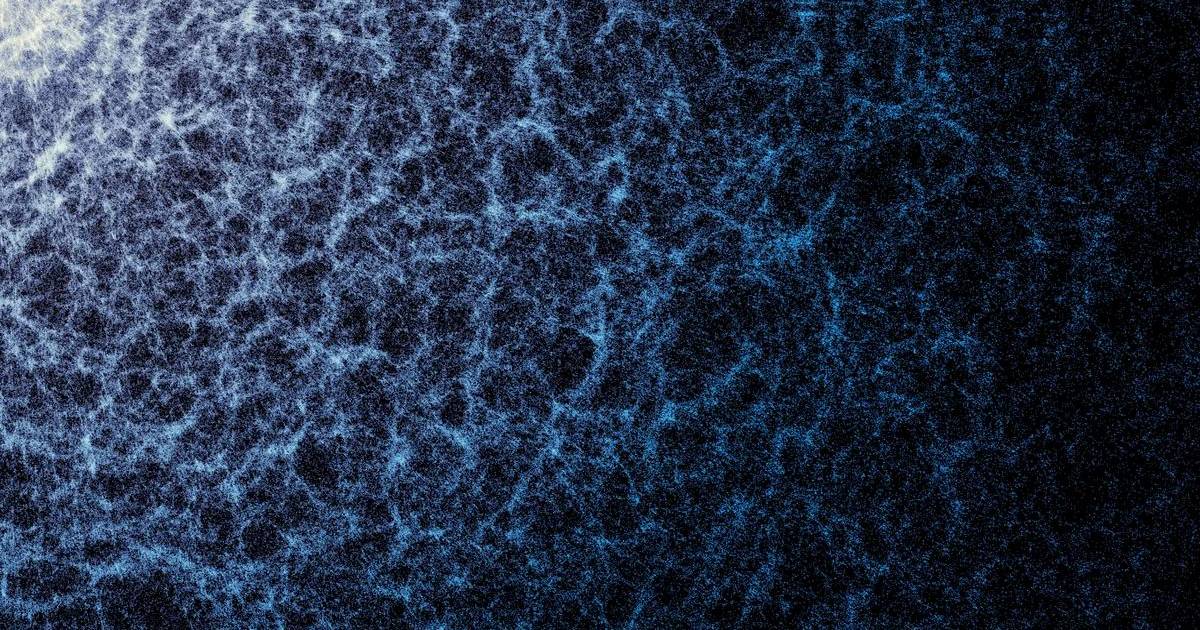
The Dark Energy Spectroscopic Instrument (DESI) has produced the largest 3D map of the universe ever constructed, and the data is revealing something unexpected. Rather than remaining a static property of space, the evidence suggests that dark energy might be evolving over time. If confirmed, this discovery would not only rewrite the textbooks on physics but fundamentally alter our understanding of how the universe will eventually end.
This cosmic cartography project is not merely about drawing a picture of the stars; it is a high-precision measurement of the geometry of space-time. By mapping the positions of millions of galaxies and quasars, researchers are attempting to decode the “expansion history” of the cosmos. The preliminary results suggest that the “cosmological constant”—the idea that dark energy’s density is uniform across time and space—might be an oversimplification.
As a technology editor with a background in computer science, I find the sheer scale of the data processing involved in DESI as impressive as the astronomical findings. To build this map, scientists are utilizing a sophisticated robotic system capable of repositioning 5,000 tiny robotic actuators in seconds to align fiber-optic cables with distant celestial objects. This is a triumph of software engineering and precision hardware working in tandem to probe the deepest mysteries of existence.
The Architecture of the Cosmos: How DESI Works
The Dark Energy Spectroscopic Instrument, or DESI, operates from the Kitt Peak National Observatory in Arizona. Unlike traditional telescopes that take a single image of a patch of sky, DESI is designed for spectroscopy. It breaks the light from millions of distant objects into a spectrum, allowing astronomers to determine the “redshift” of each galaxy. Redshift is a phenomenon where light is stretched toward longer, redder wavelengths as an object moves away from the observer, providing a direct measurement of how quick a galaxy is receding and, how far away it is.

To achieve this unprecedented scale, the instrument uses a focal plane equipped with 5,000 robotic positioners. These robots precisely place optical fibers to capture the light of specific galaxies and quasars. According to the Lawrence Berkeley National Laboratory, which leads the project, the first year of data collection has already mapped roughly 3.5 million galaxies and quasars, creating a three-dimensional representation of the universe’s large-scale structure.
The map relies on a technique known as Baryon Acoustic Oscillations (BAO). These are essentially “frozen” sound waves from the early universe—ripples in the distribution of matter that act as a “standard ruler.” By measuring the apparent size of these ripples at different epochs of cosmic history, DESI can determine the expansion rate of the universe with extreme precision. This allows scientists to track how the influence of dark energy has changed from billions of years ago to the present day.
Challenging the Cosmological Constant
Since the late 1990s, the standard model of cosmology, known as the $Lambda$CDM (Lambda Cold Dark Matter) model, has relied on the “cosmological constant” ($Lambda$). In this model, dark energy is viewed as the energy of empty space itself—a constant density that never changes, regardless of how much the universe expands. This constant pressure is what drives the accelerated expansion of the universe.

However, the latest data from the DESI collaboration’s first-year results suggests a potential deviation from this model. The findings indicate that dark energy may be dynamic, meaning its strength could fluctuate or decay over billions of years. While the statistical significance is not yet at the “5-sigma” threshold required for a definitive discovery in physics, the trend is strong enough to spark intense debate among astrophysicists.
If dark energy is indeed evolving, it means the $Lambda$CDM model is incomplete. A dynamic form of dark energy, sometimes referred to as “quintessence,” would imply that the force driving the universe’s expansion is not a property of space itself but a field that can change. This would shift our understanding of the universe from a predictable, steady acceleration to a more complex, potentially unstable system.
Redefining the End of Everything
The nature of dark energy dictates the ultimate fate of the universe. Under the current “constant” model, the most likely scenario is the “Big Freeze.” In this version of the end, the universe continues to expand forever. Galaxies move so far apart that they become invisible to one another, stars run out of fuel, and the cosmos reaches a state of maximum entropy—a cold, dark, and empty void.
But a dynamic dark energy opens up different, and perhaps more dramatic, possibilities:
- The Big Rip: If dark energy becomes stronger over time (phantom energy), the expansion could accelerate so violently that it eventually overcomes all other forces. First, galaxy clusters would be torn apart, then individual galaxies, then solar systems, and finally, atoms themselves would be ripped asunder.
- The Big Crunch: If dark energy weakens or reverses its sign, the expansion of the universe could slow down and eventually stop. Gravity would then take over, pulling all matter back together in a colossal collapse, potentially leading to another Big Bang in a cyclic process.
By mapping the universe in 3D, DESI is essentially providing the data needed to determine which of these paths we are on. The hint that dark energy is not constant suggests that the “Big Freeze” may not be the inevitable conclusion, leaving the door open for a more volatile cosmic finale.
The Road to Verification
In the world of high-stakes physics, one dataset is rarely enough to overturn a decades-old model. The DESI results are a “hint” rather than a “proof.” To confirm these findings, the scientific community is looking toward complementary data from other massive surveys. The European Space Agency’s Euclid mission, launched in 2023, is specifically designed to investigate dark energy and dark matter by mapping the geometry of the dark universe with similar precision.
the upcoming Vera C. Rubin Observatory in Chile will provide a “movie” of the sky, observing billions of galaxies over ten years. By combining DESI’s spectroscopic 3D map with Euclid’s lensing data and Rubin’s deep-sky imagery, astronomers hope to reach a definitive conclusion about the nature of dark energy.
The intersection of big data and cosmology is where the most exciting discoveries are happening. The processing power required to analyze millions of galactic spectra and compare them against theoretical models is staggering. We are moving into an era of “precision cosmology,” where the mysteries of the vacuum are being solved not just through theory, but through the sheer force of data engineering.
The next major checkpoint for this research will be the release of subsequent data years from the DESI survey, which will increase the sample size of mapped galaxies and potentially push the statistical significance of the “evolving dark energy” finding toward a confirmed discovery.
What do you think about the possibility of a changing universe? Does the idea of a “Big Rip” or “Big Crunch” change how you view our place in the cosmos? Share your thoughts in the comments below.