
For decades, the instinctive reaction to a sudden flare-up of low back pain was to retreat to bed. The prevailing wisdom suggested that the spine needed absolute stillness to heal, and that any movement risked further injury. However, modern medical science has fundamentally overturned this approach. Today, clinicians and specialists agree that prolonged bed rest is not only ineffective but can actually delay recovery and exacerbate the problem.
As a physician and health journalist, I have seen the lingering impact of this outdated advice. When patients are told to “just rest,” they often experience a cycle of muscle atrophy, joint stiffness, and an increasing fear of movement. This phenomenon, known as fear-avoidance, can transform a temporary acute episode into a chronic condition that diminishes quality of life and limits professional productivity.
The shift toward active recovery is now the gold standard in global healthcare. Managing low back pain effectively requires a transition from a passive mindset—where the patient waits for the pain to vanish—to an active one, where movement is used as the primary tool for rehabilitation. By understanding the biological and psychological drivers of back pain, individuals can navigate their recovery with confidence and evidence-based strategies.
Current clinical guidelines emphasize that for non-specific low back pain—pain not caused by a serious underlying disease or systemic infection—the goal is to return to normal activities as quickly as possible. This approach is supported by major health institutions worldwide, which advocate for staying active to maintain spinal flexibility and muscle strength.
The Danger of the ‘Rest Cure’
The idea that resting is the safest option for back pain is a medical myth that has persisted far longer than the evidence supported it. When the body remains immobile for extended periods, several negative physiological processes begin. Muscles that support the spine, including the core and the erector spinae, begin to weaken. This loss of support places more pressure on the spinal discs and ligaments, often increasing the pain once the person finally attempts to move.
inactivity affects the circulatory system and the lubrication of the joints. Movement helps circulate blood and nutrients to the damaged tissues and keeps the synovial fluid in the joints flowing, which reduces stiffness. According to the NHS, remaining as active as possible is key to recovery, as bed rest can lead to a stiffer back and weaker muscles.
Beyond the physical impact, there is a significant psychological component to prolonged rest. When a patient avoids movement out of fear that they will “break something,” the brain begins to associate movement with danger. This creates a feedback loop: the patient avoids movement, the muscles weaken, the pain increases upon the slightest activity, and the fear is reinforced. Breaking this cycle is the most critical step in long-term recovery.
The 8 Commandments for Effective Back Recovery
To combat the “rest myth,” specialists in orthopedics and physiotherapy have developed a set of guiding principles—often referred to as the “commandments” of back health—to help patients move from pain to performance. These guidelines focus on the synergy between physical activity and mental resilience.
1. Keep Moving
The most fundamental rule is to avoid total inactivity. This does not mean pushing through excruciating pain, but rather finding the “threshold of tolerance.” Low-impact activities, such as walking, are highly encouraged. Walking promotes blood flow to the lumbar region and helps maintain the natural mobility of the spine.
2. Reject Prolonged Bed Rest
While a brief period of rest (a few hours or a single night) may be necessary during an acute “lock-up” phase, staying in bed for days is counterproductive. The goal should be to transition back to a standing and walking position as soon as the initial intensity of the pain allows.
3. Challenge the Fear of Pain
It is vital to understand that pain does not always equal damage. In many cases of non-specific low back pain, the pain is a hypersensitivity of the nervous system rather than a sign of structural failure. Learning to move despite mild discomfort helps “retrain” the brain to recognize that movement is safe.

4. Prioritize Quality Sleep
Sleep is when the body performs the bulk of its tissue repair. However, pain often disrupts sleep, which in turn lowers the pain threshold the following day. Using supportive pillows—such as a pillow between the knees for side sleepers or under the knees for back sleepers—can reduce spinal pressure and improve sleep quality.
5. Manage Psychological Stress
The mind and the spine are deeply connected. Stress and anxiety can lead to muscle tension, particularly in the shoulders and lower back, which exacerbates physical pain. Techniques such as mindfulness, deep breathing, or cognitive behavioral strategies can help lower the overall systemic tension in the body.
6. Implement Gradual Loading
Recovery is not a linear jump from bed rest to a marathon. It requires a “graded exposure” approach. This means starting with gentle movements, then moving to stretching, and eventually introducing strength training. Gradually increasing the load on the spine builds resilience and prevents re-injury.
7. Maintain Social and Professional Engagement
Isolation often accompanies chronic pain, which can lead to depression and a slower recovery rate. Returning to work—even in a modified capacity—or staying socially active provides a mental distraction and a sense of normalcy that accelerates the healing process.
8. Avoid Over-Medicalization
Many patients insist on MRIs or CT scans for every episode of back pain. However, imaging often reveals “abnormalities” (such as bulging discs) that are actually common in healthy adults without pain. Over-reliance on scans can lead to “patient labeling,” where the person believes they are “broken,” further fueling the fear-avoidance cycle.
The Role of Core Stability and Flexibility
While walking is the foundation of recovery, long-term prevention requires a focus on the “internal corset”—the muscles of the core. The core is not just the abdominal muscles; it includes the diaphragm, the pelvic floor, and the multifidus muscles that stabilize the vertebrae. When these muscles are strong, they absorb the shock of daily movements, sparing the spinal discs from excessive wear.
Gentle stretching and mobility work, such as yoga or tai chi, are often recommended once the acute phase has passed. These practices focus on the relationship between breath and movement, which helps in reducing muscle guarding—the involuntary tightening of muscles around a painful area.
According to the Mayo Clinic, a combination of physical therapy, exercise, and lifestyle modifications is generally more effective than surgical intervention for the majority of low back pain cases. The focus is on improving posture, strengthening the core, and increasing flexibility to create a more resilient musculoskeletal system.
Identifying ‘Red Flags’: When Movement is Not the Answer
While the “movement is medicine” philosophy applies to the vast majority of cases, it is crucial for patients to recognize when pain is a symptom of something more serious. In these instances, immediate medical intervention is required, and activity should be paused until a diagnosis is made.
Medical professionals look for “red flags” that indicate neurological compromise or systemic illness. These include:
- Saddle Anesthesia: Numbness or tingling in the groin, buttocks, or inner thighs.
- Bladder or Bowel Dysfunction: Sudden loss of control or inability to urinate.
- Severe Neurological Deficits: Sudden weakness in the legs (e.g., “foot drop”) or loss of balance.
- Unexplained Weight Loss or Fever: This may indicate an infection or malignancy.
- Trauma: Pain following a high-impact fall or accident.
If any of these symptoms occur, it may indicate a condition such as Cauda Equina Syndrome, which is a surgical emergency. In such cases, the advice to “keep moving” is discarded in favor of urgent diagnostic imaging and specialist care.
Practical Steps for Daily Management
For those currently navigating the recovery process, integrating these principles into a daily routine can make a significant difference. The goal is to integrate movement seamlessly into the day rather than treating it as a chore.
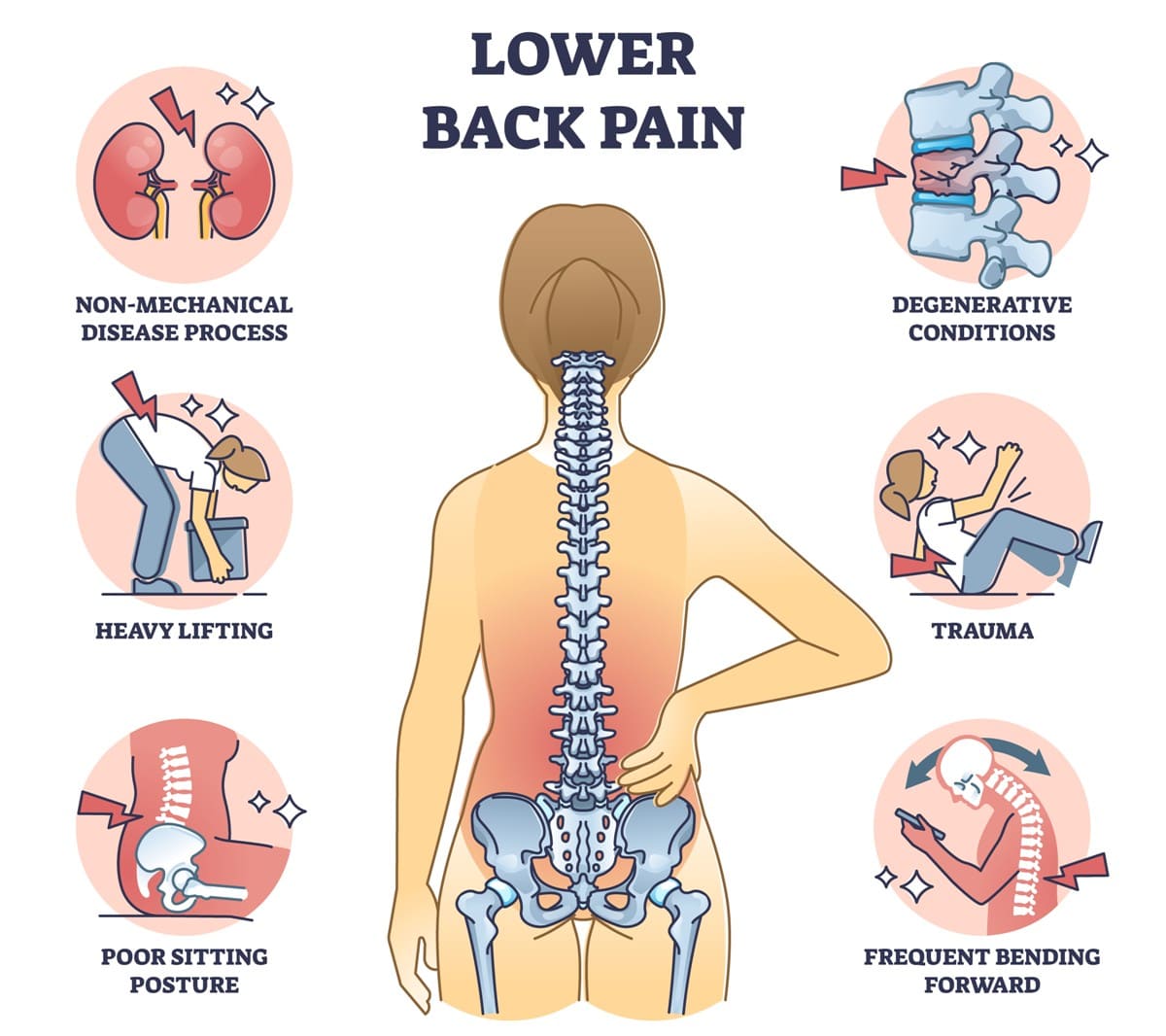
The Micro-Break Strategy: For those with sedentary jobs, the “20-20-20” rule for the back is effective. Every 20 minutes, stand up for 20 seconds and take a short 20-step walk. This prevents the spine from “setting” in a flexed position and maintains blood flow to the lumbar discs.
Ergonomic Adjustments: While no single posture is “perfect,” the key is variety. Switching between a sitting desk and a standing desk, or using a lumbar support cushion, prevents any single area of the spine from bearing the brunt of the body’s weight for too long.
Hydration and Nutrition: Spinal discs are largely composed of water. Dehydration can lead to a loss of disc height and flexibility, making the spine more prone to stiffness. A diet rich in anti-inflammatory foods—such as omega-3 fatty acids found in fish and walnuts—can also help manage the systemic inflammation associated with chronic pain.
The Path Forward: A Holistic View of Spine Health
Managing low back pain is as much a psychological journey as it is a physical one. The transition from fearing movement to embracing it is the most difficult but most rewarding part of the process. By rejecting the outdated notion of bed rest and adopting a strategy of gradual, confident activity, most people can return to their full functional capacity.
The evidence is clear: the human spine is designed for movement. It is a dynamic structure that thrives on load and activity. When we treat the back as something fragile that must be protected by stillness, we inadvertently make it more fragile. When we treat it as a resilient system capable of adaptation, we unlock the path to lasting recovery.
For those seeking further guidance, the Harvard Health Publishing resource provides comprehensive overviews on various stretching and strengthening routines tailored to different stages of back pain recovery.
The next step for those suffering from persistent pain is to consult a licensed physical therapist to create a personalized “graded exposure” plan. This ensures that the increase in activity is safe, measured, and aligned with the individual’s specific structural needs.
Do you have a strategy that helped you overcome chronic back pain? Share your experience in the comments below or share this article with someone who might still be following the outdated “rest cure.”
Related reading