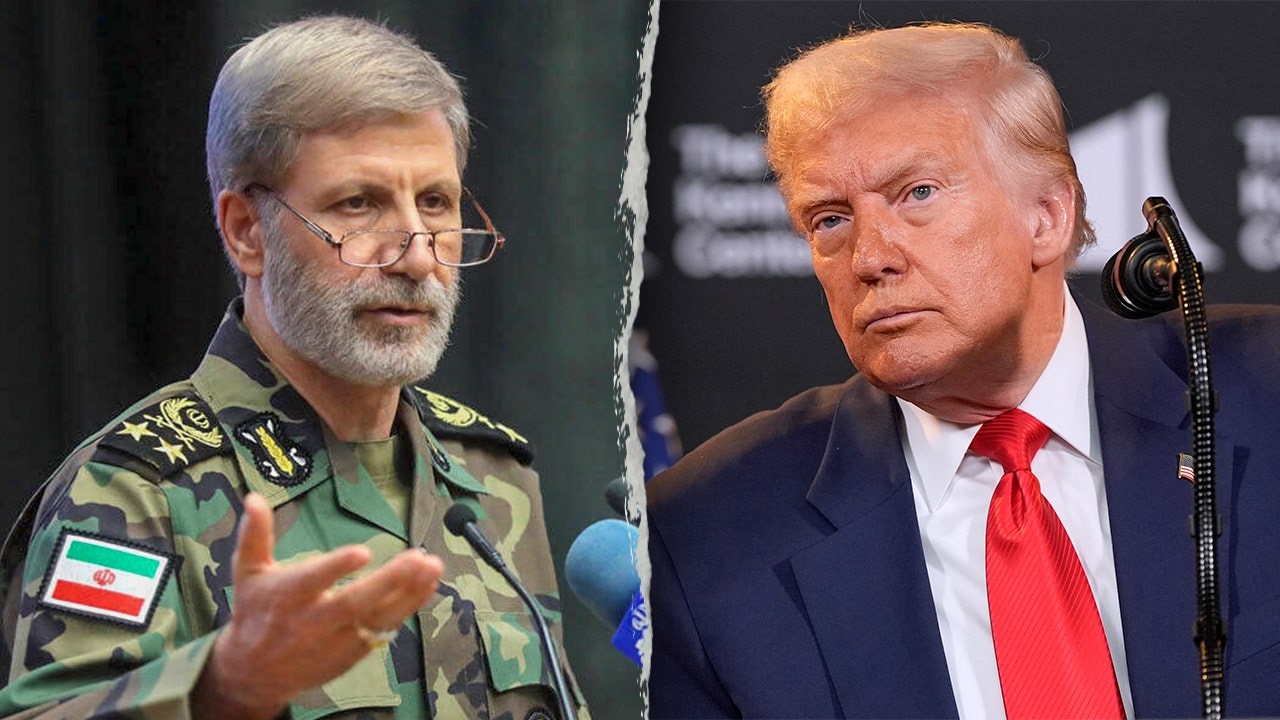
Global markets and geopolitical analysts are bracing for heightened volatility as U.S. President Donald Trump’s administration faces a critical juncture in its diplomatic standoff with Iran. With the fragile ceasefire between Washington and Tehran now described as “on life support,” White House officials and military strategists are privately evaluating whether to reopen military options—raising the specter of renewed conflict in the Middle East. The latest developments underscore the fragility of diplomatic efforts to curb Iran’s nuclear ambitions while managing regional tensions, with economists warning that even limited military escalation could trigger a sharp spike in oil prices and destabilize global supply chains.
The warning came as Trump, during a Monday Oval Office briefing, framed the current negotiations as precarious, suggesting Iran’s latest proposals—including a focus on lifting U.S. Economic sanctions before addressing nuclear enrichment—were “unacceptable.” His administration has insisted that any deal must include Iran’s complete relinquishment of its stockpile of enriched uranium, a demand Tehran has reportedly omitted from recent discussions. “The ceasefire is on massive life support,” Trump stated, adding that U.S. Intelligence assesses Iran’s leadership remains divided between “moderates and lunatics,” complicating negotiations. Meanwhile, the White House has signaled that military preparations are ongoing, with officials emphasizing that any future strikes would prioritize “denying Iran the tools it uses to escalate” over punitive retaliation.
Analysts at the International Monetary Fund (IMF) have flagged the risks of renewed hostilities, noting that even localized conflicts in the Strait of Hormuz—where Iran has previously threatened disruptions—could push Brent crude prices above $100 per barrel, triggering inflationary pressures in emerging markets. “The economic fallout from a military escalation would be immediate and severe,” warned IMF spokesperson Geraldine Morris, citing potential disruptions to 20% of global oil trade passing through the strait. Meanwhile, the U.S. Treasury has quietly accelerated sanctions enforcement against Iranian-linked entities, including those involved in the country’s drone and missile programs, as part of a broader strategy to pressure Tehran without direct confrontation.
Diplomatic Breakdown: What Went Wrong?
The collapse of recent talks can be traced to a fundamental mismatch in priorities. The U.S. Has insisted on two non-negotiables: (1) a verified freeze on Iran’s uranium enrichment program, and (2) the dismantling of its existing stockpile of enriched uranium—a demand Iran has historically resisted. According to declassified U.S. Intelligence briefings obtained by Reuters, Iranian negotiators have proposed delaying discussions on nuclear issues in exchange for partial sanctions relief, an approach the Biden administration (and now Trump’s team) has dismissed as a tactical delay. “Iran is playing for time while expanding its nuclear capacity,” said a senior State Department official, speaking on condition of anonymity.
Adding to the complexity, internal divisions within Iran’s government have surfaced in recent weeks. Hardline factions, including elements of the Islamic Revolutionary Guard Corps (IRGC), have reportedly pushed back against any concessions, while “moderate” President Ebrahim Raisi’s administration has signaled openness to limited engagement. This schism was highlighted in a leaked internal memo, obtained by The Guardian, which described infighting over whether to prioritize economic relief or nuclear negotiations. The memo, dated May 5, 2026, noted that “the regime’s survival depends on maintaining leverage over both the U.S. And its own factions.”
Trump’s administration has also faced criticism from allies, including European Union diplomats, who argue that the U.S. Blockade of Iranian oil exports—enforced through secondary sanctions on global firms—has left Tehran with few incentives to negotiate in good faith. “The current approach is unsustainable,” said EU Foreign Policy Chief Josep Borrell in a statement last week. “We need a phased approach that addresses both nuclear and economic concerns simultaneously.” The White House has not responded directly to Borrell’s remarks but has reiterated its stance that Iran must demonstrate tangible concessions before any sanctions are lifted.
Military Posture: Preparing for the Worst?
While Trump has not authorized new military strikes, U.S. Central Command (CENTCOM) has reportedly increased rotational deployments of B-52 bombers and carrier strike groups in the Gulf region. A Pentagon spokesperson confirmed earlier this week that “routine exercises” are underway but declined to specify their scale or purpose. Meanwhile, Iranian state media has amplified rhetoric warning of retaliation, with Supreme Leader Ayatollah Ali Khamenei’s office calling the U.S. “the greatest threat to regional stability.”
Military analysts suggest that any renewed conflict would likely begin with targeted strikes on Iranian missile and drone production facilities, as well as command-and-control nodes linked to the IRGC’s Quds Force. However, the risks of escalation remain high: Iran’s asymmetric capabilities—including proxy networks in Iraq, Syria, and Yemen—could draw the U.S. Into prolonged engagements. “The playbook for 2026 is not 2018,” said retired U.S. Marine Corps General Joseph Dunford, who served as Chairman of the Joint Chiefs under Trump. “Iran has learned from past strikes and is now more dispersed and resilient.”
Economically, the implications are stark. The World Bank estimates that a 30-day conflict could reduce global GDP growth by 0.3 percentage points, with emerging markets—particularly in Asia—bearing the brunt. Commodity traders are already pricing in volatility, with gold futures surging 4% in anticipation of safe-haven demand. “Investors are treating this as a binary risk: either de-escalation or a sharp market correction,” said Commerzbank analyst Sarah Johnson.
What’s Next: The Path Forward
With no immediate signs of a diplomatic breakthrough, attention is turning to three potential outcomes:

- De-escalation: A last-minute compromise could emerge if Iran agrees to freeze uranium enrichment in exchange for limited sanctions relief, though Trump’s team has signaled skepticism about such an outcome.
- Limited strikes: The U.S. Could launch precision airstrikes on Iranian military sites, aiming to degrade capabilities without triggering full-scale war. This scenario carries high risks of miscalculation.
- Prolonged stalemate: Both sides dig in, with economic warfare (sanctions vs. Oil disruptions) dominating the conflict landscape, as seen in the past year.
The next critical checkpoint is Trump’s scheduled summit with Chinese President Xi Jinping in Beijing, where the two leaders are expected to discuss Iran as part of broader trade and security negotiations. A joint statement from the meeting could provide clues about whether China—Iran’s largest trade partner—will use its leverage to push Tehran toward compromise. Meanwhile, the U.S. Congress is set to vote on a resolution later this month urging the administration to “pursue diplomatic solutions” to the Iran standoff, though its binding power remains unclear.
For businesses and investors, the advice from risk consultants is clear: diversify exposure to Middle Eastern assets, monitor oil price movements closely, and prepare for potential supply chain disruptions. The Financial Times’s geopolitical risk index has already spiked 12% in the past week, reflecting heightened uncertainty.
Key Takeaways
- Diplomatic deadlock: The U.S.-Iran ceasefire is at risk of collapse, with Iran rejecting U.S. Demands on uranium stockpiles and sanctions relief.
- Military posturing: U.S. And Iranian forces are in heightened alert, with CENTCOM and IRGC both signaling readiness for potential conflict.
- Economic fallout: Oil markets and global supply chains face disruption risks, with analysts warning of inflationary pressures.
- China’s role: The upcoming Trump-Xi summit could be pivotal in determining whether Beijing uses its influence to mediate.
- Congressional oversight: Lawmakers are set to debate Iran policy, though legislative action may be limited.
- Investor alert: Commodities, particularly oil and gold, are being watched for volatility signals.
As the situation evolves, World Today Journal will continue to provide updates on diplomatic developments, military movements, and economic impacts. For official statements from the U.S. State Department, visit state.gov. The next scheduled briefing from the White House Press Secretary is set for May 15, 2026, where further details on Iran negotiations may be announced.
What do you think: Is diplomacy still possible, or are we heading toward confrontation? Share your views in the comments below, and don’t forget to follow World Today Journal for real-time updates on this developing story.
- Maison Loustalet: New Delicatessen Opens in Villefranche-de-Lauragais
- Claressa Shields Addresses Relationship with Papoose Amid Remy Ma Divorce Controversy
- Trump Legal Team Defends Accountability Efforts Amid Ongoing Proceedings (world-today-news.com)
- US Warns Citizens to Leave Middle East Amid Potential Iran Escalation (newsdirectory3.com)