
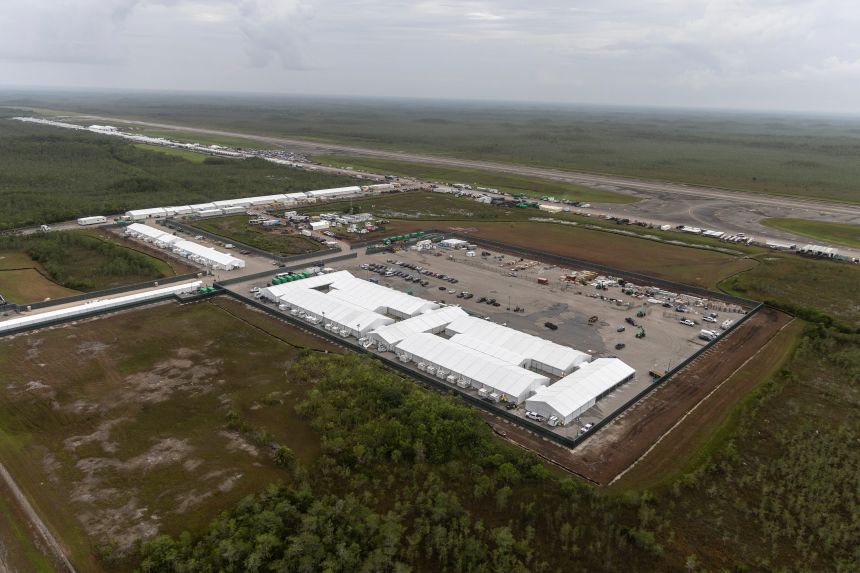
Florida’s notorious Alligator Alcatraz migrant detention center, a facility that once symbolized the state’s hardline immigration policies, is set to close by early June 2026, according to multiple sources with direct knowledge of the operation. The announcement, delivered to vendors at the site on Tuesday, marks the end of a controversial chapter in Florida’s immigration enforcement efforts—a facility that cost the state hundreds of millions of dollars to build and operate since its opening last July.
The decision to shutter the center, located deep in the Everglades near Miami, comes as state officials acknowledge the facility’s escalating costs and shifting federal priorities. Governor Ron DeSantis, who championed the center as a model for other states, has indicated the closure is imminent, though details about the fate of the approximately 1,400 detainees currently held there remain unclear. The facility’s rapid demobilization—including the removal of fencing, trailers, and other infrastructure—is expected to begin within weeks of the last detainee’s departure.
What began as a politically charged symbol of Florida’s stance on immigration has now become a financial and operational liability. The closure raises critical questions about the future of migrant detention in the state, the role of private vendors in such operations, and whether other facilities will face similar scrutiny. Here’s what we know about the shutdown, its implications, and what happens next.
Alligator Alcatraz: A Facility Built on Controversy
The Alligator Alcatraz detention center, officially operated by Florida’s Division of Emergency Management, opened on July 3, 2025, in a remote section of the Everglades near Homestead. The facility was designed to hold up to 1,500 migrants and was initially praised by then-President Donald Trump as a model for other states to emulate. However, the center quickly became a lightning rod for criticism over its location, operating costs, and conditions for detainees.
Key Statistics:
- Current detainee population: Approximately 1,400 (as of April 2026)
- Estimated total operating cost: Nearly $1 billion since opening
- Expected closure timeline: Final detainees removed by early June 2026; full demobilization to take 2–3 weeks
- Future use: Site to be repurposed as a compact airport for pilot training
The facility’s nickname, Alligator Alcatraz, reflects both its remote location and the harsh conditions detainees faced. While the state has not publicly detailed specific complaints about detainee treatment, reports from advocacy groups and legal challenges have raised concerns about overcrowding, limited medical care, and the psychological impact of detention in an isolated, swampy environment.
“If we shut the lights out tomorrow, we will be able to say it served its purpose.”
The governor’s remarks came just days before vendors were formally notified of the closure, suggesting the decision had been under discussion for some time. The facility’s high operational costs—estimated at nearly $1 billion—have reportedly been a primary driver for the shutdown. While the state has not provided a detailed breakdown of expenses, sources familiar with the operation have indicated that maintaining the remote facility in the Everglades has proven far more costly than initially projected.
Why Is Alligator Alcatraz Closing?
The closure of Alligator Alcatraz can be attributed to three primary factors: escalating costs, shifting federal priorities, and operational challenges. Here’s a breakdown of each:
1. Financial Burden
The facility’s operating costs have spiraled well beyond initial projections. While exact figures remain undisclosed, sources indicate the state has spent hundreds of millions on construction, staffing, and maintenance since the center opened. The remote location in the Everglades—accessible only by air or a lengthy drive through swampland—has required significant infrastructure investments, including temporary housing for staff, specialized security measures, and logistical support for vendors.
the facility’s reliance on private contractors for food, medical services, and security has created a complex web of expenses that state officials now describe as unsustainable. With no clear path to recoup these costs through federal reimbursements, Florida officials have determined the facility is no longer financially viable.
2. Federal-State Tensions
Tensions between Florida and the federal government over immigration policy have played a significant role in the facility’s fate. While Governor DeSantis initially positioned Alligator Alcatraz as a state-led solution to federal inaction, the facility’s operation has increasingly been at odds with the Biden administration’s detention policies. The federal government, which ultimately controls immigration enforcement, has shown little interest in expanding the facility’s capacity or extending its contract.
Sources close to the discussions indicate that federal officials have made it clear they prefer to consolidate detainees in existing facilities rather than support the costly expansion of new centers. This shift in federal priorities has left Florida with few options for continuing operations at Alligator Alcatraz without significant additional state funding.
3. Operational Challenges
The facility’s remote location has created logistical nightmares. Detainees have faced delays in legal proceedings due to the difficulty of transporting them to courts in Miami or other urban centers. Medical emergencies have required airlifts to nearby hospitals, adding to costs and raising ethical concerns about the quality of care available on-site.
the facility’s isolation has made it difficult to recruit and retain staff. Vendors and contractors have reportedly struggled with the harsh working conditions, including extreme heat, limited amenities, and the psychological toll of working in a detention center surrounded by alligators and wildlife. These challenges have contributed to higher-than-expected turnover rates and increased training costs.
What Happens to the Detainees?
The most pressing question surrounding the closure is the fate of the approximately 1,400 detainees currently held at Alligator Alcatraz. State and federal officials have not yet provided a detailed plan, but several scenarios are under consideration:

- Transfer to Other Federal Facilities: The most likely outcome is that detainees will be moved to existing federal detention centers across Florida and other states. The U.S. Immigration and Customs Enforcement (ICE) operates numerous facilities in Florida, including centers in Miami, Orlando, and Tampa.
- Deportation: Some detainees may be prioritized for deportation, particularly those with no legal claims or pending asylum cases. However, legal challenges and processing delays could slow this process.
- Release or Alternative Placement: A small number of detainees may be released into communities with support from nonprofits or transferred to alternative housing arrangements, though this is expected to be the least common outcome.
Officials have not specified how detainees will be selected for these different paths, but sources suggest that legal status, public safety concerns, and operational capacity at receiving facilities will be key factors. The transfer process is expected to begin immediately and continue through early June, with the goal of emptying the facility by the end of the month.
Meanwhile, the site itself will undergo a rapid demobilization process. Within weeks of the last detainee’s departure, crews will begin removing fencing, temporary housing units, and other structures. The state has announced plans to repurpose the site as a small airport for pilot training, though no details have been released about which organization will oversee the transition.
Who Is Affected and How?
The closure of Alligator Alcatraz will have ripple effects across multiple groups, each with distinct concerns:
Detainees
Approximately 1,400 individuals currently held at the facility face uncertainty about their legal status, living conditions, and potential deportation. Advocacy groups have expressed concerns about the humane treatment of detainees during transfers and the risk of separation from legal counsel or support networks.
Vendors and Contractors
Hundreds of workers—including security personnel, medical staff, and logistics providers—will lose their jobs or face reassignment. The sudden closure has left many vendors scrambling to secure alternative contracts, and some have reported not being notified of the decision until hours before the announcement.
Florida Taxpayers
State residents will ultimately bear the financial burden of the facility’s closure, including the costs of demobilization and potential legal settlements if detainees or advocacy groups sue over conditions or transfers.
Local Communities
Residents near the Everglades site have mixed reactions. Some welcome the closure as an end to a controversial facility, while others fear increased traffic or environmental disruption during the demobilization process.
Federal Government
ICE and other federal agencies will determine how to absorb the detainees and whether to seek reimbursement from Florida for costs incurred during transfers. The closure may also influence future state-federal negotiations on immigration enforcement.
Legal Challenges and Political Fallout
The closure of Alligator Alcatraz does not mark the end of legal battles over Florida’s immigration policies. While the facility itself is shutting down, the broader questions about the state’s role in migrant detention remain unresolved. Here’s what to watch:

- Ongoing Lawsuits: Multiple lawsuits have been filed against the state and private contractors over conditions at the facility. These cases may now shift focus to detainee transfers and post-detention support.
- Federal Oversight: The Department of Homeland Security has indicated it will “continuously evaluate” detention needs, suggesting that Florida’s closure could prompt a review of other state-run facilities.
- Political Implications: Governor DeSantis’s decision to close the facility—despite his initial support for it—could be seen as a strategic move ahead of the 2024 election cycle, where immigration remains a contentious issue.
Legal experts suggest that the closure may also set a precedent for other state-run detention centers, particularly in conservative states that have expanded their roles in immigration enforcement. If Florida can no longer sustain the costs, other states may reconsider similar facilities.
Key Takeaways
Where to Find Official Updates
For the latest information on the closure of Alligator Alcatraz and the fate of detainees, residents and stakeholders should monitor the following sources:
- Florida Division of Emergency Management – Official updates on facility closure and demobilization.
- U.S. Immigration and Customs Enforcement (ICE) – Information on detainee transfers and federal detention policies.
- Governor Ron DeSantis’ Office – Statements on the closure and future immigration enforcement strategies.
- U.S. Department of Homeland Security – Updates on federal detention needs and potential policy changes.
- American Civil Liberties Union (ACLU) – Legal updates and advocacy efforts related to detainee rights.
The Road Ahead
The closure of Alligator Alcatraz marks the end of an era in Florida’s immigration enforcement strategy. What began as a politically charged symbol of defiance against federal policies has become a financial and operational liability. While the facility’s shutdown raises questions about the future of migrant detention in the state, it also offers an opportunity to reassess the human and financial costs of such centers.
For detainees, the next few weeks will be critical. Transfers to other facilities or deportation proceedings will determine their immediate future, while advocacy groups will continue to monitor conditions and push for accountability. For Florida, the closure presents a chance to re-evaluate its role in immigration enforcement and whether other detention centers face similar scrutiny.
One thing is certain: the story of Alligator Alcatraz is not over. As detainees are relocated and the site is repurposed, legal battles, political debates, and financial reckonings will continue to unfold. The next official checkpoint will be the completion of detainee transfers by early June, followed by the demobilization of the facility. Updates from Florida’s Division of Emergency Management and ICE will be essential for tracking progress.
We welcome your insights and questions about the closure of Alligator Alcatraz. Share your thoughts in the comments below or share this article to help others stay informed.
*Embedded video: Visual tour of Alligator Alcatraz detention facility (archival footage)