
Sofia, Bulgaria — May 13, 2026
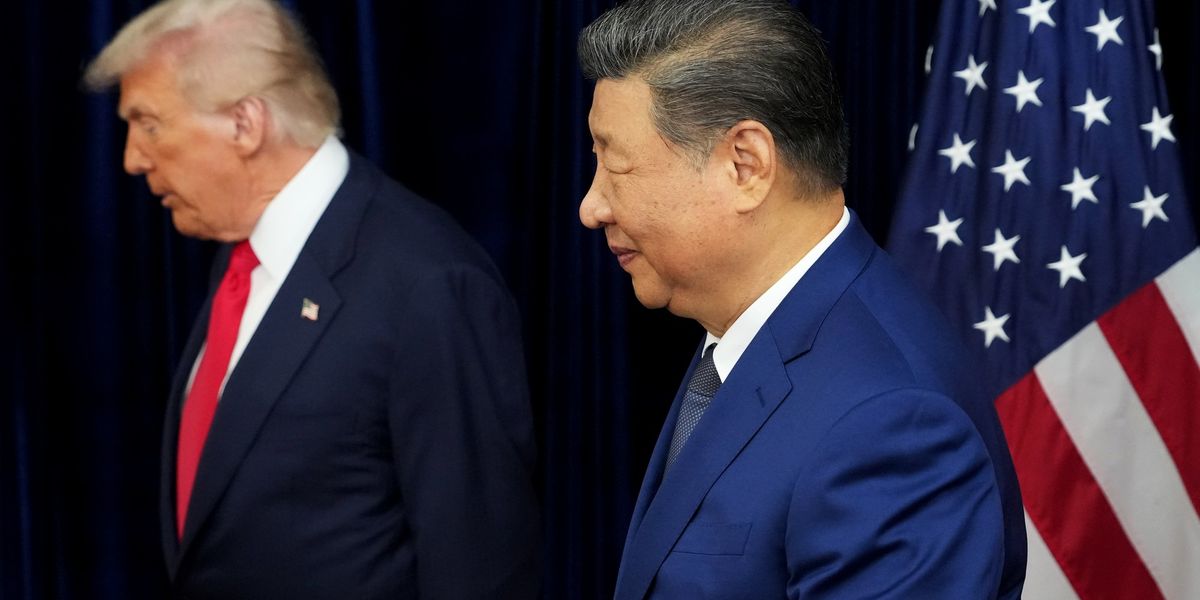
When President Donald Trump arrives in Beijing later this month, he will face a leader whose political philosophy and operational style could scarcely be more different from his own. Xi Jinping, China’s president since 2013, embodies the cold, calculating detachment of Machiavelli’s Prince, while Trump’s leadership is defined by instinctive charisma and a transactional approach to power. Their meeting is not merely a diplomatic encounter—This proves a clash of two radically distinct visions of governance, each convinced of their nation’s manifest destiny and their own unique mastery of global power dynamics.
Trump, the quintessential American populist, thrives on the energy of crowds, instinctively reading their emotions and channeling them into political momentum. Xi, by contrast, operates from a position of iron discipline, where morality is subordinate to strategic advantage and opponents are eliminated with methodical precision. Their summit could reshape the post-World War II order—or plunge the world into uncharted territory. The stakes are higher than ever.
This is not the first time history’s most powerful men have clashed in such a stark contrast of personalities. From Nixon’s 1972 visit to Mao Zedong—a meeting that transformed global geopolitics—to the disastrous miscalculations of Hitler and Stalin, the outcomes have ranged from epochal breakthroughs to catastrophic missteps. With Trump and Xi at the helm, the world watches to see whether their summit will echo the success of Beijing 1972 or the failures of Munich 1938.
President Trump’s visit to China marks his first trip to Beijing in nearly a decade, following a period of deepening tensions over trade, technology and Taiwan. The White House has confirmed the summit will focus on economic cooperation, though underlying strategic rivalries remain unresolved.
Why This Summit Matters: The Clash of Leadership Styles
The contrast between Trump and Xi is not merely personal—it reflects fundamental differences in how power is wielded in the 21st century. Trump’s leadership is rooted in transactional dealmaking, where alliances are forged through mutual benefit and personal rapport. Xi’s approach, by contrast, is rooted in long-term strategic control, where loyalty is enforced and dissent is preemptively neutralized. Both men believe their nations are destined to dominate the global stage, but their methods could not be more divergent.

Trump’s public persona—flamboyant, unpredictable, and deeply attuned to the mood of his audience—stands in sharp contrast to Xi’s disciplined, behind-the-scenes leadership. Where Trump seeks to dominate through spectacle, Xi orchestrates power through meticulous planning. Their clash is not just between two leaders but between two competing models of governance: one that thrives on spontaneity and the other on absolute control.
The Machiavellian and the Charismatic: A Dangerous Alchemy
Xi Jinping’s leadership style is often described as Machiavellian—not in the pejorative sense, but in the original philosophical framework. Machiavelli’s Prince argues that a ruler must prioritize the survival and expansion of their state above all else, including moral considerations. Xi’s China operates on this principle: internal dissent is crushed, economic rivals are outmaneuvered, and geopolitical opponents are isolated through a combination of economic leverage and ideological control.

Trump, meanwhile, embodies the charismatic leader archetype. His ability to connect with masses—whether through rallies, social media, or one-on-one interactions—has been a defining feature of his political career. Unlike Xi, who rarely deviates from scripted public appearances, Trump’s leadership is defined by improvisation, emotional resonance, and a willingness to challenge conventional wisdom. His presidency has been marked by a rejection of institutional norms, a trait that both energizes his base and alarms his critics.
When these two styles collide, the potential for both breakthrough and disaster is immense. Historically, such mismatches have led to transformative outcomes—Nixon’s opening to China in 1972 being the most celebrated example—or catastrophic failures, such as the Munich Agreement of 1938, where misjudged charisma led to appeasement and ultimately war.
A Shared Vision, Divergent Paths
Despite their differences, Trump and Xi share a fundamental belief: the existing global order, shaped by the victors of World War II, is no longer sufficient to meet their nations’ ambitions. Both have expressed skepticism toward multilateral institutions like the United Nations and NATO, instead advocating for a G-2 dynamic—a direct U.S.-China relationship that bypasses traditional alliances.

Trump has repeatedly framed this vision as a “G-2” between the U.S. And China, suggesting that the two superpowers should dictate the rules of global engagement. Xi, while less explicit, has pursued a similar strategy through economic statecraft, using China’s growing influence to reshape international norms in favor of Beijing’s interests. Their mutual disdain for the post-WWII order creates both opportunity and peril: if they can align on a new framework, it could stabilize global relations. If they fail, the result could be a fragmented, unstable world.
Both leaders also share a belief in their nations’ exceptionalism. Xi’s “Great Rejuvenation of the Chinese Nation” mirrors Trump’s “Make America Great Again”, reflecting a shared conviction that their countries are destined to reclaim their rightful place at the center of global power. The question is whether they can reconcile these visions—or whether their clash will define the 21st century.
The Spectacle of Power: Parades, Performances, and the Politics of Display
Neither Trump nor Xi is averse to using spectacle as a tool of governance. Trump’s military parades—such as the 2017 Independence Day celebration in Washington—are designed to project strength and unity, while Xi’s National Day parades in Beijing showcase China’s military and technological prowess. Both men understand the power of performance: Trump through direct engagement with crowds, Xi through carefully choreographed displays of state power.
Yet their approaches could not be more different. Trump’s rallies are spontaneous, emotional, and often improvisational, reflecting his instinctive connection with his audience. Xi’s public appearances are meticulously planned, every gesture and word calculated to reinforce his authority. Where Trump seeks to be the spectacle, Xi prefers to direct it.
This divergence extends to their handling of domestic politics. Trump’s leadership is marked by a willingness to challenge institutional norms, while Xi’s China is defined by its guanxi (relationship-based) system, where loyalty is enforced through a combination of ideological control and economic incentives. The contrast is stark: one leader thrives on disruption, the other on stability.
Historical Precedents: Lessons from the Past
The Trump-Xi summit is not the first time two leaders with such divergent styles have shaped global history. The most famous example is Richard Nixon’s 1972 visit to Mao Zedong, which marked the beginning of U.S.-China rapprochement and fundamentally altered the Cold War landscape. Nixon’s charisma and willingness to engage with an ideological adversary allowed him to achieve what many thought impossible.

Yet history also offers cautionary tales. The Munich Agreement of 1938, where British Prime Minister Neville Chamberlain’s misplaced trust in Adolf Hitler’s charisma led to the dismemberment of Czechoslovakia, serves as a warning about the dangers of underestimating a Machiavellian adversary. Similarly, the Nazi-Soviet Pact of 1939—where Hitler’s charm deceived Stalin into a temporary alliance—demonstrates how even the most ruthless leaders can be outmaneuvered by those who understand the dynamics of power.
Trump and Xi’s summit will be watched closely for signs of whether their meeting will follow the path of Nixon-Mao or the missteps of Chamberlain-Hitler. The outcome could redefine global power structures—or plunge the world into a new era of instability.
What’s Next? The Road Ahead
The Trump-Xi summit is expected to focus on several key areas, including:
- Economic Cooperation: Discussions on trade, technology transfers, and investment could ease tensions—but only if both sides are willing to make concessions.
- Taiwan: The status of Taiwan remains the most contentious issue, with both sides holding firm positions. Any breakthrough would require unprecedented flexibility.
- Climate and Security: Cooperation on climate change and global security could signal a new era of U.S.-China engagement—but only if both leaders are willing to compromise.
The White House has confirmed that President Trump will undergo a medical checkup at the end of May, ahead of the Beijing visit. While no official details have been released, the timing suggests preparations for a high-stakes diplomatic engagement.
As the summit approaches, the world will be watching to see whether Trump and Xi can transcend their differences—or whether their clash will define the next chapter of global history.
What do you think? Will this summit lead to cooperation or confrontation? Share your thoughts in the comments below.
For more updates on this story, follow World Today Journal’s coverage of U.S.-China relations.