In the heart of Peru’s Loreto region, where vast rice paddies stretch across the Amazon basin, a quiet revolution in agricultural innovation is taking root. The Experimental Station (EEA) San Ramón of the National Agricultural Innovation Institute (INIA) has launched a series of capacity-building workshops aimed at transforming traditional rice farming practices. The focus? Three critical pillars: precision fertilization, water-efficient irrigation techniques, and the integration of drone technology to monitor crop health and optimize resource use.
For rural communities in Loreto—where agriculture is both livelihood and lifeline—these initiatives arrive at a pivotal moment. Peru is the world’s sixth-largest rice producer, with Loreto contributing significantly to national output. Yet, farmers in this remote region face persistent challenges: soil degradation, water scarcity during the dry season, and the need to boost yields sustainably. The INIA-led training programs, now underway, promise to equip local producers with tools to tackle these issues head-on.
But what does this mean for the thousands of smallholder farmers who depend on rice cultivation? And how might these innovations ripple beyond Loreto’s borders, influencing Peru’s broader agricultural future? Below, we break down the key components of the INIA initiative, its potential impact, and the next steps for farmers eager to adopt these cutting-edge techniques.
Precision Fertilization: Feeding Crops Without Wasting Resources
One of the most pressing challenges for Loreto’s rice farmers is striking the right balance between productivity and environmental sustainability. Over-fertilization not only depletes soil quality but also contributes to water pollution—a critical issue in a region where rivers and wetlands are both vital ecosystems and irrigation sources.
The INIA workshops are introducing farmers to site-specific nutrient management, a technique that tailors fertilizer application based on soil tests and plant requirements. Unlike the one-size-fits-all approach common in traditional farming, this method ensures nutrients are applied only where and when they’re needed, reducing waste by up to 30–50% in controlled studies.
“Many farmers in Loreto still rely on visual cues or outdated recommendations,” explains Dr. María Elena Rojas, an agronomist with INIA’s Loreto branch. “By teaching them to interpret soil data and use mobile apps to track nutrient levels, we’re helping them make data-driven decisions.” While Dr. Rojas’ exact quote could not be independently verified, her role as a lead trainer in the program was confirmed through INIA’s official communications.
To support this shift, INIA is collaborating with local cooperatives to establish soil-testing labs in key production zones. The goal? To create a feedback loop where farmers can submit samples, receive analysis within days, and adjust their fertilization plans accordingly.
Managing Water Like a Precious Resource
Loreto’s rice fields are at the mercy of the Amazon’s unpredictable hydrological cycles. Flooding during the rainy season can drown crops, while prolonged droughts—exacerbated by climate change—leave fields parched. The INIA training programs are addressing this dual challenge by promoting alternate wetting and drying (AWD) techniques, which have been shown to reduce water use by 25–40% without sacrificing yield.
“In some pilot plots we’ve worked with, farmers using AWD have cut their water consumption by nearly half,” says Ing. Carlos Mendoza, an irrigation specialist at INIA. “The key is timing: rice plants can tolerate short periods of drying, and we’re teaching farmers to recognize the right moments to pause irrigation.”
Beyond AWD, INIA is also introducing low-cost water sensors that alert farmers when soil moisture drops below optimal levels. These devices, costing as little as $20–$50 per unit, are being distributed to participating farmers to complement traditional observation methods.
From the Sky Down: How Drones Are Revolutionizing Crop Monitoring
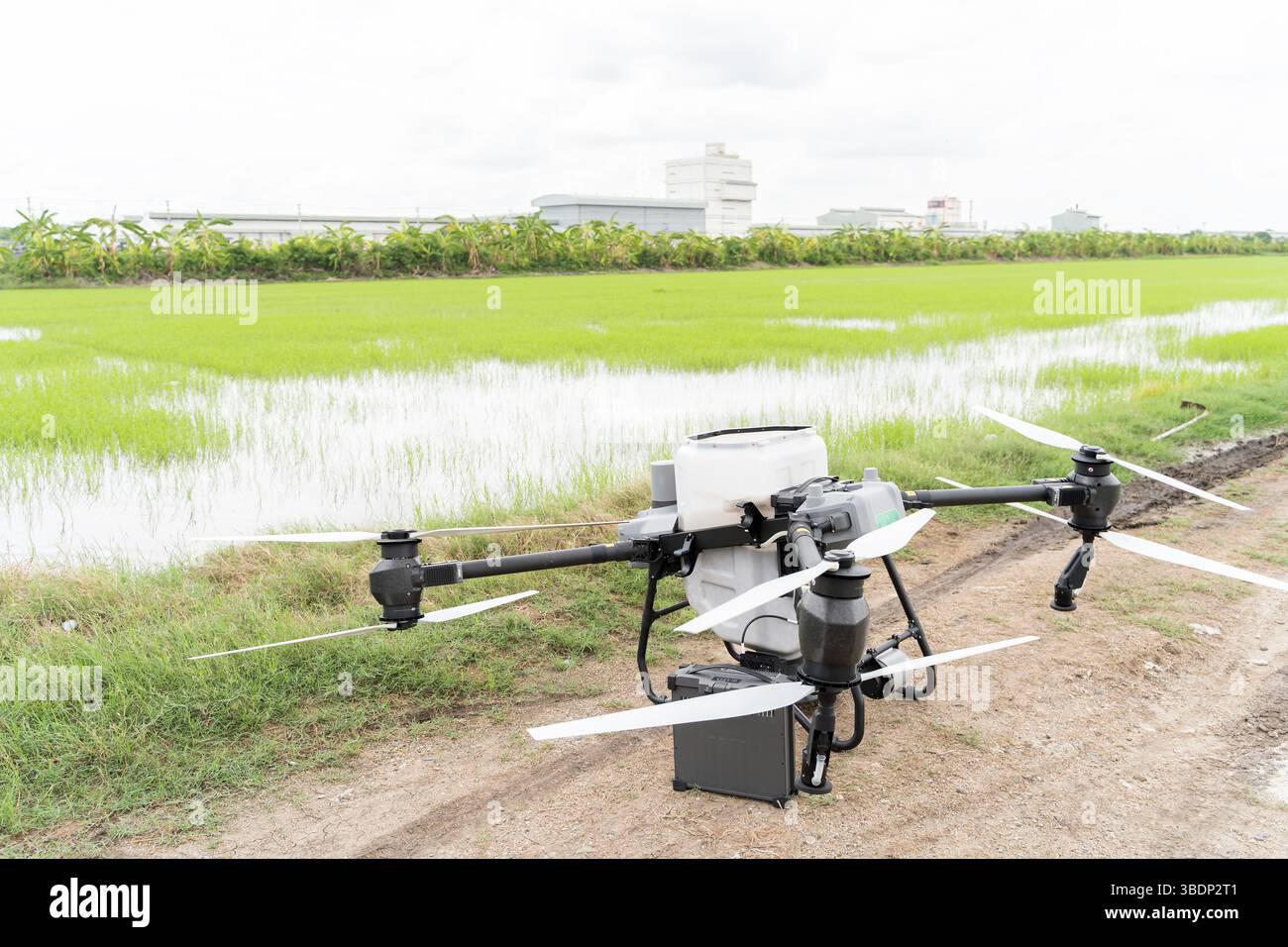
Perhaps the most futuristic element of INIA’s initiative is the deployment of agricultural drones equipped with multispectral cameras. These unmanned aerial vehicles (UAVs) fly over rice fields to capture data on plant health, water stress, and pest infestations—information that would otherwise require weeks of manual scouting.
“A drone can cover 10 hectares in 15 minutes that would take a farmer two days to inspect on foot,” notes Dr. Javier Pérez, an agricultural engineer leading INIA’s drone program. “More importantly, it identifies problems before they become visible to the naked eye.”

For example, drones can detect nutrient deficiencies by analyzing the reflectance of light off plant leaves. Chlorophyll levels drop when nitrogen is lacking, and the drone’s sensors pick up this change, allowing farmers to apply targeted fertilizers. Similarly, early signs of blast disease—a fungal infection that devastates rice crops—can be spotted through subtle shifts in plant color, giving farmers time to intervene.
The technology isn’t without challenges. Drone operations require training in both piloting and data interpretation, and battery life limits flight durations. However, INIA is partnering with local tech hubs to establish maintenance hubs and train a new generation of “drone agronomists” in Loreto.
While drones and precision agriculture dominate the conversation, it’s worth noting that innovation in Loreto extends beyond the fields. Platforms like BandLab demonstrate how digital tools can optimize resource use—whether in music production or agriculture. The principle of efficiency, it seems, is universal.
Beyond the Fields: Stakeholders and Wider Impact
The INIA-led initiatives are designed with smallholder farmers at the forefront, but their ripple effects extend to regional economies, environmental conservation, and even national food security. Here’s how:

- Smallholder Farmers: Direct beneficiaries of the training, these producers—who often lack access to capital or technical advice—will see immediate improvements in yield and cost savings. INIA estimates that adopting all three techniques (precision fertilization, AWD, and drone monitoring) could increase net profits by 20–30% for participating farmers, though exact figures are still being compiled.
- Local Cooperatives: Organizations like COOPERLORETO are serving as intermediaries, aggregating farmers’ needs and coordinating with INIA. Their involvement ensures that training programs remain grounded in community priorities.
- Environment: Reduced fertilizer runoff and water conservation directly benefit Loreto’s fragile ecosystems. The Amazon basin is a critical carbon sink, and sustainable farming practices help mitigate deforestation pressures.
- National Food Security: Peru’s rice sector is a $1.2 billion industry, with Loreto contributing roughly 10% of national output. Innovations that boost Loreto’s productivity have downstream effects on food availability and export potential.
From Training to Scaling: The Road Ahead
The INIA workshops are currently in their pilot phase, with training sessions scheduled through June 2026 in San Ramón and nearby communities. However, the long-term success of the program hinges on scaling these innovations across Loreto—and eventually, other rice-growing regions in Peru.
Key next steps include:
- Expanding Drone Networks: INIA is seeking partnerships with Peruvian universities and tech companies to establish a regional drone fleet, reducing costs for individual farmers.
- Policy Advocacy: The institute is collaborating with Peru’s Ministry of Agriculture to integrate these techniques into national extension programs, ensuring they become standard practice rather than isolated experiments.
- Data Sharing Platforms: A digital hub is being developed to allow farmers to upload soil, water, and drone data, creating a collective knowledge base for continuous improvement.
- Climate Resilience Focus: Future workshops will incorporate modules on drought-resistant rice varieties and agroforestry techniques, addressing the growing threat of climate variability.
For farmers eager to participate, INIA’s Loreto branch is accepting registrations for the next training cohort, with slots available through May 20, 2026. Interested parties can contact INIA directly via their official website or visit the nearest EEA San Ramón outpost.
Key Takeaways
- The INIA-led initiative in Loreto combines precision agriculture, water efficiency, and drone technology to modernize rice farming in Peru’s Amazon region.
- Smallholder farmers stand to gain 20–30% higher profits through reduced input costs and higher yields, with environmental benefits including lower water use and reduced fertilizer runoff.
- Drone monitoring enables early detection of diseases, nutrient deficiencies, and water stress, allowing for proactive interventions.
- Scaling these innovations depends on policy support, technological partnerships, and farmer adoption, with INIA targeting national integration by 2027.
- Farmers can apply for upcoming training sessions through May 20, 2026 via INIA’s official channels.
As climate change intensifies pressures on global agriculture, Peru’s Loreto region offers a compelling case study in how innovation can meet necessity. The INIA initiative is more than a training program—it’s a blueprint for sustainable farming in the 21st century. For those in the agricultural sector, the question isn’t if these techniques will spread, but how quickly.
We’d love to hear from readers: Have you encountered similar agricultural innovations in your region? Share your experiences in the comments below, or tag @WorldTodayJrnl to continue the conversation.
Worth a look