
Sofia, Bulgaria — May 13, 2026
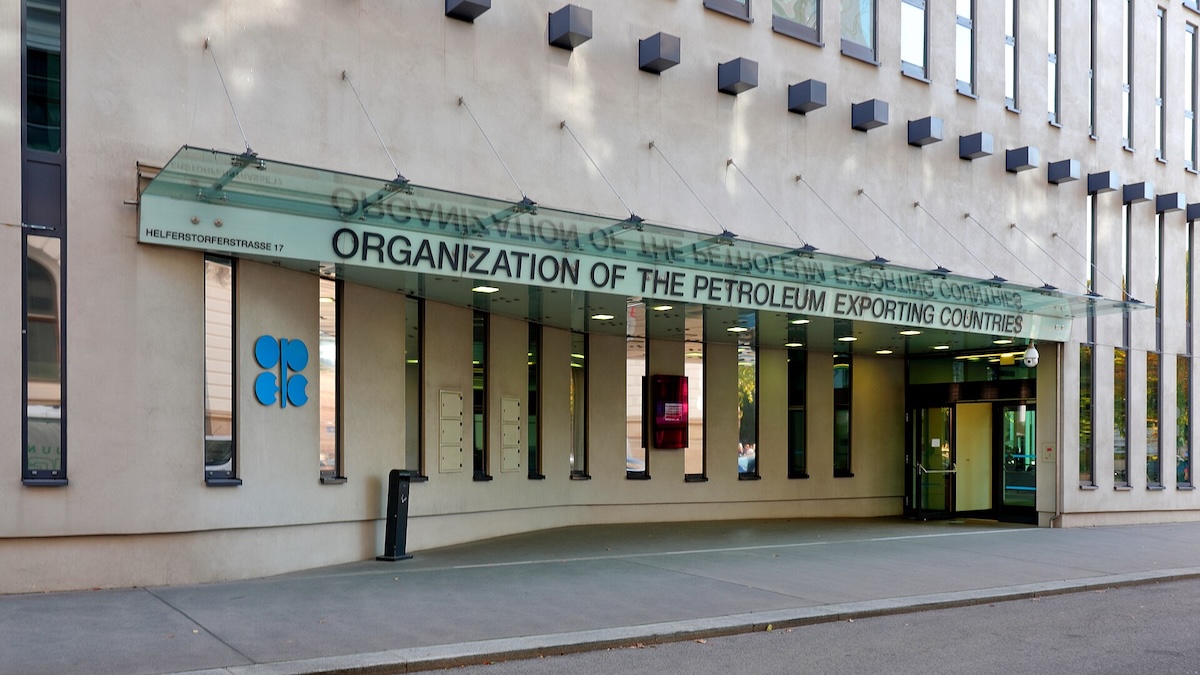
The United Arab Emirates (UAE) officially left the Organization of the Petroleum Exporting Countries (OPEC) on May 1, 2026, ending a 58-year membership that once made it the cartel’s third-largest oil producer. The move—announced on April 28—marks the most significant defection in OPEC’s history and forces a reckoning: Does the cartel still matter in a world where energy markets are reshaped by war, geopolitical rifts, and the scramble for alternative fuels?
For decades, OPEC’s ability to influence global oil prices through coordinated production cuts was a cornerstone of energy policy. But with the UAE now operating independently, analysts warn that the cartel’s cohesion—and its power—may be permanently weakened. The timing of the exit, coinciding with the closure of the Strait of Hormuz due to the US-Israeli war on Iran, has only amplified the stakes. As oil prices surge and supply chains tremble, the question is no longer just whether OPEC can survive without its third-largest member—but whether any cartel can in an era of fragmented alliances and accelerating energy transitions.
This is not the first time OPEC has faced existential challenges. Qatar left in 2019, citing a desire for greater flexibility, and Indonesia rejoined in 2016 after a brief exit in 2008. But the UAE’s departure is different: Abu Dhabi has long chafed under OPEC’s Saudi-led decision-making, and its oil reserves—estimated at 100 billion barrels—give it outsized leverage. With the Emirates now free to set its own production quotas, the cartel’s ability to enforce discipline on the remaining 11 members is under scrutiny.
Why the UAE Left: Quotas, Quarrels, and a Quest for Independence
The UAE’s decision was years in the making. As early as 2019, Emirati officials began privately signaling dissatisfaction with OPEC’s quota system, which they argued stifled their ability to maximize profits during high-demand periods. The Emirates, which joined OPEC in 1967 as Abu Dhabi and later as a founding member of the UAE in 1971, had long resented what it saw as Saudi Arabia’s dominance within the cartel. Steven A. Cook, a senior fellow at the Council on Foreign Relations, notes that the UAE’s leadership believes OPEC’s decision-making—historically prioritizing Saudi interests—has not served Abu Dhabi’s economic goals.

Adding to the tensions is the strained relationship between the UAE and Saudi Arabia. While the two Gulf allies have historically coordinated closely, recent years have seen a cooling of ties, particularly over regional conflicts like Yemen and the war in Gaza. The UAE’s decision to withdraw from OPEC—effective just days after the announcement—can be seen as both a strategic and symbolic move to reduce dependence on Riyadh’s leadership.
Yet the timing is also strategic. With the Strait of Hormuz—a critical chokepoint for global oil supplies—now blocked due to the US-Israeli conflict with Iran, oil prices have surged to record levels. The UAE’s exit allows it to increase production unilaterally if market conditions warrant, a flexibility it was previously denied under OPEC’s collective quotas. “This is about responding to a new energy age,” the UAE’s energy ministry stated in its official announcement, though the exact wording has not been independently confirmed.
The Cartel’s Crisis: Can OPEC Survive Without the UAE?
OPEC’s immediate response to the UAE’s exit has been muted. The cartel’s remaining members—including Saudi Arabia, Iraq, Iran, and Kuwait—have not signaled any intention to follow Abu Dhabi’s lead. But the loss of the UAE’s 3.5 million barrels per day of production (pre-exit figures) is a blow to the group’s collective leverage.
Historically, OPEC’s power has relied on its ability to act as a unified bloc. When members like Saudi Arabia and Russia (in OPEC+) coordinated deep production cuts in 2020 to prop up prices during the COVID-19 crash, the strategy worked—at least temporarily. But with the UAE now operating outside the cartel’s rules, the remaining members may struggle to maintain discipline. “The UAE’s exit tests OPEC’s resolve,” says Kristian Coates Ulrichsen, a Middle East expert at Rice University’s Baker Institute. “If others see Abu Dhabi’s move as a path to higher profits, we could see more defections down the line.”
There are already signs of strain. In recent months, Iraq and Nigeria have pushed for higher production quotas, arguing that current limits are hurting their economies. With the UAE now free to produce at will, the pressure on OPEC to loosen its grip may intensify.
Who Wins? Who Loses?
The UAE’s exit benefits several stakeholders:
- UAE’s economy: Abu Dhabi can now adjust production based on real-time market demand, potentially securing higher revenues during price spikes.
- Global oil consumers: With one less member enforcing production cuts, supply could increase slightly, easing some pressure on prices—though the Strait of Hormuz crisis remains the dominant factor.
- US energy interests: The Trump administration, which has long criticized OPEC for artificially inflating prices, has welcomed the UAE’s move, framing it as a victory for market-based energy policies.
But the losses are also clear:
- OPEC’s price-setting power: Without the UAE’s production discipline, the cartel’s ability to enforce collective output cuts is weakened. Analysts at the International Energy Agency (IEA) warn that this could lead to greater price volatility in the short term.
- Saudi Arabia’s leadership: Riyadh’s influence over OPEC’s strategy is diminished, particularly as other members may now question the value of sticking with the cartel.
- Developing nations dependent on OPEC funds: Many African and Asian countries rely on OPEC’s stability to fund budgets. If oil prices remain erratic, fiscal planning becomes harder.
What Happens Next? The Road Ahead for OPEC
The UAE’s exit is unlikely to kill OPEC overnight. The cartel still controls about 40% of global oil production, and its remaining members—particularly Saudi Arabia and Iraq—have deep financial and political incentives to keep it alive. But the UAE’s departure forces OPEC to evolve or risk irrelevance.

Possible scenarios include:
- OPEC Lite: The cartel could shrink to a core group of the most compliant members (Saudi Arabia, Iraq, Iran, Kuwait, and possibly Venezuela), focusing on symbolic coordination rather than strict quotas.
- Expansion to Include Non-OPEC Producers: OPEC+ (which includes Russia and other non-OPEC members) could become the dominant force, but this would dilute the cartel’s original mission.
- A New Energy Alliance: Some analysts speculate that OPEC could pivot toward gas and renewables, though this would require a radical shift in membership and strategy.
The next major test for OPEC will come at its June 2026 meeting in Vienna, where members will decide whether to adjust quotas in response to the UAE’s exit and the ongoing Strait of Hormuz crisis. If Saudi Arabia and allies fail to present a unified front, the cartel’s days as a price-setter may be numbered.
Key Takeaways
- The UAE’s exit from OPEC is the cartel’s most significant defection ever, weakening its collective power.
- OPEC’s remaining members may struggle to enforce production discipline without Abu Dhabi’s compliance.
- The move benefits the UAE’s economy and global oil consumers but could increase price volatility.
- Saudi Arabia’s leadership within OPEC is now under greater challenge as other members reconsider their allegiance.
- The June 2026 OPEC meeting will be critical in determining whether the cartel adapts or declines.
What’s Next? Follow OPEC’s official updates and IEA reports for real-time developments. The UAE’s energy ministry has not yet announced its post-OPEC production strategy, but analysts expect it to prioritize flexibility over collective action.
As global energy markets navigate uncharted territory, one thing is clear: The era of unchallenged OPEC dominance may be over. The question is whether the cartel can reinvent itself—or if the world has moved on.
Maria Petrova is the Editor of World Today Journal’s global affairs section. She has covered energy geopolitics for over a decade and holds an MA in International Relations from Sofia University.