
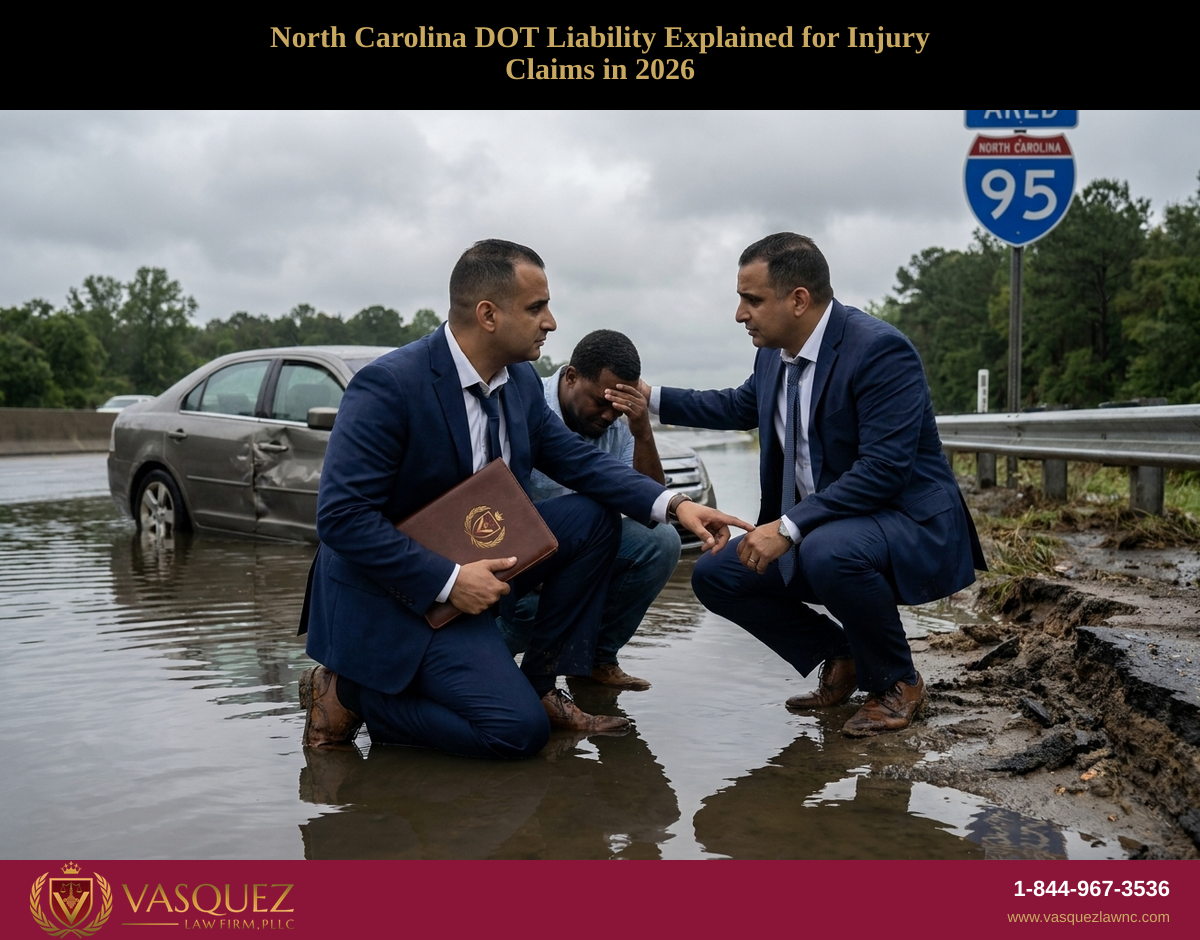
Navigating the aftermath of a road accident is often a stressful experience, but the complexity intensifies significantly when the government is involved. In North Carolina, when a driver believes the North Carolina Department of Transportation (NCDOT) is responsible for an accident—whether due to a hazardous road condition, poor signage, or a collision with a state-operated vehicle—they encounter a legal landscape vastly different from a standard insurance claim between private citizens.
Unlike a typical personal injury case where a plaintiff sues an individual or a corporation, claims against a state entity are governed by the principle of sovereign immunity. This legal doctrine generally protects government agencies from being sued without their consent. However, North Carolina has established specific statutory pathways that allow citizens to seek compensation, provided they adhere to strict procedural mandates and legal hurdles.
For those attempting to secure damages for injuries or property loss, understanding the intersection of the North Carolina Tort Claims Act and the state’s unique negligence laws is essential. The process is not merely about proving fault; it is about navigating a rigid administrative framework where a single missed deadline or a minor admission of fault can result in the total dismissal of a claim.
The Framework of Sovereign Immunity and the Tort Claims Act
At the heart of any legal action against the NCDOT is the concept of sovereign immunity. Historically, the state could not be sued in its own courts. To provide a remedy for citizens harmed by state actions, the North Carolina General Assembly enacted the North Carolina Tort Claims Act. This act effectively waives the state’s immunity in specific circumstances, allowing the government to be held liable for the negligence of its employees acting within the scope of their employment.
However, this waiver is not absolute. The Tort Claims Act imposes significant restrictions on how much a plaintiff can recover. Under NC General Statute § 1-535, You’ll see strict caps on damages. For instance, the total amount of damages recoverable against the state is generally limited to $500,000 per person, regardless of the severity of the injury or the actual financial loss incurred. These caps mean that even in cases of catastrophic injury or wrongful death, the recovery may be significantly lower than what would be available in a lawsuit against a private entity with high-limit insurance policies.
It is also important to note that the state is not liable for every road defect. The NCDOT is typically only held responsible if it can be proven that the agency had “actual or constructive notice” of the danger. Actual notice means the state was explicitly told about a hazard (such as a reported pothole), while constructive notice means the hazard existed for such a length of time that the NCDOT should have known about it through reasonable inspection.
The Mandatory Process for Filing NCDOT Claims
One of the most critical distinctions in pursuing a claim against the NCDOT is the requirement for administrative notice. A plaintiff cannot simply file a lawsuit in a district court. Instead, they must first follow a specific notice procedure to give the state an opportunity to investigate the claim and potentially settle it without litigation.
The process typically begins with the submission of a formal notice of claim to the North Carolina Office of the Attorney General. This notice must include detailed information about the incident, the nature of the injuries, and the specific grounds for the state’s liability. Failure to provide proper notice or attempting to file a lawsuit before the administrative process is exhausted can lead to a permanent loss of the right to recover damages.
Timelines are equally rigid. While the statute of limitations for general personal injury in North Carolina is typically three years, the administrative requirements for state claims can create tighter windows for action. Legal experts emphasize that documenting the scene immediately—through photographs of road conditions, police reports, and witness statements—is vital, as the state may perform road repairs shortly after an accident, potentially erasing the evidence of the hazard that caused the crash.
The Hurdle of Pure Contributory Negligence
Perhaps the most daunting aspect of seeking damages in North Carolina is the state’s adherence to the doctrine of “pure contributory negligence.” While most U.S. States have moved to a “comparative negligence” system—where a plaintiff’s recovery is reduced by their percentage of fault—North Carolina remains one of the few jurisdictions where any degree of fault on the part of the plaintiff can completely bar recovery.
In the context of an NCDOT claim, this means that if the state can prove the driver was even 1% responsible for the accident, the plaintiff may be entitled to zero compensation. For example, if a driver hits a massive, unmarked pothole but the state argues the driver was traveling 5 mph over the speed limit or was momentarily distracted, the court may rule that the driver contributed to the accident. Under this strict standard, the state’s 99% negligence is negated by the plaintiff’s 1% negligence.
This legal standard places a heavy burden of proof on the claimant to demonstrate that they exercised “ordinary care” and that the accident was caused solely by the state’s failure to maintain the roadway or the negligence of a state employee.
Common Scenarios Involving NCDOT Liability
Claims against the NCDOT generally fall into three primary categories, each with its own set of evidentiary challenges:
- Roadway Defects: This includes potholes, crumbling shoulders, or debris left on the highway by state contractors. Success in these cases depends on proving the NCDOT had sufficient notice of the defect to take corrective action.
- Insufficient Signage and Striping: When inadequate warning signs or faded lane markings lead to a collision, the claimant must prove that the signage failed to meet state or federal safety standards and that this failure was the proximate cause of the accident.
- Government Vehicle Collisions: Accidents involving NCDOT maintenance trucks or other state-owned vehicles are handled similarly to private vehicle accidents, but they are still subject to the Tort Claims Act’s damage caps and the notice requirements of the Attorney General’s office.
- Sovereign Immunity: The state is generally protected from lawsuits unless the North Carolina Tort Claims Act applies.
- Damage Caps: Recoveries are typically capped at $500,000 per person under state law.
- Notice Requirements: A formal notice of claim must be filed with the state before a lawsuit can be initiated.
- Contributory Negligence: Any amount of fault attributed to the driver can completely block the ability to recover damages.
- Proof of Notice: For road defects, you must prove the NCDOT knew or should have known about the hazard.
Insurance Claims vs. State Claims
Many drivers mistakenly believe that their own insurance company will handle the entirety of a claim against the NCDOT. While an insurance provider may pay for medical bills or vehicle repairs under “uninsured/underinsured motorist” or “collision” coverage, the insurance company’s ability to recover those funds from the state (a process known as subrogation) is limited by the same laws that affect the individual.

Because the state’s liability is capped and protected by sovereign immunity, insurance companies may be unable to recover the full amount they paid out. This leaves the injured party to pursue a separate legal action against the state for “pain and suffering” or other non-economic damages that the insurance policy does not cover.
the interaction between private insurance and state claims can be treacherous. Statements made to an insurance adjuster—such as “I didn’t see the pothole until the last second”—can be used by the state’s attorneys to argue contributory negligence, potentially destroying the claimant’s chance at a state settlement.
Summary of Legal Requirements
| Feature | Private Party Claim | NCDOT / State Claim |
|---|---|---|
| Initial Step | Insurance Claim / Lawsuit | Notice of Claim to Attorney General |
| Damage Limits | Based on Insurance Policy/Assets | Statutory Cap (e.g., $500,000) |
| Immunity | None | Sovereign Immunity (Partial Waiver) |
| Fault Standard | Contributory Negligence (NC) | Contributory Negligence (NC) |
| Evidence Needed | Proof of Negligence | Proof of Negligence + State Notice |
Given these complexities, the path to recovery is rarely straightforward. The combination of statutory caps, strict notice requirements, and the unforgiving nature of contributory negligence makes legal representation almost a necessity for those seeking justice against a government entity.
The next critical step for any individual affected by NCDOT negligence is to ensure that all evidence is preserved and that a formal notice of claim is filed within the permissible legal window. Those who wait until the statute of limitations is near often find that they have already missed the administrative deadlines required by the state.
Do you have experience navigating claims against government agencies, or are you seeking more information on North Carolina road laws? Share your thoughts or questions in the comments below.