
Lithuania Hits Milestone with Record Electric Vehicle Registrations in April
Lithuania is experiencing a significant acceleration in its transition toward sustainable transport, marking a historic peak in the adoption of battery electric vehicles (BEVs). In a move that signals a shifting preference in the Baltic automotive market, the country recorded over 2,400 new registrations of passenger electric cars in April, a figure that represents a record-breaking surge for a single month.
As a financial journalist who has spent nearly two decades analyzing economic policy and global market shifts, I view this spike as more than just a statistical anomaly. It is a reflection of a broader economic realignment within Northern Europe. The convergence of falling battery costs, expanded charging networks and more aggressive European Union climate mandates is finally pushing the “tipping point” for the average Lithuanian consumer.
The data, tracked by the official vehicle registration authority, Regitra, underscores a rapid pivot away from internal combustion engines. This surge is not merely a trend among luxury buyers but is increasingly driven by the availability of mid-market models and a growing awareness of the total cost of ownership (TCO) advantages associated with electric mobility.
For a nation striving to align its energy independence with green initiatives, this record suggests that the psychological barrier to EV adoption is crumbling. However, the speed of this growth puts immediate pressure on the state’s electrical grid and the pace of public infrastructure deployment.
Analyzing the April Surge: Drivers of Growth
The leap to over 2,400 registrations in April is a stark departure from previous monthly averages. While EV growth has been steady, this specific spike is often characteristic of the “delivery wave” phenomenon. In many European markets, large batches of vehicles from dominant manufacturers—most notably Tesla—are delivered in concentrated windows, creating these vertical spikes in registration data.
Beyond delivery cycles, several economic catalysts have converged to make electric cars more attractive to Lithuanian drivers. First, the volatility of fossil fuel prices has made the predictability of electricity costs a powerful incentive. When consumers calculate the long-term savings on fuel and maintenance, the higher upfront cost of an electric vehicle becomes a justifiable investment.
the integration of the EU’s “Fit for 55” package has created a regulatory environment that penalizes carbon-heavy transport while incentivizing zero-emission alternatives. This top-down pressure from Brussels is filtering down to local dealerships and financing options, making EV loans more accessible and attractive than their petrol-powered counterparts.
From an economic perspective, we are seeing a shift in the “value proposition” of the automobile. The car is no longer just a tool for mobility but is becoming a node in a larger energy ecosystem. With the rise of smart charging and potential vehicle-to-grid (V2G) technologies, the economic utility of owning an EV in Lithuania is expanding.
Infrastructure and the Challenge of Scalability
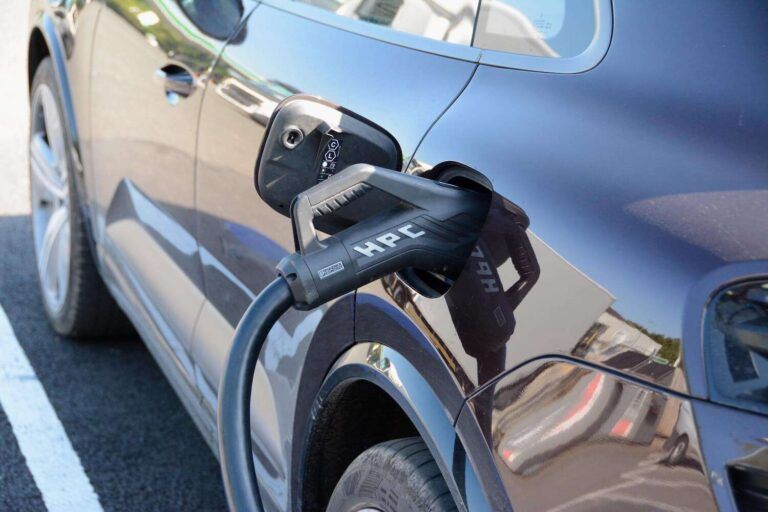
While the registration numbers are celebratory, they highlight a critical vulnerability: the gap between vehicle ownership and charging accessibility. For a record number of EVs to remain functional and efficient, the deployment of high-power charging (HPC) stations must keep pace with the registration curve.

According to data from the European Alternative Fuels Observatory (EAFO), the Baltic states have made strides in expanding their networks, but the density of chargers in rural Lithuania still lags behind the urban hubs of Vilnius and Kaunas. This “charging anxiety” remains the primary deterrent for the remaining segment of the population that has not yet made the switch.
The challenge is not merely the number of plugs, but the capacity of the local grid. A sudden influx of thousands of vehicles charging simultaneously during peak evening hours can strain aging electrical infrastructure. This necessitates a strategic investment in “smart grids” that can balance loads and utilize renewable energy sources—such as wind and solar—to power the fleet without relying on carbon-intensive peaking plants.
the shift toward electric mobility requires a transformation of the automotive service industry. Local garages and dealerships must pivot from traditional mechanical repair to software-driven diagnostics and battery health management. This transition represents a significant labor market shift, requiring the retraining of thousands of technicians across the country.
The Broader Baltic Context and Climate Goals
Lithuania’s record-breaking April does not happen in a vacuum. It is part of a regional trend across the Baltics, where Estonia and Latvia are also seeing accelerated EV uptake. This regional synchronization is crucial for cross-border travel, as a unified charging standard and a dense network of stations across the Baltic corridor make EVs viable for long-distance transit.
This transition is central to Lithuania’s commitment to the European Green Deal. By reducing the reliance on imported hydrocarbons, the country is not only meeting environmental targets but is also enhancing its national security. Energy independence is a strategic priority for the region, and every internal combustion engine replaced by an electric motor reduces the vulnerability to external energy shocks.
Economically, this shift is also attracting foreign investment. As the demand for EVs grows, there is an increased opportunity for the development of local battery recycling plants and charging software startups. Lithuania has the potential to move from being a mere consumer of EV technology to a participant in the value chain, leveraging its strong engineering talent and growing tech sector.
What So for the Average Consumer
For the Lithuanian consumer, the record registration numbers indicate that the market has matured. The “early adopter” phase—characterized by wealthy enthusiasts buying expensive, niche vehicles—has ended. We have entered the “early majority” phase, where practicality, reliability, and cost-efficiency are the primary drivers.
Prospective buyers are now looking at a wider array of options, from compact city cars to electric SUVs. The secondary market for EVs is also beginning to form, which will be essential for making electric mobility accessible to lower-income households. As the first generation of mass-market EVs begins to enter the used car market, the barrier to entry will drop even further.
However, consumers should remain mindful of the “residual value” risk. As battery technology evolves rapidly, older models may depreciate faster than traditional cars. This makes leasing and flexible financing options more attractive than outright ownership for many, as it shifts the risk of technological obsolescence from the consumer to the financier.
Next Steps and Outlook
The momentum established in April is likely to continue, provided that the infrastructure can support the load. The focus now shifts from stimulating demand to ensuring the stability of the supply chain and the reliability of the charging network.
The next critical checkpoint for the industry will be the release of the quarterly registration summary from Regitra, which will reveal whether the April spike was a temporary anomaly or the beginning of a sustained upward trajectory in EV adoption.
As we monitor these trends, Lithuania is no longer just following the lead of Western Europe—it is accelerating its own path toward a zero-emission future. The record of 2,400+ vehicles in a single month is a powerful indicator that the electric revolution has arrived in the Baltics.
Do you think Lithuania’s charging infrastructure is ready for this surge? Share your thoughts in the comments below or share this article with your network to join the conversation on the future of Baltic mobility.
Related reading