In a landmark decision that reshapes Alabama’s political landscape ahead of the 2026 midterm elections, the U.S. Supreme Court on Monday overturned lower court rulings that had blocked the state from using a congressional map drawn by Republicans in 2023. The 6-3 ruling, which sent the cases back to a district court for reconsideration, effectively clears the path for Alabama to implement a new map that reduces Black voting representation in the state’s congressional delegation. The decision comes just weeks after the Court’s broader weakening of the Voting Rights Act in a separate Louisiana case, sparking concerns about the future of minority voting rights across the South.
The Supreme Court’s action vacates a three-judge panel’s order requiring Alabama to use a map with two majority-Black districts—a configuration that had been in place for the 2024 elections. Instead, the state’s Republican-led legislature can now proceed with a 2023 map that includes only one majority-Black district, a shift that voting rights advocates warn could diminish the political influence of Black voters in the state. The Court’s majority, in a decision authored by Chief Justice John Roberts, cited the Louisiana precedent—Allen v. Milligan—to justify its move, arguing that lower courts had overstepped in enforcing Section 2 of the Voting Rights Act.
In dissent, Justice Sonia Sotomayor, joined by Justices Elena Kagan and Ketanji Brown Jackson, called the decision “inappropriate and will cause only confusion as Alabamians begin to vote in the elections scheduled for next week.” The dissent underscored the urgency of the ruling, as Alabama’s primary elections are set for May 19, 2026—a timeline that leaves little room for legal challenges or adjustments to the new map. The Court’s intervention follows a years-long legal battle over Alabama’s redistricting efforts, which began after a 2021 map was struck down by federal judges for violating the Voting Rights Act.
What Happens Next? With the Supreme Court’s ruling, Alabama’s Republican leaders are expected to move swiftly to finalize the 2023 map, which was approved by the state legislature in 2023 but had been blocked by federal courts. The state’s current congressional delegation consists of five Republicans and two Democrats, both of whom represent majority-Black districts. If the new map is adopted, one of those districts—likely the 7th Congressional District, currently held by Democrat Terri Sewell—could lose its Black majority, altering the balance of power in Washington.
The ruling also has broader implications for voting rights in the U.S. Southern states, where Republican-controlled legislatures have been pushing to redraw congressional districts in ways that could reduce minority representation. Legal experts warn that the decision may embolden similar efforts in Georgia, Texas, and Florida, where courts have also intervened in redistricting disputes. “What we have is a green light for states to ignore the Voting Rights Act and prioritize partisan gains over fairness,” said Myrna Pérez, director of the Voting Rights and Elections program at the Brennan Center for Justice, in a statement to The New York Times.
The Legal Battle Behind Alabama’s Redistricting Fight
The Supreme Court’s intervention is the latest twist in a contentious legal saga that began in 2021, when Alabama’s then-newly drawn congressional map was challenged by voting rights groups. Federal judges ruled in 2023 that the map violated Section 2 of the Voting Rights Act by diluting the voting power of Black residents, ordering the state to create two majority-Black districts instead of one. The Republican-led legislature responded by adopting a new map in 2023, but that plan was also blocked by a district court in early 2026.
The Court’s decision to revisit the case follows its April 2026 ruling in Allen v. Milligan, which narrowed the scope of Section 2 protections. In that case, the Court held that the Voting Rights Act does not require states to create districts where minority voters have a “substantial opportunity” to elect candidates of their choice—only that they are not denied equal access to the ballot. The Alabama ruling appears to apply that stricter standard, effectively gutting the protections that had been in place for decades.
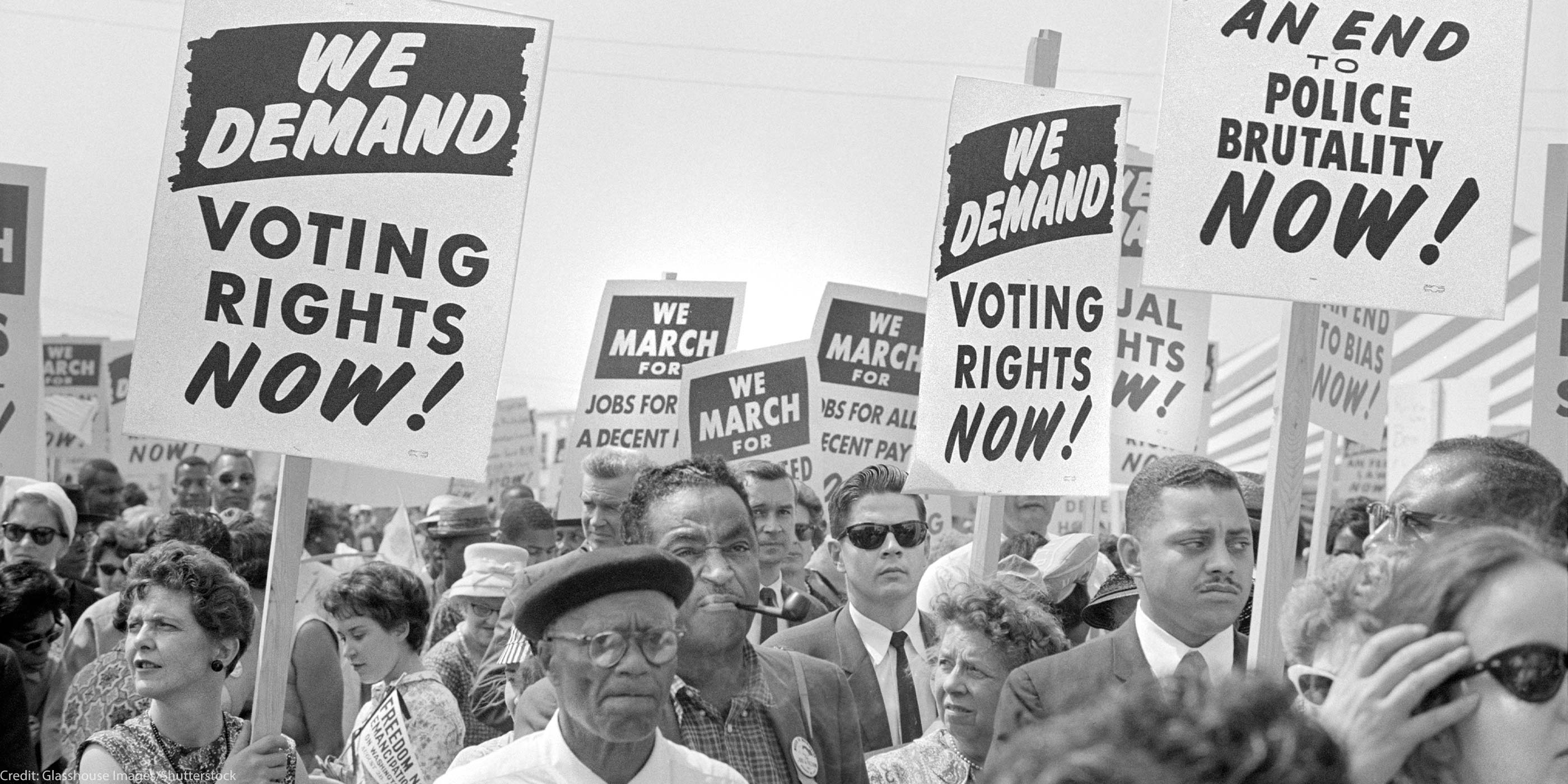
Critics argue that the Court’s move undermines the core purpose of the Voting Rights Act, which was enacted in 1965 to combat racial discrimination in voting. “This decision is a direct attack on the principle that all voters should have an equal say in who represents them,” said Marc Elias, a prominent voting rights attorney, in a statement to Associated Press. “It allows states to draw maps that lock in minority voters’ disenfranchisement.”
Who Is Affected and How?
The Supreme Court’s ruling primarily impacts Alabama’s Black voters, who make up nearly 27% of the state’s population but could see their political influence shrink under the new map. The two majority-Black districts currently held by Democrats—Alabama’s 2nd and 7th Congressional Districts—were created to ensure that Black voters had a meaningful opportunity to elect candidates of their choice. Under the 2023 map, those districts would be consolidated into a single majority-Black district, likely reducing the number of Black lawmakers in Congress.

Alabama’s Democratic Party has already condemned the ruling, with state Rep. Juandalynn Givan calling it “a betrayal of democracy.” Givan, who has been a vocal advocate for fair redistricting, told reporters outside the Alabama Statehouse on May 7, 2026, that the decision “will silence the voices of Black Alabamians and other communities of color.” Her remarks came during a special legislative session where lawmakers debated the new map’s implementation.
The ruling also affects the broader political landscape of the 2026 midterms, as Alabama’s congressional races could now play out under a map that favors Republican candidates. The state’s GOP leaders, including Governor Kay Ivey, have welcomed the decision, framing it as a victory for state sovereignty over federal overreach. “Alabama’s legislature has the authority to draw maps that reflect the will of the people,” Ivey said in a statement released on May 12, 2026. “We will continue to uphold the Constitution and the rights of all Alabamians.”
Broader Implications for Voting Rights
The Supreme Court’s decision in Alabama is part of a larger trend of conservative legal victories that have weakened protections for minority voters. Since the Court’s 2013 decision in Shelby County v. Holder, which gutted a key provision of the Voting Rights Act, states have faced fewer federal obstacles to enacting redistricting plans that dilute minority voting power. The Alabama ruling further erodes those safeguards, leaving it to state courts—often dominated by conservative judges—to enforce voting rights laws.

Legal scholars warn that the decision could embolden similar challenges in other states. In Georgia, for example, a federal court recently struck down a redistricting plan for violating the Voting Rights Act, but the state’s Republican leaders have signaled they may appeal to the Supreme Court. Similarly, Texas and Florida have faced lawsuits over their own redistricting efforts, with advocates arguing that the Alabama ruling sets a dangerous precedent.
“This is a watershed moment for voting rights in America,” said Hans von Spakovsky, a senior legal fellow at the Heritage Foundation, in an interview with CBS News. “States now have the green light to draw maps that reflect their political priorities, not just demographic realities.” While conservative groups celebrate the ruling as a victory for state rights, civil rights organizations have vowed to challenge the new map in Alabama’s lower courts, arguing that it still violates the Voting Rights Act.
What’s Next for Alabama’s Elections?
With the Supreme Court’s ruling, the focus now shifts to Alabama’s lower courts, where the three-judge district panel will reconsider the case in light of the new legal standards. Legal experts predict that the process could take weeks, leaving little time for opponents to mount a successful challenge before the May 19 primary elections. If the panel upholds the 2023 map, Alabama’s congressional delegation could see a significant shift in representation, with one fewer majority-Black district.
For voters, the immediate impact is uncertainty. Black Alabamians who had grown accustomed to seeing their communities represented by lawmakers of their own race may now face a future where their political influence is diminished. Advocacy groups are urging voters to stay engaged and monitor the redistricting process closely, while legal teams prepare for potential appeals to the Supreme Court.
The next critical checkpoint is the district court’s ruling on the remanded cases, expected within the next 30 days. If the court upholds the 2023 map, the state’s Republican leaders will move to finalize the new districts ahead of the November 2026 general elections. For now, the political and legal battles over Alabama’s congressional map are far from over.
As the dust settles, one thing is clear: the Supreme Court’s decision has not only reshaped Alabama’s political landscape but also sent a message to states across the country about the future of voting rights. Whether this ruling will stand the test of time—or be overturned by future courts—remains to be seen.
For updates on Alabama’s redistricting process, follow World Today Journal’s coverage of the 2026 midterms. Share your thoughts in the comments below or join the conversation on social media using #AlabamaRedistricting.
Worth a look