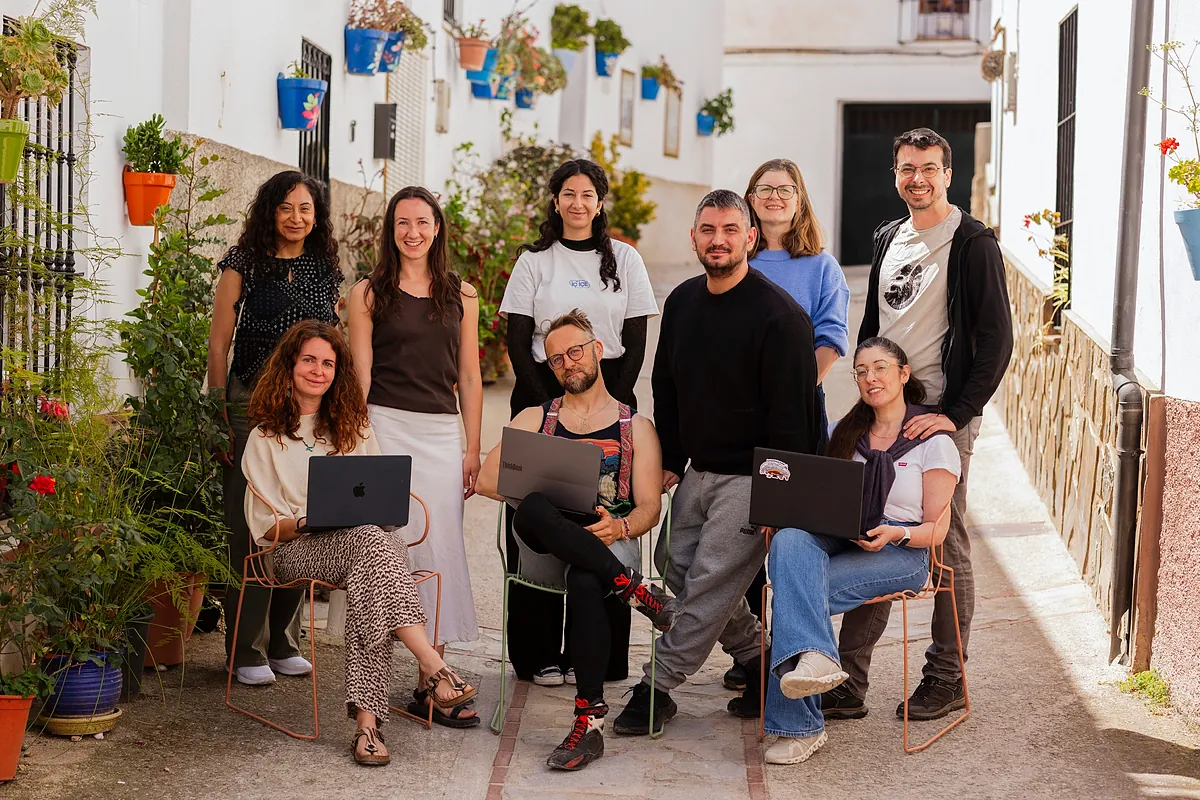
The quiet, cobblestone streets of rural Spain were long envisioned as the salvation of the España Vaciada—the “Empty Spain.” For decades, the Spanish interior has battled a relentless tide of depopulation, with youth fleeing to the coastal hubs of Madrid and Barcelona, leaving behind aging populations and crumbling infrastructure. The strategy to reverse this trend seemed simple: invite the global workforce of the 21st century to move in, work remotely, and breathe new life into dying hamlets.
However, this vision of the “village of the future” is colliding with a harsh economic reality. As high-earning remote workers and “digital nomads” migrate to these low-cost rural enclaves, they are inadvertently triggering a localized housing crisis. In villages where rental markets were once stagnant or non-existent, a sudden surge in demand—coupled with the significantly higher purchasing power of international professionals—is pricing out the very locals the revitalization projects were meant to protect.
For many residents, the dream of rural renewal has morphed into a struggle for survival. The sentiment echoing through these communities is stark: “Aquí es imposible ya alquilar” (It’s already impossible to rent here). This phenomenon represents a new frontier of gentrification, where the “digital nomad effect” is shifting the housing struggle from the crowded city centers to the silent valleys of the interior.
As a financial journalist who has spent nearly two decades analyzing global market shifts, I find this trend particularly telling. It is a classic case of economic displacement. When a population with “global” salaries enters a market with “local” pricing, the equilibrium does not simply shift; it shatters. The result is a rural gentrification that mimics the patterns of urban centers like Barcelona or Lisbon, but with far fewer social safety nets and a much smaller supply of available housing.
The Digital Nomad Magnet: Policy and Appeal
The catalyst for this migration was not accidental. The Spanish government actively incentivized this shift through the introduction of the Digital Nomad Visa, part of the broader “Startup Law” (Ley de Startups) enacted to attract international talent. This visa allows non-EU citizens to live and work in Spain provided they are employed by a company outside the country or are freelancers with foreign clients.
The appeal is obvious. For a professional earning a Silicon Valley or London salary, the cost of living in a village in Castile-La Mancha or Extremadura is negligible. They find allure in the sluggish pace of life, the climate, and the aesthetic charm of traditional Spanish architecture. To the nomad, a €600 monthly rent for a refurbished cottage is a bargain; to a local agricultural worker or a small-town shopkeeper, that same price point may represent a prohibitive percentage of their monthly income.
This disparity creates an immediate competitive disadvantage for locals. Landlords, realizing they can secure higher rents from remote workers who are less concerned with local price benchmarks, are increasingly pivoting their offerings. In many cases, traditional long-term leases are being abandoned in favor of short-term, flexible arrangements that cater to the transient nature of the digital nomad lifestyle.
Rural Gentrification: The “Empty Spain” Paradox
The term España Vaciada describes the vast interior regions of Spain that have suffered from extreme demographic decline. For years, the goal was simply to get anyone to move back. However, the current wave of migration is not necessarily bringing back the traditional farming or industrial base; it is importing a “laptop class” whose economic needs differ fundamentally from those of the existing community.
This shift leads to several critical economic frictions:
- Rental Inflation: When a small village has only a handful of available rental properties, the arrival of even five or ten high-earning nomads can drive prices up by 20% to 50% in a matter of months.
- Property Speculation: Investors are beginning to eye these “nomad-friendly” villages, purchasing dilapidated homes to renovate them into high-end rentals or boutique co-living spaces, further reducing the stock of affordable housing for permanent residents.
- Service Displacement: As the demographic shifts, local businesses often pivot to serve the newcomers. The traditional bakery may be replaced by a specialty coffee shop or a co-working hub, increasing the general cost of living for everyone.
According to data from the Instituto Nacional de Estadística (INE), Spain has faced a persistent challenge with housing affordability, with rental prices in many regions continuing to climb despite economic volatility. While the most publicized crises occur in the cities, the rural surge is more insidious because the markets are so fragile; a small increase in demand creates a disproportionately large impact on price.
The Broader National Context: From Cities to Countryside
The crisis in the “village of the future” does not exist in a vacuum. It is a rural extension of a national housing emergency. Spain is currently grappling with a “perfect storm” of factors that make housing inaccessible for a significant portion of its population. The rise of short-term tourist rentals (via platforms like Airbnb) has already hollowed out the centers of cities like Madrid and Barcelona, pushing residents to the periphery.
Now, that same logic is penetrating the countryside. The “touristification” of rural Spain is no longer limited to the summer months. With the rise of remote work, the “tourist” has become a “semi-permanent resident,” occupying housing year-round but paying prices that reflect a global rather than local economy.
This creates a precarious situation for young Spaniards who wish to return to their ancestral villages to start businesses or farms. They find themselves competing for housing against a global elite. The result is a bitter irony: the very people who could provide long-term demographic stability to the region are being priced out by the temporary residents meant to save it.
Key Takeaways: The Rural Housing Shift
- Policy-Driven Migration: The Digital Nomad Visa has successfully attracted high-earning foreigners, but without corresponding housing protections for locals.
- Market Distortion: High purchasing power from remote workers is driving rental inflation in villages with extremely limited housing stock.
- The Gentrification Loop: Rural “revitalization” is increasingly manifesting as gentrification, shifting local services and housing toward a transient, wealthier demographic.
- Systemic Link: Rural housing spikes are a mirror of the urban “touristification” crisis seen in Spain’s major cities.
What Happens Next? Potential Policy Solutions
To prevent the “village of the future” from becoming an exclusive enclave for the global wealthy, Spanish policymakers and local municipalities are beginning to explore several interventions. However, these are hard to implement in rural areas where regulation is often lax and the desire for “new money” is high.
Potential strategies include:
- Rental Caps: Implementing local ceilings on rent increases to prevent predatory pricing in small markets.
- Zoning for Permanent Residents: Creating mandates that a certain percentage of renovated housing must be reserved for long-term residents or those employed in local essential services.
- Tax Incentives for Local Housing: Providing tax breaks to landlords who rent to locals rather than short-term nomads.
- Public Housing Investment: The Spanish government’s commitment to increasing the public housing stock is critical, but these investments have historically focused on urban areas. Expanding this to rural hubs is essential for stability.
From an economic perspective, the goal should not be to expel digital nomads—who bring necessary spending and connectivity to these regions—but to decouple the local housing market from global salary scales. Without a strategic buffer, the “Empty Spain” will not be filled; it will simply be replaced by a different, more transient population, leaving the original inhabitants as strangers in their own homes.
Frequently Asked Questions
What is the “España Vaciada”?
The “España Vaciada” or “Empty Spain” refers to the vast interior regions of the country that have suffered from severe depopulation over the last century, leading to a lack of services and an aging population.

How does the Digital Nomad Visa work?
Introduced as part of the Startup Law, this visa allows non-EU citizens who work remotely for companies outside Spain to reside in the country, offering certain tax advantages and a path to residency.
Why are digital nomads causing housing prices to rise in small villages?
Because digital nomads typically earn salaries from high-income global markets (e.g., US or UK), they can afford to pay rents that are significantly higher than what local residents earn, leading landlords to raise prices to attract these wealthier tenants.
Is this happening only in Spain?
No. Similar trends have been observed in Portugal (particularly in Lisbon and the Algarve) and in parts of Italy and Greece, where remote work and “golden visas” have led to rural and urban gentrification.
The next critical checkpoint for this issue will be the upcoming reviews of the Startup Law’s impact on regional demographics and the potential introduction of new housing regulations at the autonomous community level. As Spain continues to refine its approach to remote work, the balance between economic attraction and social preservation will remain a central point of contention.
Do you believe remote work is a sustainable way to save rural communities, or is it simply a new form of displacement? Share your thoughts in the comments below.
Related reading