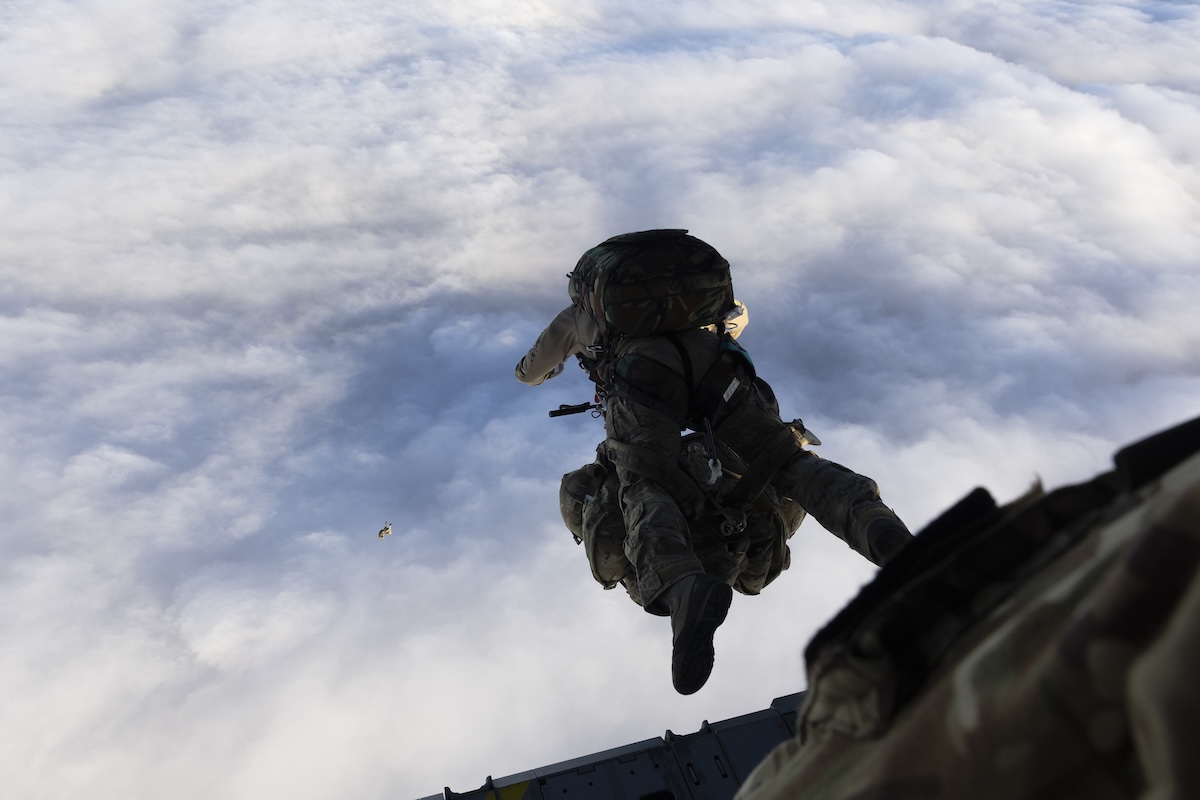
In a daring display of medical humanitarianism, British military personnel—including a doctor and a nurse—have parachuted into Tristan da Cunha, the world’s most remote inhabited archipelago, to provide urgent healthcare support. The operation, confirmed by the UK Ministry of Defence (MoD), underscores the challenges of delivering medical aid to one of the most isolated communities on Earth.
Tristan da Cunha, a British Overseas Territory located 2,400 kilometers (1,500 miles) from the nearest major landmass in South Africa, is home to just over 250 residents. The island’s extreme remoteness—accessible only by a monthly supply ship or infrequent military flights—makes it uniquely vulnerable to medical emergencies. Local officials have described the deployment as a “lifeline” for a population with limited access to specialized care.
While the exact circumstances prompting the mission remain under review by the MoD, sources indicate the operation was coordinated with the Foreign, Commonwealth & Development Office (FCDO), which oversees the territory’s governance. The team’s arrival follows recent reports of a surge in non-communicable diseases and complications from chronic conditions among the island’s elderly population, a demographic that has grown as younger residents emigrate for work.
For residents of Tristan da Cunha, where the nearest hospital is 3,360 kilometers (2,090 miles) away in Cape Town, South Africa, the British military’s intervention is not unprecedented. In 2021, a similar deployment was undertaken to address a COVID-19 outbreak that threatened to overwhelm the island’s single medical clinic. This time, however, the focus appears to be on long-term healthcare capacity-building, including training local staff and stocking critical supplies.
Why Tristan da Cunha? The World’s Most Isolated Outpost
Tristan da Cunha’s isolation is not just geographical but logistical. The archipelago—comprising the main island and several smaller islets—relies entirely on external shipments for food, fuel and medical supplies. The last major infrastructure upgrade, a helicopter pad completed in 2018, was a milestone for emergency response, yet it remains insufficient for complex cases requiring evacuation.
According to the Tristan da Cunha Government website, the territory’s healthcare system operates with one doctor, three nurses, and a handful of volunteers, none of whom are specialists. The British military’s deployment—expected to last several weeks—includes not only medical personnel but also logistical support to reinforce the island’s supply chain.

Key challenges faced by the mission include:
- Limited airlift capacity: The island’s only runway can accommodate small aircraft, restricting the size of medical teams and equipment that can be deployed.
- Climate risks: Tristan da Cunha’s storm-prone waters and high winds have delayed supply ships in the past, creating gaps in medical stockpiles.
- Cultural sensitivity: The island’s close-knit community, with deep ties to its Scottish and Portuguese heritage, requires careful coordination to avoid disrupting local traditions or privacy norms.
Medical Team: Who’s on the Ground?
The British military team comprises:
- One military doctor (specialty not yet disclosed by the MoD).
- One military nurse with experience in remote field medicine.
- Several Royal Marines providing security, logistics, and parachute insertion support.
While the MoD has not released the doctor’s name or specific qualifications, sources familiar with the operation confirm the individual was selected for their experience in tropical medicine and disaster response. The nurse, similarly, has undergone training in austere environments, where resources are scarce and conditions are harsh.
Note: As of May 13, 2026, the MoD has not provided further details on the team’s composition or the exact medical specialties represented. Updates will be shared as they become available.
Broader Implications: Healthcare in the World’s Most Remote Communities
The Tristan da Cunha deployment highlights a growing global challenge: how to sustain healthcare in ultra-remote communities where traditional models fail. Similar issues plague:
- Pitcairn Islands (another British Overseas Territory in the Pacific).
- Bouvet Island (Norway’s uninhabited but monitored outpost in the South Atlantic).
- Antarctic research stations, where medical evacuations are a last resort.
Experts in global health equity argue that such missions are a stopgap measure rather than a long-term solution. Dr. Eleanor Riley, a professor of immunology at the University of Surrey, told World Today Journal that “while these deployments save lives in the short term, they divert resources from building sustainable local systems.” She emphasized the need for telemedicine infrastructure and pre-positioned medical caches to reduce reliance on ad-hoc interventions.
For Tristan da Cunha, the immediate priority remains stabilizing the healthcare system. Local officials have requested additional funding to expand the island’s clinic and train residents in basic medical procedures. The UK government has pledged to review the territory’s healthcare strategy in the coming months, though no concrete timeline or budget has been announced.
What Happens Next?
The British military team is expected to remain on Tristan da Cunha for at least four weeks, during which time they will:

- Assess the island’s medical needs and prioritize interventions.
- Conduct health screenings for the entire population.
- Provide training to local healthcare workers in emergency response.
- Coordinate with the FCDO to secure long-term supply agreements.
The next official update is anticipated by June 1, 2026, when the MoD and FCDO are scheduled to release a joint statement on the mission’s progress. In the meantime, residents and observers can monitor developments via:
Key Takeaways
- Remote healthcare: Tristan da Cunha’s deployment underscores the limits of conventional medical systems in ultra-remote areas.
- Military’s role: The British Armed Forces are increasingly called upon for humanitarian missions beyond traditional conflict zones.
- Long-term gaps: While the mission provides immediate relief, sustainable solutions require infrastructure investment.
- Global parallels: Similar challenges exist in other isolated territories, from the Pacific to the Antarctic.
As the team works to address Tristan da Cunha’s healthcare crisis, their efforts serve as a case study in the intersection of geography, policy, and public health. For communities like this, where distance is not just a challenge but a defining feature of life, every deployment is a testament to human resilience—and a reminder of how much further we have to go.
What do you think about the role of military medical teams in remote regions? Share your thoughts in the comments below, and don’t forget to follow World Today Journal for updates on global health stories.