
In a move that signals a profound shift from traditional automotive manufacturing toward a software-centric future, Hyundai Motor has officially unveiled the facelifted Grandeur sedan. Launched on Thursday, May 14, 2026, the new flagship model represents more than a mere aesthetic update; it serves as a primary vehicle for the company’s transition into the era of software-defined vehicles (SDV).
By integrating advanced artificial intelligence (AI) and a next-generation hybrid powertrain, the latest Grandeur aims to solidify its position at the forefront of the premium sedan market—a segment the model has dominated in Korea for nearly four decades. The release highlights a strategic pivot for Hyundai, prioritizing highly personalized, conversational user experiences and sophisticated digital infrastructure to compete in an increasingly tech-driven global landscape.
The new Grandeur is the first mass-produced model from the manufacturer to feature the Pleos Connect infotainment system, a platform anchored by a highly capable AI-powered voice assistant known as Gleo AI. This integration marks a significant milestone in Hyundai’s efforts to merge luxury heritage with cutting-edge computational power.
The Rise of the Software-Defined Vehicle (SDV)
The core of the Grandeur’s evolution lies in its identity as a software-defined vehicle. Unlike traditional cars, where functionality is largely fixed by hardware, an SDV relies on software to define much of the vehicle’s character, performance, and user interaction. This transition allows for continuous updates and a level of personalization previously unseen in the premium sedan segment.
At the heart of this digital transformation is Gleo AI, a large language model-based generative AI assistant. This technology moves beyond simple voice commands, allowing for natural conversational interactions between the driver and the vehicle. According to Hyundai, Gleo AI functions as an intelligent mobility assistant capable of performing several advanced tasks, including:
- Conducting complex knowledge searches.
- Recommending customized travel itineraries.
- Engaging in contextual conversations to provide proactive, relevant information to the driver.
This shift toward AI-driven mobility is intended to create a “highly personalized in-vehicle experience,” turning the cabin into a space that anticipates user needs rather than merely responding to manual inputs. For industry analysts, this represents Hyundai’s direct response to the growing demand for “smart” mobility solutions that mirror the seamless integration found in modern consumer electronics.
Digital Cockpit: Balancing Minimalism with Usability
The interior of the redesigned Grandeur has been overhauled to feature a large, 17-inch central display that evokes the minimalist digital cockpit aesthetic popularized by companies like Tesla. However, Hyundai has taken a distinct approach by addressing a common criticism in the industry: the loss of tactile control.
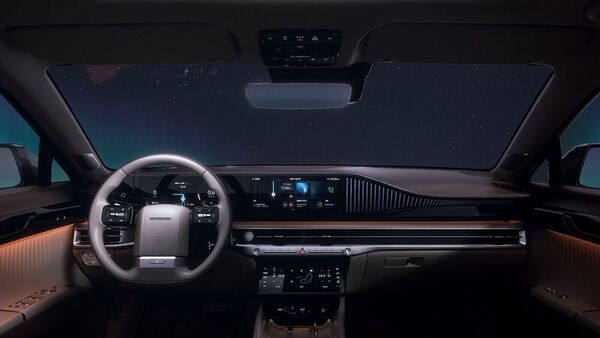
The new 17-inch high-resolution screen is divided into two primary functional zones to enhance both immersion and intuition:
- Information Panel (Left): This zone functions similarly to a traditional instrument cluster. It provides constant visibility of speed, warnings, and efficiency data. Notably, it also renders surrounding vehicles, objects, and pedestrians in 3-D to assist with situational awareness during driving or parking maneuvers.
- Control Panel (Right): This zone manages navigation, media, and various vehicle settings. The interface allows drivers to run two applications side-by-side or expand a single app to fill the entire screen.
In a strategic move to improve safety and usability, Hyundai has also reinstated physical buttons at the bottom of the display. This design choice directly addresses widespread customer feedback regarding the difficulties associated with navigating fully touch-based control systems while in motion. By combining a massive digital canvas with real physical buttons, Hyundai is attempting to bridge the gap between high-tech minimalism and ergonomic reliability.
Design Evolution: The “Shark Nose” and Refined Silhouette
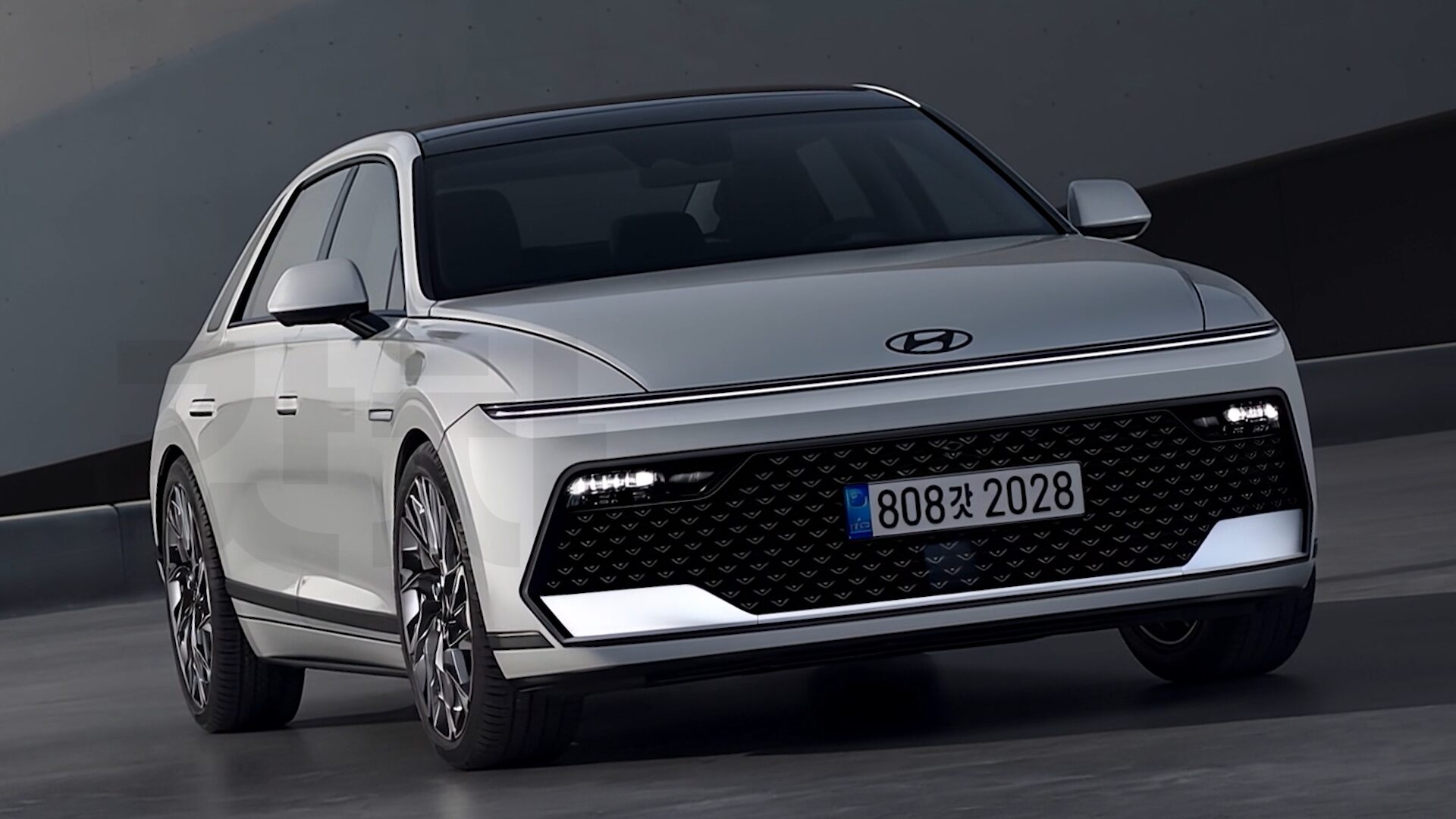
Visually, the Grandeur has undergone a significant transformation to achieve a more “refined silhouette.” One of the most striking changes is the adoption of a softened front fascia, which Hyundai has branded as a “shark nose” design. This represents complemented by a thinner, elongated seamless horizon lamp and sleeker headlamps, contributing to a more modern and aggressive presence.
The company has also focused on streamlining the vehicle’s exterior by removing traditional protrusions. For the first time on a Grandeur sedan, the conventional shark-fin antenna has been replaced with a hidden-type unit. This detail, while subtle, is part of a broader effort to achieve a cleaner, more sophisticated aesthetic that aligns with the vehicle’s premium positioning.
Feature Comparison: Grandeur Evolution
| Feature | Traditional Grandeur Elements | New Grandeur (2026 Facelift) |
|---|---|---|
| Infotainment System | Standard digital interfaces | Pleos Connect with Gleo AI |
| User Interface | Traditional clusters / Touch-heavy | 17-inch split-zone display & physical buttons |
| Antenna Design | External shark-fin unit | Hidden-type unit |
| Front Fascia | Standard premium styling | “Shark nose” design with seamless horizon lamp |
| Vehicle Architecture | Hardware-centric | Software-Defined Vehicle (SDV) |
Next-Generation Hybrid Powertrain
Recognizing the global shift toward electrification and the continued demand for efficient internal combustion alternatives, Hyundai has integrated a newly developed hybrid powertrain into the Grandeur lineup. This next-generation hybrid system is designed to work in tandem with the vehicle’s advanced software architecture, ensuring that efficiency and performance are optimized through real-time data processing.
The inclusion of a hybrid variant is a critical component of Hyundai’s strategy to appeal to a broad spectrum of premium buyers who require a balance of long-range capability, environmental consciousness, and the luxury expected of a flagship sedan. As the automotive industry navigates the complex transition from fossil fuels to electric power, the Grandeur’s hybrid approach provides a versatile bridge for the premium market.
Key Takeaways
- AI Integration: The debut of Gleo AI, a generative AI assistant, enables natural conversational interactions and proactive information delivery.
- SDV Transition: The Grandeur is a cornerstone of Hyundai’s shift toward Software-Defined Vehicles, prioritizing digital intelligence.
- Enhanced Interface: A new 17-inch central display features a dual-zone layout, combining high-resolution digital maps and 3-D situational awareness with physical buttons for safety.
- Design Refinement: The “shark nose” front design and hidden antenna create a cleaner, more modern aesthetic.
- Hybrid Focus: A next-generation hybrid powertrain is central to the model’s new lineup.
As Hyundai continues to roll out the Grandeur, market analysts will be closely monitoring sales data and consumer reception to determine if this heavy investment in AI and SDV technology can successfully reinvigorate the flagship sedan segment. The company’s ability to harmonize high-level computational power with the tactile expectations of luxury drivers will be the ultimate test of this new era.
We will continue to monitor official manufacturer filings and market performance reports for updates on the Grandeur’s global rollout.
What are your thoughts on the integration of generative AI in luxury vehicles? Does the return of physical buttons improve the experience, or is it a step backward? Share your comments below and share this article with your network.