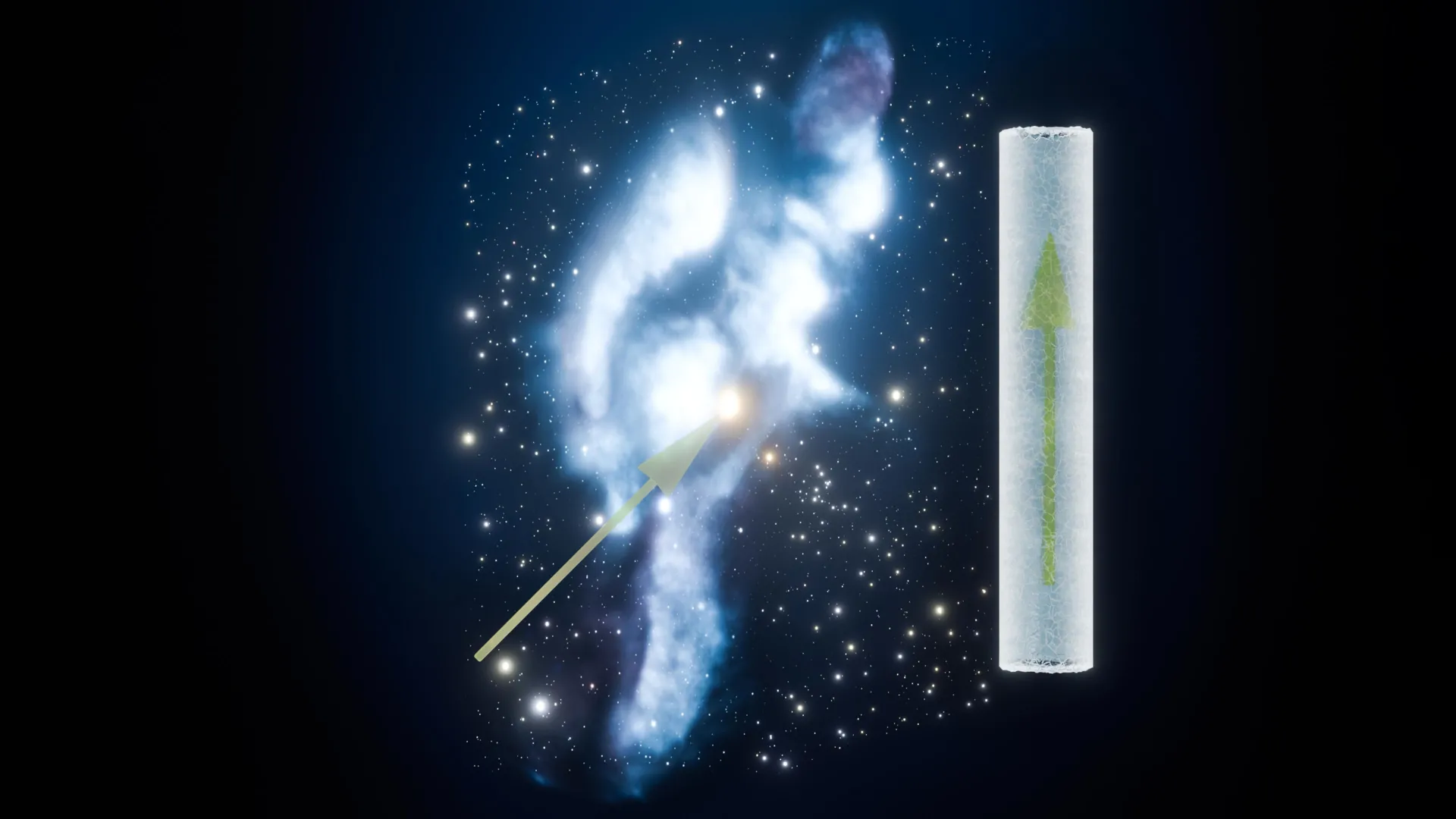
Earth Is Flying Through Ancient Supernova Debris—Scientists Found the Evidence in Antarctic Ice
Deep in the pristine ice sheets of Antarctica, scientists have uncovered a cosmic secret that rewrites our understanding of Earth’s galactic journey. New research confirms our solar system has been drifting through a vast cloud of radioactive debris left behind by a long-dead star—evidence preserved in ancient ice cores that reveals Earth’s silent passage through the remnants of a supernova explosion.
The discovery hinges on traces of iron-60, a rare isotope forged only in the violent deaths of massive stars. Unlike ordinary iron, iron-60 decays over time, making its presence on Earth a smoking gun of recent cosmic activity. By analyzing ice layers dating back up to 80,000 years, researchers found measurable amounts of this extraterrestrial isotope, proving our solar system has been collecting “cosmic ash” as it traverses the Local Interstellar Cloud—a diffuse region of gas and dust between stars.
This isn’t just ancient history. The findings, published in a series of peer-reviewed studies, suggest the cloud surrounding our solar system was shaped by one or more nearby supernovae. What’s more, the cosmic dust may have played a role in Earth’s climate and even influenced biological evolution—though the exact mechanisms remain a subject of intense study.
How Antarctic Ice Revealed a Cosmic Time Capsule
For decades, scientists have theorized that Earth occasionally passes through interstellar clouds enriched with heavy elements from dying stars. But direct evidence was elusive—until researchers turned to Antarctica’s ice cores. These cylindrical samples, drilled from the continent’s glaciers, act like a geological archive, trapping atmospheric particles layer by layer over millennia.
The breakthrough came when a team led by Dr. Anton Wallner, a nuclear physicist at the Australian National University, analyzed ice from the EPICA Dome C site in East Antarctica. Using ultra-sensitive mass spectrometry, they detected iron-60 atoms buried in the ice, their signatures unmistakable. “This is the first time we’ve been able to physically hold evidence of supernova debris on Earth,” Wallner explained in a 2023 Nature study.
Key to the discovery was the isotope’s half-life: iron-60 decays into cobalt-60 with a half-life of about 2.6 million years. Any iron-60 found on Earth today must have arrived recently—geologically speaking. The Antarctic ice confirmed the isotope’s arrival occurred in waves, suggesting Earth has been moving through a patchy cloud of supernova debris for tens of thousands of years.
“The ice cores show that Earth was showered with this material over a long period, not just a single event. This tells us our solar system has been embedded in this cosmic cloud for a very long time.”
The Local Interstellar Cloud: Our Solar System’s Cosmic Neighborhood
Our solar system isn’t drifting through empty space—it’s embedded in a vast, diffuse region called the Local Interstellar Cloud (LIC). This cloud, about 30 light-years wide, is one of many such regions in the Local Bubble, a cavernous area of low-density gas carved out by ancient supernovae. Until now, the LIC’s composition was largely inferred from observations of nearby stars and interstellar dust.
The new research adds a critical piece: the LIC contains measurable amounts of iron-60, proving it was enriched by supernovae. Most likely, these explosions occurred millions of years ago, but their debris has been drifting through space ever since. As our solar system moves through the cloud at about 26 km/s (16 mi/s), it collects this material—some of which ends up in Earth’s atmosphere and eventually settles into ice sheets.
To put this in perspective: the amount of iron-60 detected is minuscule—on the order of a few atoms per gram of ice. But it’s enough to confirm the cloud’s origin and trace its influence over time. “This is like finding a needle in a haystack, but the needle is radioactive and glows,” joked Dr. Brian Fields, an astrophysicist at the University of Illinois.
What Does This Mean for Earth—and Us?
The discovery raises fascinating questions about our planet’s cosmic environment. While the iron-60 levels detected are too low to pose any health risks, the findings have broader implications:
- Climate Influence: Some researchers speculate that cosmic rays from supernovae could have triggered changes in Earth’s atmosphere, potentially influencing cloud formation or even biological mutations. However, direct links remain speculative.
- Solar System Dynamics: The LIC’s composition helps explain why our solar system’s heliosphere—the bubble of charged particles around the Sun—has an unusual shape. The cloud’s pressure appears to be compressing the heliosphere from one side.
- Galactic Archaeology: By studying iron-60 in ice cores, scientists can reconstruct the timeline of nearby supernovae, offering a new way to map our galaxy’s violent history.
One lingering mystery is whether the supernovae that seeded the LIC were part of a single event or multiple explosions. Some models suggest a series of stellar deaths over millions of years, while others propose a “supernova cluster” where multiple stars went supernova in quick succession. The Antarctic ice data alone can’t resolve this, but it provides a crucial data point for future simulations.
How Do We Know This Isn’t Just Background Radiation?
A natural question: if iron-60 is so rare, how do we rule out terrestrial sources? The answer lies in the isotope’s unique fingerprint. Unlike iron produced on Earth—whether in rocks, industrial processes, or nuclear reactors—cosmic iron-60 carries a distinct ratio of other isotopes, such as manganese-53 and chromium-54. These “tag along” isotopes act as a signature, proving the iron’s extraterrestrial origin.
the ice cores show iron-60 concentrated in layers corresponding to specific time periods, not spread evenly. This rules out gradual accumulation from Earth’s crust and points to episodic influxes—exactly what you’d expect from a solar system passing through a patchy interstellar cloud.
To further confirm their findings, researchers cross-referenced the ice data with measurements from deep-sea sediments and lunar samples. All three sources showed elevated iron-60 levels around the same time frames, strengthening the case for a cosmic origin.
The Next Steps: What’s Being Studied Now?
This discovery is just the beginning. Scientists are now working to:
- Refine the timeline: By analyzing more ice cores from different Antarctic sites, researchers hope to pinpoint exactly when Earth entered and exited the densest parts of the cosmic cloud.
- Model the supernovae: Astrophysicists are using the iron-60 data to simulate where and when the nearby supernovae occurred, potentially identifying the stars responsible.
- Search for other isotopes: If iron-60 is present, other supernova-forged elements—like platinum-194 or palladium-107—might also be detectable in ice cores.
- Study biological impacts: Some theories suggest cosmic rays from supernovae could have driven mutations in early life, possibly contributing to evolutionary leaps. Researchers are now looking for correlations between iron-60 spikes and genetic records.
The next major milestone will likely come from the International Space Station’s Alpha Magnetic Spectrometer (AMS-02), which has been detecting cosmic rays—including potential supernova debris—for over a decade. Comparing AMS-02 data with the Antarctic ice findings could provide a three-dimensional picture of our solar system’s cosmic environment.
Key Takeaways: What You Need to Know
- Earth is collecting cosmic dust: Our planet has been drifting through a cloud of supernova debris for at least 80,000 years, with traces preserved in Antarctic ice.
- Iron-60 is the smoking gun: This rare isotope, only made in supernovae, was detected in ice layers, proving the debris is extraterrestrial.
- The Local Interstellar Cloud is real: Our solar system is embedded in this cloud, which was shaped by ancient stellar explosions.
- No immediate risks: The detected iron-60 levels are too low to affect Earth’s climate or health, but the discovery offers insights into our galactic neighborhood.
- Ongoing research: Scientists are now using this data to reconstruct the history of nearby supernovae and study their potential influence on Earth.
FAQ: Your Questions About Earth’s Cosmic Journey
Could this supernova debris affect us today?
Not directly. The levels of iron-60 detected are extremely low—far below anything that could impact human health or climate. However, studying this material helps us understand cosmic radiation’s long-term effects on Earth.
How do we know the iron-60 isn’t from Earth?
Cosmic iron-60 comes with a “signature” of other isotopes (like manganese-53) that don’t match Earth’s natural iron. The ice cores show iron-60 concentrated in specific layers, not spread evenly—consistent with Earth passing through a patchy cloud.
Could this have influenced human evolution?
Some theories suggest cosmic rays from supernovae could have increased mutation rates in early life, potentially driving evolutionary changes. However, direct evidence linking iron-60 to human genetics is still being explored.
Where can I learn more about this research?
For the latest updates, follow studies published in Nature and Science. The Australian National University and NASA’s heliophysics division are also actively researching this topic.
What’s next for this research?
The next major developments will likely come from:
- Further analysis of Antarctic ice cores from multiple sites.
- Cross-referencing with data from the Alpha Magnetic Spectrometer (AMS-02) on the ISS.
- Simulations to model the supernovae that seeded the Local Interstellar Cloud.
What do you think? Could Earth’s passage through supernova debris have played a role in our planet’s history? Share your thoughts in the comments—or tag @WorldTodayJ to join the conversation.
Like this story? Share it with a friend who loves space science—or save it for your next astronomy chat!
Worth a look