
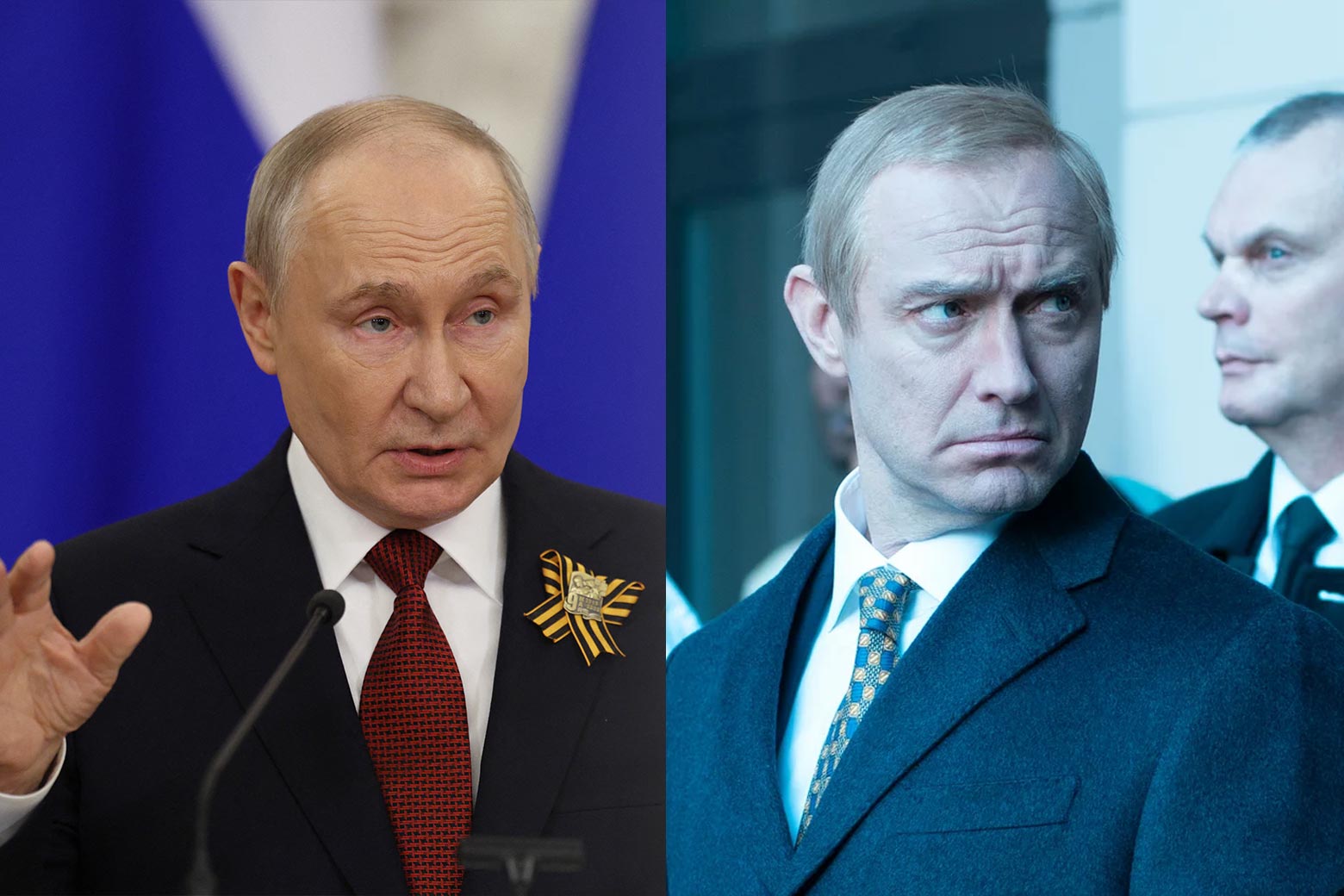
The corridors of the Kremlin have long been regarded as one of the world’s most impenetrable political landscapes. For decades, the inner workings of Russian power have been shrouded in a layer of strategic opacity, leaving international observers, economists, and historians to piece together the reality of the state through fragments of intelligence, diplomatic cables, and leaked rumors. In this vacuum of information, the line between political reality and carefully constructed myth often becomes blurred.
Mikhail Zygar’s The Wizard of the Kremlin attempts to pierce this veil, offering an intensive look at the evolution of the Russian state and the consolidation of power that has defined the modern era. However, as the book navigates the treacherous waters of authoritarian politics, it raises a fundamental question for the reader: how much of what is presented is verifiable history, and how much is the necessary narrative of an investigative journalist operating in a high-stakes environment?
For global markets and geopolitical strategists, understanding this distinction is not merely an academic exercise. The stability of energy markets, the trajectory of international sanctions, and the predictability of Eurasian security depend heavily on distinguishing between the Kremlin’s official posture and its actual operational mechanics. As we dissect The Wizard of the Kremlin, we must weigh the value of its insider perspectives against the inherent difficulty of verifying claims within a closed system.
The Architect of the Narrative: Mikhail Zygar’s Methodology
To understand the tension between fact and fiction in the text, one must first understand the methodology employed by Mikhail Zygar. Unlike traditional historians who rely on archived state documents—which, in the case of the Russian Federation, are often classified or selectively released—Zygar utilizes a form of investigative political biography. His approach is built upon a foundation of interviews with former officials, members of the inner circle, and individuals who have navigated the shifting loyalties of the Russian political elite.
This method provides a level of granular detail that official state media cannot offer. Zygar describes the nuances of the “siloviki”—the security-focused elite—and the complex web of patronage that sustains the current administration. By focusing on the personalities and the interpersonal dynamics of power, the book moves beyond dry policy analysis into the realm of political psychology. This provides a compelling narrative, but it also introduces the primary challenge of the work: the subjectivity of the source.
In an environment where information is a weapon, every interviewee has an agenda. A former official may provide information to settle a score, to signal a shift in power, or to protect their own standing. While Zygar’s accounts are deeply researched, they function more as a collection of high-level perspectives than a definitive, indisputable record. The “fact” in this context is not just the event described, but the fact that a specific individual perceived the event in a certain way.
Verifying the Unverifiable: The Fact-Fiction Divide
The central debate surrounding The Wizard of the Kremlin is whether the book should be read as a factual chronicle or a narrative interpretation of power. To navigate this, it is helpful to categorize the book’s content into three distinct layers: the verifiable, the circumstantial, and the speculative.
- The Verifiable: These are the foundational events that are documented through multiple, independent channels—such as major shifts in leadership, specific legislative changes, and known geopolitical maneuvers. The book’s timeline of the transition from the Yeltsin era to the current administration is largely supported by the broader historical record.
- The Circumstantial: This layer consists of the “why” behind the “what.” Zygar provides explanations for policy shifts and internal power struggles based on his interviews. While these accounts are highly detailed and logically consistent with the political climate, they rely on the testimony of individuals whose motives may be complex.
- The Speculative: This involves the psychological profiling of the leadership and the prediction of future moves. While these sections provide the “layers” that make the book a compelling read, they reside in the realm of expert analysis rather than hard, verifiable data.
This distinction is critical for professional analysts. When reading about the internal mechanics of a regime, the “fiction” is not necessarily a fabrication of events, but rather the potential for “narrative truth” to supersede “objective truth.” In the world of high-stakes diplomacy, a leader’s perception of their own power is often more impactful than the actual legal or economic constraints placed upon them.
For those seeking to verify the broader context of Russian political shifts, authoritative reporting from agencies such as Reuters provides a necessary counterweight, focusing on the measurable impacts of Kremlin policy on global trade and international law.
Geopolitical Echoes: Why the Narrative Matters Globally
The discussion of The Wizard of the Kremlin extends far beyond the borders of Russia. The book’s exploration of how power is consolidated and maintained has found a resonant audience in Western political circles. There is a growing fascination with the “playbook” of modern autocracies—the methods by which traditional democratic structures can be hollowed out from within while maintaining a veneer of legitimacy.
This resonance is particularly evident in the way political observers draw parallels between the Kremlin’s tactics and movements in other major democracies. The book touches upon the concept of the “strongman” and the use of media control to shape public perception, themes that have become central to political discourse in the United States and Europe. This connection is not merely about imitation; it is about the shared vulnerabilities of modern political systems to centralized, personality-driven leadership.
From a business and economic perspective, the implications are profound. The rise of “illiberal” political models can lead to increased volatility in international relations, as decisions may be driven by the preservation of a leader’s image rather than by long-term economic stability or international treaty obligations. Understanding the “wizardry” of how these leaders manage their internal and external perceptions is essential for any global entity looking to mitigate political risk.
To understand the broader implications of these political shifts on global security, analysts frequently monitor updates from the BBC and other major international broadcasters that track the intersection of politics and conflict.
Comparing Information Sources in Authoritarian Contexts
To help readers distinguish between different types of political information, the following table compares the utility and reliability of various sources when studying a closed political system.

| Source Type | Primary Strength | Primary Weakness | Best Use Case |
|---|---|---|---|
| Official State Media | Provides the intended government narrative. | High level of censorship and propaganda. | Understanding the regime’s public stance. |
| Investigative Memoirs (e.g., Zygar) | Offers deep, psychological, and insider insight. | Subject to interviewee bias and lack of direct proof. | Understanding internal power dynamics. |
| International Intelligence/Journalism | Focuses on verifiable, cross-referenced data. | May lack the “human” or “insider” nuance. | Verifying major events and policy shifts. |
| Economic/Market Data | Provides objective evidence of state health. | Does not explain the “why” behind the numbers. | Assessing the actual strength of the regime. |
Conclusion: Navigating the Layers of Power
The Wizard of the Kremlin is not a textbook of undisputed facts, nor is it a work of pure fiction. It is a sophisticated piece of investigative political literature that exists in the gray zone between the two. Its value lies in its ability to provide a framework for understanding the complex, often irrational, motivations that drive one of the world’s most significant political actors.
For the discerning reader, the book serves as a reminder that in the realm of global politics, truth is often a multi-layered construct. The “layers” mentioned in recent critiques are not just narrative flourishes; they are a reflection of the reality of modern power, where perception is often as consequential as policy.
Next Checkpoint: As geopolitical tensions continue to evolve, analysts will be looking toward the next series of international summits and economic data releases from the Eurasian region to see if the internal power dynamics described by Zygar manifest in upcoming policy shifts.
What are your thoughts on the intersection of investigative journalism and political stability? Do you believe insider accounts are essential for understanding modern autocracies? Share your insights in the comments below and share this article with your network.