
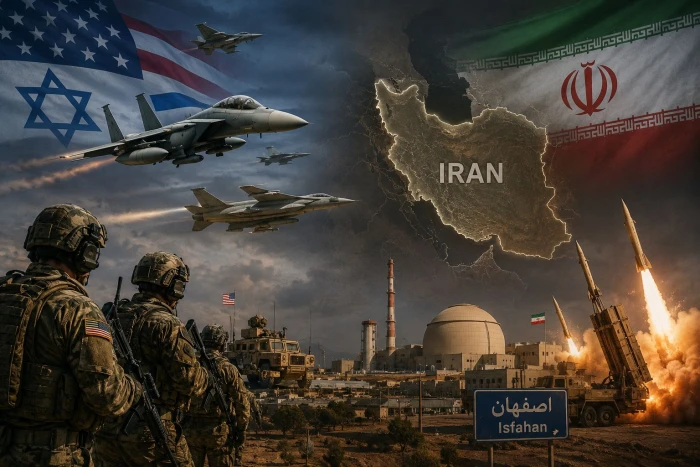
The geopolitical landscape of the Middle East has entered a period of acute instability as reports emerge of intensified military coordination between the United States and Israel. In a climate of deepening diplomatic deadlock, the two allies are reportedly refining operational plans for potential military actions against Iranian targets, signaling a precarious shift from a “shadow war” toward the possibility of direct, large-scale confrontation.
This escalation comes at a critical juncture for regional security, with military analysts observing a heightened state of readiness across both the Israel Defense Forces (IDF) and U.S. Central Command (CENTCOM) assets. While neither Washington nor Tel Aviv has officially confirmed a specific timeline for new operations, the strategic positioning of aircraft and naval assets suggests a posture designed for rapid response and high-intensity engagement.
The current friction is underscored by a perceived stalemate in diplomatic channels, leaving military options as the primary lever of deterrence. As the international community monitors the situation, the risk of a miscalculation—or a deliberate strike—threatens to ignite a broader regional conflict that could draw in multiple state and non-state actors, potentially disrupting global energy markets and humanitarian stability.
Strategic Coordination and Military Readiness
Reports indicate that the United States and Israel are currently synchronizing their military capabilities to prepare for a variety of scenarios involving Iranian infrastructure. These preparations are believed to focus on high-value military targets and strategic assets within Iran, aimed at degrading Tehran’s ability to project power through its regional proxies or advance its nuclear capabilities.
The coordination involves complex intelligence sharing and the alignment of air superiority assets. According to general regional security frameworks, such operations typically require the integration of stealth capabilities and long-range precision munitions to minimize collateral damage while maximizing the impact on command-and-control centers. The U.S. Central Command (CENTCOM) continues to maintain a significant presence in the region to ensure the freedom of navigation and to deter aggression against allied partners.
Military experts suggest that these preparations serve two purposes: first, as a tangible deterrent to discourage Iran from further escalation, and second, as a necessary operational safeguard should diplomacy fail entirely. The focus on “intensive preparations” reflects a shift toward a proactive defense strategy, ensuring that any potential strike is executed with overwhelming force and precision.
The Lebanon Dimension: A Fragile Truce
Parallel to the tensions with Tehran, the situation in Lebanon remains a volatile flashpoint. Unconfirmed reports have circulated regarding potential adjustments to the existing ceasefire agreements, including discussions about a 45-day extension to prevent a full-scale return to hostilities. However, official confirmation of such an extension has not been issued by the primary mediating parties.

The stability of the Lebanese ceasefire is inextricably linked to the broader Iran-Israel conflict. Because Hezbollah operates as a key strategic partner for Iran, any direct strike on Iranian soil could trigger a retaliatory response from the Lebanese border, effectively nullifying existing truce agreements. The prospect of renewed fighting in Lebanon would not only displace thousands of civilians but also force Israel to fight a multi-front war, complicating the logistics of any operation against Iran.
Diplomats are currently working to decouple the Lebanese ceasefire from the direct Iran-Israel friction, though many argue that such a separation is impossible. The U.S. Department of State has consistently emphasized the need for a sustainable diplomatic resolution in Lebanon to avoid a regional spillover that would jeopardize the security of the entire Levant.
Diplomatic Stagnation and the Path Forward
The shift toward military readiness is largely a byproduct of a profound stagnation in negotiations. For months, efforts to reach a comprehensive agreement on nuclear containment and regional security have stalled, with both sides entrenched in their respective demands. Tehran continues to face stringent sanctions, while Israel views the current diplomatic trajectory as insufficient to neutralize the existential threat posed by Iran’s nuclear ambitions.
The current administration in Washington finds itself balancing the need to support Israel’s security requirements with the desire to avoid a catastrophic regional war. This “calculated ambiguity” has led to a scenario where military plans are kept “warm”—ready for immediate execution—while diplomatic doors remain ajar, albeit only slightly. The lack of a clear diplomatic off-ramp has increased the likelihood that a tactical incident could inadvertently trigger a strategic escalation.
Key points of contention in the current diplomatic deadlock include:
- The verification of Iranian nuclear facility activities.
- The cessation of weapons transfers to regional proxy groups.
- The establishment of a new regional security architecture that recognizes Israel’s sovereignty.
Regional Implications: Why the World is Watching
The potential for a direct U.S.-Israeli military operation against Iran carries implications that extend far beyond the borders of the Middle East. The global economy remains highly sensitive to the stability of the Strait of Hormuz, a critical chokepoint for global oil shipments. Any conflict that threatens this waterway could lead to a sharp spike in energy prices, triggering inflationary pressures worldwide.

the humanitarian cost of a broadened conflict would be immense. The region is already reeling from years of proxy warfare and internal instability. A direct confrontation between major powers would likely result in significant civilian casualties and a new wave of displacement, placing an unbearable burden on neighboring states and international aid organizations.
From a geopolitical perspective, this crisis tests the resilience of U.S. Alliances in the region. The coordination between Washington and Tel Aviv signals a unified front, but it also invites scrutiny from other regional players who fear being caught in the crossfire. The ability of the U.S. To lead a coalition that prevents total war while simultaneously neutralizing threats is the central challenge of current Middle Eastern diplomacy.
Key Takeaways
- Military Alignment: The U.S. And Israel are reportedly synchronizing air and naval assets for potential strikes on Iranian military infrastructure.
- Lebanon Volatility: Reports of a potential 45-day ceasefire extension in Lebanon highlight the fragility of the current truce.
- Diplomatic Failure: A stalemate in nuclear and security negotiations has shifted the focus toward military deterrence.
- Global Risk: Potential escalation threatens global oil supplies and risks a wider regional humanitarian crisis.
As the situation evolves, the international community awaits a definitive signal from the White House and the Israeli government regarding their ultimate objectives. The coming days will be critical in determining whether the current military preparations remain a deterrent or become the prelude to an active campaign.
The next confirmed checkpoint for observers will be the upcoming scheduled security briefings from the U.S. Department of Defense, where updates on regional posture and deployment levels are expected to be provided.
We invite our readers to share their perspectives on these developments in the comments below. Please share this report to keep your network informed on this developing global story.