
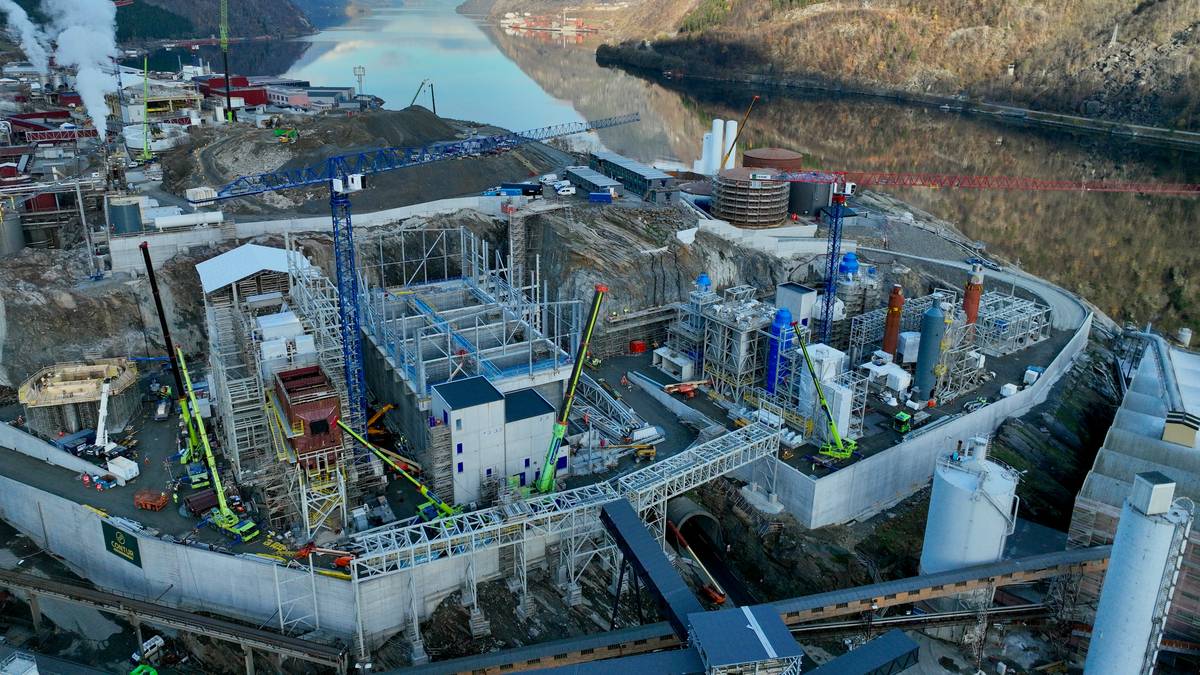
The global transition toward a low-carbon economy relies heavily on the production of base metals, yet the process of extracting and refining these materials often creates a fundamental paradox. At the heart of this struggle is Boliden Odda, a critical zinc smelting operation in southern Norway, where a drive for increased production is colliding with stringent environmental mandates.
Recent data reveals a complex narrative: while the facility has implemented significant technological upgrades to reduce the carbon intensity of its operations, the absolute volume of CO2 emissions has risen. This development highlights a recurring challenge for heavy industry—the “efficiency gap,” where gains in per-unit sustainability are eclipsed by an overall increase in industrial output.
For investors and policymakers, the situation at Boliden Odda serves as a case study in the friction between scaling up the supply of “green transition” metals and meeting immediate national emission targets. As the demand for zinc—essential for protecting steel in wind turbines and solar infrastructure—climbs, the pressure to produce more is often at odds with the goal of absolute emission reductions.
As Chief Editor of Business at World Today Journal, I have observed this trend across several European industrial hubs. The transition from “intensity-based” targets to “absolute” targets is where many multinational firms currently face their steepest operational hurdles. In the case of Boliden, the struggle is not a lack of investment in climate technology, but rather a mathematical reality of industrial scaling.
The Volume-Efficiency Paradox at Boliden Odda
Boliden has invested heavily in its Odda operations to modernize the smelting process and minimize the environmental footprint of each ton of zinc produced. These climate measures were designed to make the plant one of the most climate-effective zinc smelters in the world. However, the strategic decision to double zinc production has fundamentally altered the emissions trajectory of the site.
The core of the issue lies in the distinction between emission intensity and absolute emissions. Emission intensity measures the amount of CO2 produced per unit of product. By upgrading machinery and optimizing energy use, Boliden has successfully lowered this ratio. Yet, because the total volume of zinc being processed has increased so substantially, the total amount of CO2 released into the atmosphere has trended upward.
This scenario is common in the metals and mining sector. When a company expands its capacity to meet global demand, the efficiency gains provided by new technology often act as a brake on emission growth rather than a catalyst for a total decrease. For Boliden Odda, the expansion is a commercial necessity to remain competitive in a global market, but it creates a diplomatic and regulatory challenge within Norway’s strict climate framework.
The Norwegian government has set ambitious goals to reduce greenhouse gas emissions by 55% by 2030 compared to 1990 levels, as outlined in the Norwegian government’s climate policy. When a major industrial employer like Boliden reports a rise in absolute emissions, it creates tension between local economic stability and national environmental commitments.
Zinc’s Role in the Global Green Transition
To understand why Boliden is pushing for increased production despite the emissions risks, one must look at the utility of zinc. Zinc is not merely a commodity; it is a primary component in the galvanization process, which prevents steel from corroding. Without high-quality galvanized steel, the longevity of critical renewable energy infrastructure—such as the towers of offshore wind turbines and the mounting frames of solar arrays—would be severely compromised.
The global shift toward electrification requires a massive increase in the production of base metals. This creates a strategic dilemma for the European Union and its partners: they require more zinc to build the green economy, but the production of that zinc remains carbon-intensive. Boliden, as a Swedish multinational with operations across Europe, is positioned to fill this supply gap, but it must do so under the scrutiny of an increasingly carbon-conscious regulatory environment.
The company’s operations in Boliden’s diverse portfolio include not only zinc but also copper, lead and precious metals, all of which are essential for the modern energy grid. By expanding the Odda plant, Boliden is attempting to secure a dominant position in the supply of low-carbon-intensity zinc, even if the absolute emissions of the plant rise during the growth phase.
Regulatory Pressure and the Cost of Carbon
The rise in emissions at Boliden Odda does not occur in a vacuum. The facility operates within the framework of the EU Emissions Trading System (EU ETS), which puts a direct price on carbon. Under this system, companies must hold allowances for every ton of CO2 they emit. As the EU reduces the number of available allowances to force a decline in total emissions, the cost of polluting increases.
For Boliden, In other words that any increase in absolute emissions comes with a corresponding increase in financial liability. The company is essentially betting that the revenue generated from doubled zinc production will far outweigh the rising costs of carbon credits. This represents a high-stakes financial calculation that depends on the stability of zinc prices and the pace of EU regulatory shifts.
the Norwegian Environment Agency (Miljødirektoratet) monitors industrial emissions closely. When production increases lead to higher emissions, the company may face pressure to implement even more aggressive carbon capture and storage (CCS) technologies or to shift toward entirely hydrogen-based reduction processes—technologies that are still in the early stages of industrial scaling.
What This Means for the Industrial Sector
The situation at Boliden Odda is a harbinger for other heavy industries across the Nordics and Europe. As these regions attempt to “green” their industrial bases, they are discovering that efficiency is not the same as elimination. The transition to a net-zero economy requires a total decoupling of economic growth from carbon emissions—a feat that has yet to be fully achieved in the smelting and refining sectors.

For the workforce in Odda, the expansion represents job security and regional investment. For the environmental regulator, it represents a setback in the race toward 2030 targets. This tension illustrates the “Just Transition” challenge: ensuring that the move to a green economy does not dismantle the industrial foundations of local communities, while simultaneously ensuring that those communities do not become hotspots for carbon leakage.
The path forward for Boliden likely involves a two-pronged approach: continuing to drive down the intensity of emissions through iterative technological updates, while exploring large-scale carbon sequestration to offset the volume of production. Until carbon capture becomes economically viable at scale for zinc smelting, the company will remain caught between the demand for its product and the demand for a cleaner atmosphere.
Key Takeaways for Stakeholders
- The Efficiency Gap: Boliden Odda has reduced the carbon intensity per ton of zinc, but total CO2 emissions have risen due to a significant increase in overall production volume.
- Strategic Necessity: Zinc is critical for the durability of renewable energy infrastructure, driving the commercial need for expanded production despite environmental costs.
- Regulatory Friction: The rise in absolute emissions conflicts with Norway’s 2030 climate goals and increases the company’s exposure to EU ETS carbon pricing.
- Industrial Precedent: This case highlights the difficulty of decoupling industrial growth from carbon output in the base metals sector.
The next critical checkpoint for the facility will be the release of the next annual environmental impact report, which will determine if the efficiency gains are beginning to outpace the growth in production volume. This data will be essential for regulators deciding on future emission permits and for investors assessing the company’s long-term ESG viability.
We invite our readers to share their perspectives on the balance between industrial expansion and climate goals in the comments below. How should governments weigh the need for transition metals against absolute emission targets?