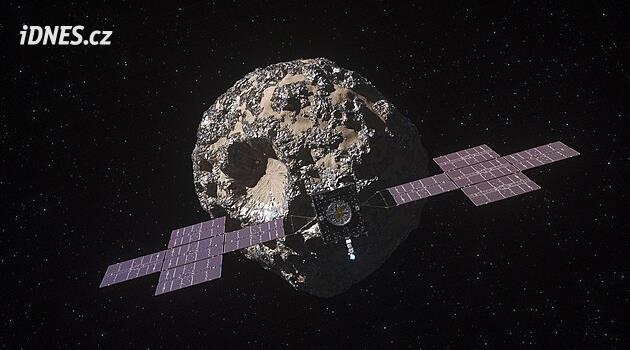
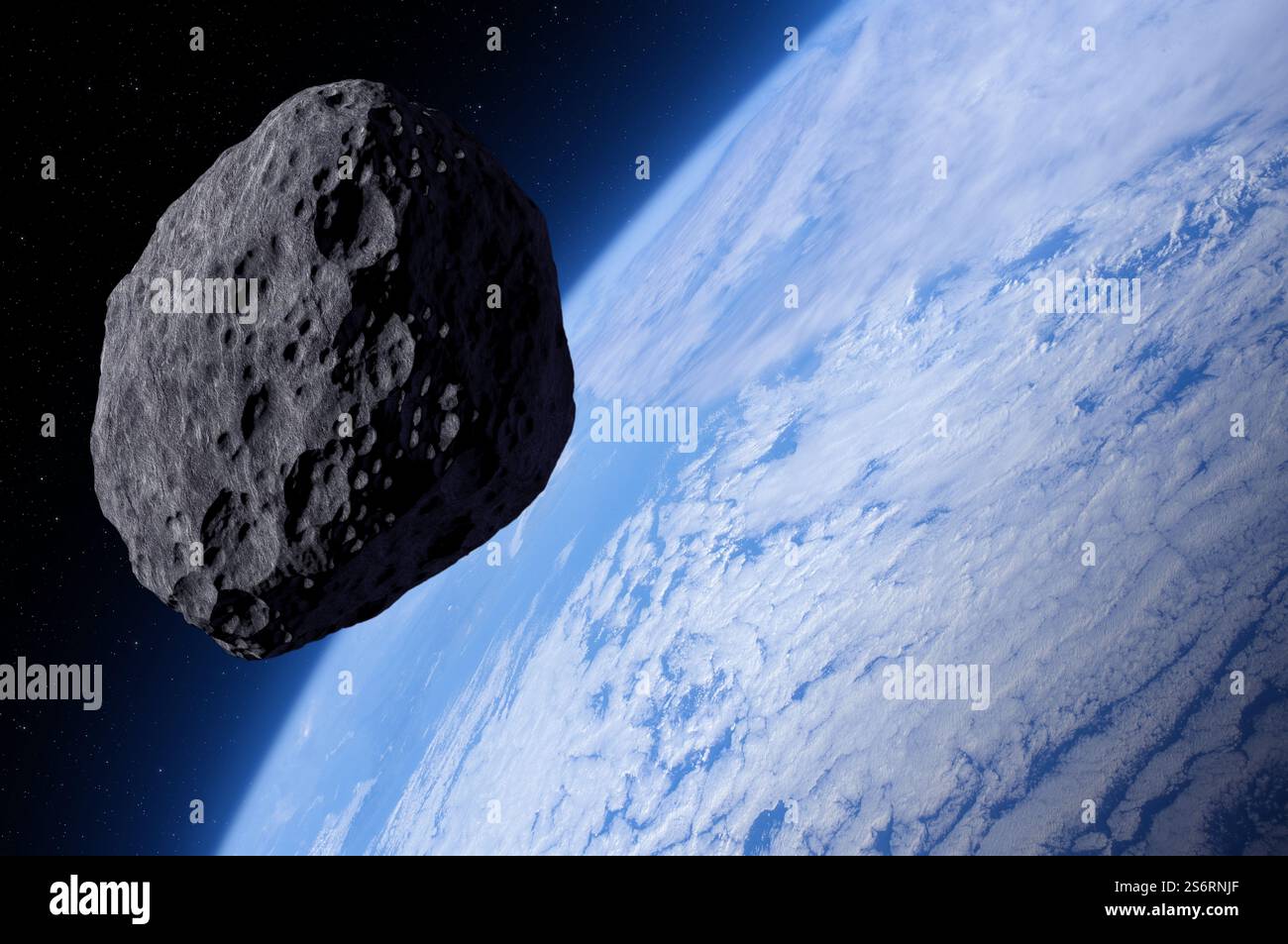
In a significant celestial event for both astronomers and amateur stargazers, the asteroid designated 2026 JH2 is making a notable close approach to Earth. Current data indicates that the object will pass closer to our planet than the Moon, marking a rare opportunity for direct observation of a Near-Earth Object (NEO).
While the term “close approach” often captures public attention due to concerns over planetary impact, the trajectory of 2026 JH2 is currently being treated by the scientific community as a high-interest observational event rather than a direct threat. The proximity of the asteroid offers a unique window for researchers to study the characteristics of such objects as they traverse the inner solar system.
For those looking to witness this event from the ground, the asteroid is expected to be visible using standard, small-scale telescopes. Unlike many deep-space objects that require professional-grade observatory equipment, 2026 JH2’s current path brings it into a range that is accessible to the hobbyist community, provided they know where to look.
Observing 2026 JH2: Location and Equipment
To successfully track the passing asteroid, observers should focus their attention toward the Ursa Major constellation. This region of the night sky will serve as the primary backdrop for the asteroid’s transit. Because the object is moving through a specific sector of the celestial sphere, timing and clear sky conditions will be critical for a successful sighting.
If you are planning to observe the flyby, consider the following practical guidance:
- Equipment: While professional observatories are monitoring the object, 2026 JH2 is expected to be visible through small telescopes and even high-powered binoculars.
- Target Area: Direct your search toward the vicinity of the Ursa Major (the Great Bear) constellation.
- Conditions: Seek out locations with minimal light pollution to enhance the visibility of the asteroid against the starfield.
As the asteroid moves through its closest point of approach, its apparent motion against the fixed stars may be detectable, offering a dynamic view of a celestial body in motion.
The Context of Near-Earth Objects (NEOs)
The approach of 2026 JH2 is part of a broader, ongoing scientific effort to map and understand the thousands of objects that inhabit our cosmic neighborhood. The European Space Agency (ESA) has identified approximately 40,000 asteroids in the vicinity of Earth, a staggering number that underscores the importance of continuous monitoring.

Near-Earth Objects, or NEOs, are asteroids or comets that have orbits that bring them into proximity with Earth. These objects are essential for scientists to study because they provide a “time capsule” of the early solar system’s composition. By analyzing the movement and composition of objects like 2026 JH2, researchers can better understand the gravitational influences and orbital mechanics that govern our solar system.
Organizations such as NASA and ESA utilize sophisticated tracking systems and automated surveys to maintain a catalog of these objects. This data is crucial not only for scientific discovery but also for the long-term safety of our planet.
Why Close Approaches Matter
Every time an asteroid passes within a distance closer than the Moon, it provides a data point that refines our mathematical models of orbital paths. These “close approaches” allow astronomers to:
- Refine the ephemeris (the predicted position of a celestial object) to ensure even greater accuracy in future tracking.
- Study the albedo (reflectivity) and size of the object through light-curve analysis.
- Test the sensitivity of current planetary defense detection technologies.
Planetary Defense and Global Monitoring
The monitoring of 2026 JH2 is a testament to the maturity of modern planetary defense strategies. The ability to predict the path of an asteroid well in advance of its arrival is a cornerstone of modern space science. Through global cooperation, space agencies ensure that any object with a potentially hazardous trajectory is identified, tracked, and analyzed long before it poses a risk.
This constant vigilance is supported by a network of ground-based telescopes and space-based surveillance. These systems work in tandem to ensure that the “near-misses” we experience—like the current approach of 2026 JH2—are used as opportunities for learning rather than causes for alarm. As technology advances, our ability to not only detect these objects but also to potentially deflect them in the future continues to grow, moving us closer to a proactive stance in cosmic protection.
Key Takeaways for Observers
- Object Name: Asteroid 2026 JH2.
- Proximity: Passing closer to Earth than the Moon.
- Visibility: Accessible via small telescopes.
- Primary Location: Near the Ursa Major constellation.
Astronomers will continue to provide updated orbital data as 2026 JH2 moves past its closest point of approach. We will monitor official updates from major space agencies for any changes in the object’s tracked trajectory.
What are your thoughts on the increasing frequency of these celestial close encounters? Do you plan on attempting to observe 2026 JH2? Let us know in the comments below and share this article with your fellow stargazers.