
LONDON — A growing legislative battle in Washington is threatening to reshape the operational landscape of United States border management. At the heart of the controversy is a high-stakes proposal aimed at securing three years of dedicated funding for immigration enforcement agencies, a move that proponents argue is essential for national stability but critics contend bypasses fundamental Congressional procedural rules.
The proposal, which seeks to provide long-term fiscal certainty to agencies such as U.S. Customs and Border Protection (CBP) and Immigration and Customs Enforcement (ICE), represents a significant departure from the traditional annual appropriations process. While the move is designed to provide these agencies with the multi-year stability required for large-scale technological and personnel deployments, it has ignited a fierce debate over the “power of the purse” and the adherence to established legislative protocols.
As the White House and Congressional leaders navigate this impasse, the implications extend far beyond the borders. The outcome of this procedural skirmish will likely set a precedent for how future multi-year funding for critical federal agencies is handled, potentially altering the balance of power between the Executive and Legislative branches.
The Multi-Year Funding Push: A Shift in Border Policy?
For decades, federal agencies have operated under the framework of annual budget cycles, a process that requires constant negotiation and leaves departments vulnerable to “fiscal cliffs” and sudden shifts in political priority. The new proposal seeks to break this cycle by earmarking funds for immigration enforcement for a three-year window.
Proponents of the measure argue that the current volatility in border security funding prevents agencies from making necessary long-term investments. “You cannot build a sustainable security infrastructure on a year-to-year basis,” one legislative strategist noted during recent discussions in the House. The goal is to allow for the procurement of advanced surveillance technology, the expansion of processing facilities, and the long-term hiring of specialized personnel without the threat of mid-cycle budget cuts.
The scale of the proposed funding is substantial. By providing a multi-year runway, the administration and its allies hope to stabilize the Department of Homeland Security (DHS), ensuring that enforcement operations remain consistent regardless of the immediate political temperature in Washington. However, this attempt at stability is precisely what has drawn the ire of constitutional scholars and procedural experts.
Procedural Hurdles: Why Critics Claim Rules are Being Bypassed
The core of the controversy lies in how this funding is being sought. Under the United States Constitution, the power to tax and spend is explicitly vested in Congress. Critics argue that the current proposal may attempt to circumvent the standard appropriations process through mechanisms that do not strictly adhere to the Congressional Budget Act or the specific rules governing budget reconciliation.
There are two primary concerns being raised by legal experts and opposition lawmakers:
- Violation of the Appropriations Clause: Some argue that attempting to secure multi-year commitments through legislative maneuvers—rather than through the traditional, rigorous committee process—undermines the ability of Congress to exercise its constitutional oversight.
- Bypassing the Byrd Rule: If the proposal is attached to a reconciliation bill, it must comply with the “Byrd Rule,” which prohibits provisions that are essentially budgetary in nature and do not have a direct impact on the deficit. Opponents argue that the long-term funding of agency operations is a policy matter, not a strictly budgetary one, and therefore should not be part of a reconciliation package.
If the proposal is found to be in violation of these rules, it could face immediate legal challenges in federal court, potentially stalling immigration enforcement funding indefinitely and creating a vacuum of authority at the border.
The Economic and Operational Stakes for Immigration Agencies
From an economic perspective, the transition from annual to multi-year funding is a double-edged sword. As a specialist in global markets and economic policy, I observe that while multi-year budgets provide the predictability necessary for large-scale capital expenditures, they also reduce the “fiscal agility” of the government to respond to unforeseen crises.
For the agencies involved, the stakes are operational. Agencies like CBP and ICE rely on complex supply chains for technology, ranging from biometric sensors to transport vehicles. A three-year funding guarantee would allow these agencies to enter into long-term contracts, likely reducing costs through economies of scale. However, the risk of “budgetary lock-in” is real; once these funds are committed, it becomes significantly harder for future administrations to redirect resources toward different priorities, such as humanitarian aid or domestic security shifts.
The following table outlines the potential impact of the proposed funding shift:
| Feature | Annual Appropriations (Current) | Multi-Year Proposal (Proposed) |
|---|---|---|
| Operational Predictability | Low; subject to yearly political shifts. | High; allows for long-term planning. |
| Fiscal Agility | High; funds can be redirected annually. | Low; funds are committed for 3 years. |
| Contracting Efficiency | Moderate; limited to short-term cycles. | High; supports long-term vendor contracts. |
| Legislative Oversight | Continuous and granular. | Periodic; harder to adjust mid-cycle. |
Key Takeaways: The Border Funding Debate
- The Objective: A new proposal seeks to provide three years of guaranteed funding for U.S. Immigration enforcement agencies to ensure operational stability.
- The Controversy: Critics argue the proposal may bypass constitutional and Congressional rules designed to protect the “power of the purse.”
- The Beneficiaries: Agencies like CBP and ICE would gain the ability to make long-term technological and personnel investments.
- The Risk: Legal challenges regarding the legitimacy of the funding mechanism could lead to significant delays and operational uncertainty.
- The Economic Shift: Moving away from annual budgets toward multi-year cycles offers efficiency but reduces the government’s ability to pivot during crises.
What’s Next for the Border Security Legislation?
The immediate future of this proposal depends on upcoming committee hearings and the formal introduction of the bill in both the House and the Senate. Legal scholars will be closely watching for any attempts to use reconciliation to bypass the standard budgetary debate, as this will likely be the first point of litigation.
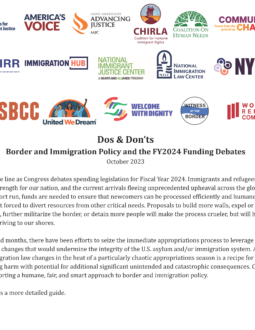
The next major checkpoint will be the Senate Finance Committee hearing, where lawmakers are expected to debate the procedural legitimacy of the multi-year funding mechanism. Until then, the status of immigration enforcement funding remains in a state of high-stakes uncertainty.
What are your thoughts on the shift toward multi-year federal funding? Does it provide necessary stability, or does it undermine Congressional oversight? Share your views in the comments below and share this article with your network.
- 373 Emirates Passengers Trapped in A380 for 10 Hours in China: AC Failure and Health Issues Reported
- Marlon Wayans Urges Parents to Stop Spanking: “Don’t Make Your Child Your Enemy
- NAMA Shutdown: The Legacy of Ireland’s Bad Bank 16 Years After Financial Collapse (news-usa.today)
- Anthropic Reveals AI Models Accidentally Cyberattacked Three Organizations (world-today-news.com)