
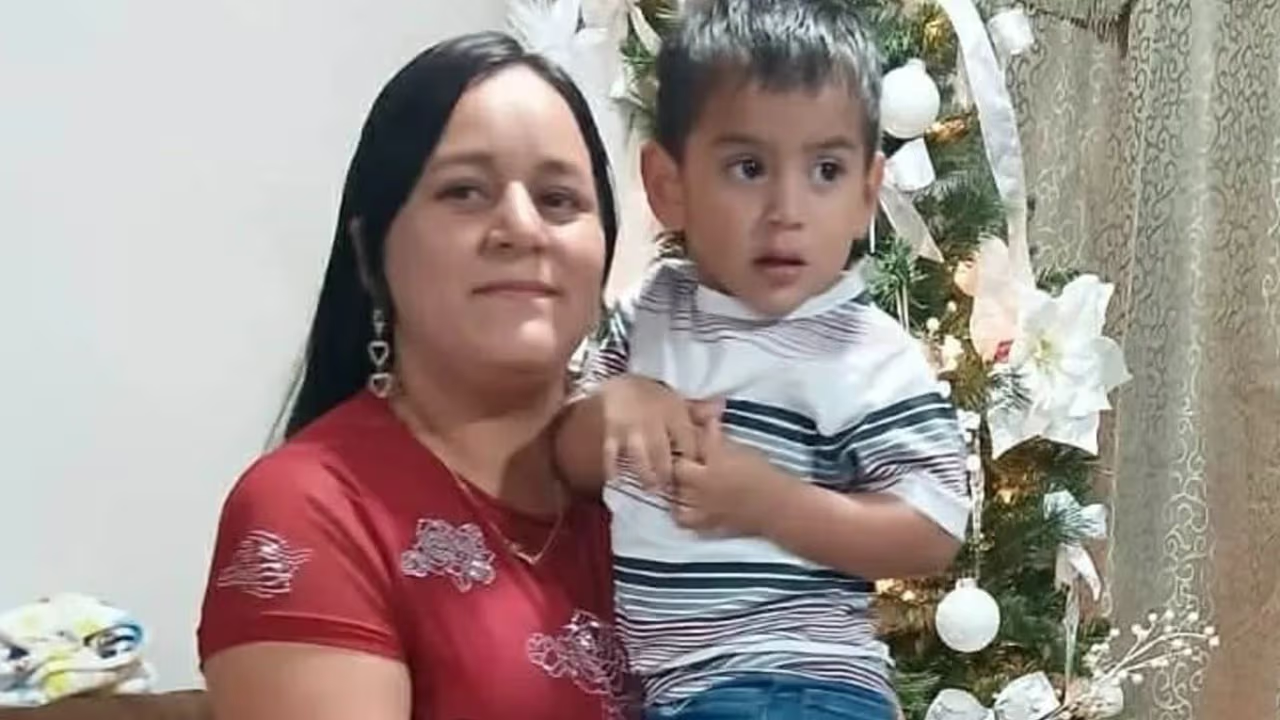
The devastating death of a three-year-old boy in Florida has cast a spotlight on the harrowing vulnerabilities children face when separated from their primary caregivers. Orlín Josué Hernandez Reyes died in Pensacola on March 4, following what investigators describe as a period of extreme physical cruelty that occurred shortly after his mother was deported to Honduras.
The tragedy has mobilized the local Latino community and human rights advocates, who are now fighting to ensure the child’s remains are returned to his mother. The case underscores a profound intersection of immigration enforcement and child welfare, revealing the catastrophic risks that can emerge when children are left in precarious care arrangements following the removal of a parent.
According to reports from the Pensacola News Journal, Orlín was left in the care of another individual after his mother, Wendy Hernandez Reyes, was deported in late January. Within weeks of that separation, the toddler was subjected to a month of repeated physical abuse that ultimately claimed his life.
Investigation into the Abuse and Cause of Death
The findings released by the medical examiner and the Escambia Sheriff’s Office paint a grim picture of the violence Orlín endured. The medical examiner described the child’s death as the result of “horrendous injuries” sustained during a sustained period of physical assault.
Official reports indicate that Orlín suffered 17 strikes to his head alone. The abuse included multiple burns consistent with a lighter being pressed against his skin, as well as several broken ribs, one of which was completely detached from his spine. Further internal damage included a transected pancreas—a severe injury where the organ is completely torn or cut in two—and a broken collarbone. Investigators also noted signs of possible sexual abuse, as detailed by the Escambia County authorities.
The level of violence inflicted upon the three-year-old has shocked the community. Latino community advocate Grace Resendez McCaffery, who has stepped in to assist the family, expressed the collective horror of those following the case, stating that she cannot imagine anyone inflicting such brutality on a human being, let alone a small child.
The Impact of Deportation on Family Stability
The timeline of Orlín’s death is inextricably linked to the deportation of Wendy Hernandez Reyes in late January. When a parent is abruptly removed from the country, the resulting vacuum in care often leaves children in the hands of relatives or acquaintances who may not be equipped—or in this case, may be actively dangerous—to provide a safe environment.
This case highlights a critical gap in the protections afforded to children during and after deportation proceedings. While the legal focus remains on the status of the adult, the immediate safety and placement of the remaining children can become a secondary concern, sometimes leaving them exposed to “monsters,” as described by community advocates.
For Wendy Hernandez Reyes, the tragedy is compounded by the distance imposed by her deportation. She now faces the agonizing prospect of reuniting with her son only after his death, a situation that McCaffery notes is fraught with emotional trauma for a grieving mother.
Community Efforts for Repatriation
Because the costs associated with transporting remains across international borders are significant, the local community has launched a fundraising campaign to bring Orlín home to Honduras. Grace Resendez McCaffery established a GoFundMe to cover the estimated $12,000 required for the repatriation process, according to the Pensacola News Journal.

As of March 16, the community had raised approximately $5,000 toward the $12,000 goal. These funds are essential for the logistical and legal requirements of transporting a body from the United States to Honduras, a process that requires coordination between the U.S. Medical Examiner’s Office and the Honduran government.
The repatriation effort is not merely about the physical return of the body, but about providing the mother with the closure of a burial and the ability to mourn her son in her home country. McCaffery is currently working with Honduran officials to facilitate the transport once the Medical Examiner’s Office releases the body.
Key Details of the Case
| Event | Date/Detail |
|---|---|
| Mother’s Deportation | Late January |
| Date of Death | March 4 |
| Location | Pensacola, Escambia County, Florida |
| Repatriation Goal | $12,000 |
| Funds Raised (as of Mar 16) | Approximately $5,000 |
What Happens Next
The immediate priority for advocates and the family is the release of Orlín’s body from the Medical Examiner’s Office. Once released, the repatriation process will move forward, contingent on meeting the financial goals of the fundraising campaign and securing the necessary permits from the Honduran government.
The legal proceedings regarding the individual responsible for the abuse are expected to continue as the Escambia Sheriff’s Office and prosecutors build their case based on the medical examiner’s findings. The community continues to watch closely, hoping for justice for Orlín and a swift return of his remains to his mother.
We invite our readers to share this story to raise awareness about the vulnerabilities of children in deportation cases and to offer their thoughts in the comments below.