
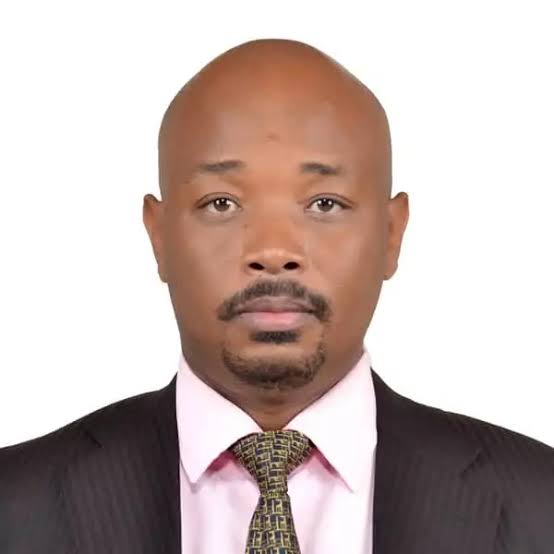
In the hushed corridors of judicial power, silence is often mistaken for impartiality. However, for Justice Frederick Martin Stephen Egonda-Ntende, the end of a 35-year career on the bench provided a rare and fleeting window to speak a truth that many of his colleagues reportedly dread. During a special court sitting and a luncheon held in his honor on May 14, 2026, the retiring Justice of the Court of Appeal delivered a searing critique of the Ugandan judiciary, challenging his peers to abandon their cowardice and reclaim their role as guardians of the law.
The Justice Egonda-Ntende retirement speech has since ignited a fierce debate across legal and political circles in Uganda and beyond. By openly criticizing the judiciary’s failure to show compassion and its susceptibility to external pressures, Egonda-Ntende did more than just bid farewell to his colleagues; he held up a mirror to an institution he believes has become a conduit for injustice. For a global audience, the event underscores a recurring struggle in developing democracies: the tension between the formal independence of the courts and the informal pressures exerted by a powerful executive.
The emotional weight of the address was palpable. Having reached the age of 70, Egonda-Ntende used his final moments of institutional affiliation to ask a question that left the room in stunned silence: “Team Judiciary, what happened? Where is your Kityo and Wambuzi at this hour?” The reference to historical figures of judicial courage served as both a lament and a demand for a return to a more humane, constitutionally grounded approach to justice.
A Plea for Compassion and the Bail Crisis
Central to Justice Egonda-Ntende’s critique was the handling of bail applications in lower courts. He argued that the judiciary has failed to maintain sensitivity to family welfare, often ignoring the human cost of incarceration for minor or bailable offenses. To illustrate this gap, he referenced a widely reported incident where children were forced to bury their mother without their father, who remained imprisoned despite the charges against him being bailable.
While the Justice did not name the individual in every instance, legal commentators have noted he was referring to Waiswa Alex Mufumbiro, the Deputy Spokesperson for the National Unity Platform, who remains incarcerated. Egonda-Ntende challenged judicial officers to reflect on the broader social implications of their rulings, particularly in cases where the accused poses no serious threat to life or property. He emphasized that the discretionary powers on bail should be used to protect human dignity rather than serve as a tool for state interests.
This focus on the “discretionary powers on bail” highlights a systemic issue where judicial independence is tested. In recent years, there have been reports that the executive branch, under President Museveni, has taken a hardline stance on the granting of bail in politically sensitive cases. This environment, according to observers, has intimidated judicial officers, making them hesitant to act independently when the state has a direct interest in the outcome of a case.
The Golden Cage: Why Judges Remain Silent
The courage of Egonda-Ntende’s final address has led many to ask a critical question: why did he wait until his retirement to speak out? The answer lies in the rigid legal and ethical frameworks that govern the lives of judicial officers in Uganda. The profession is designed to be a “golden cage,” where the prestige of the office is exchanged for strict limitations on personal expression.
Judicial officers are restricted from airing grievances publicly by the Uganda Code of Judicial Conduct and the Public Service Code of Conduct and Ethics. These frameworks, enforced under the Administration of the Judiciary Act and the Judicial Service Commission Regulations, are intended to preserve judicial independence and public confidence. Specifically, the Uganda Code of Judicial Conduct requires judges and magistrates to maintain a standard of behavior that is “above reproach” and to refrain from any public expression that might undermine the dignity of the office.

the Administration of the Judiciary (Establishment of Committees) Regulations, 2023, mandates that internal grievances be handled through specific institutional mechanisms. Rather than approaching the media or the public, judges are expected to direct their complaints to the Chief Registrar, the Principal Judge, the Chief Justice, or the Judicial Service Commission. For many, these internal channels are perceived as insufficient or risky, leading to a culture of silence where frustrations simmer behind the scenes until a judge is no longer bound by these codes of conduct.
Echoes of the Past: From Idi Amin to the Modern Bench
To provide a roadmap for current judges, Egonda-Ntende invoked the memory of those who stood firm during one of Uganda’s darkest eras. He pointed to the courage of former Chief Justice Wako Wambuzi, who led the judiciary during the brutal administration of Idi Amin. Wambuzi, alongside figures like Attorney General Godfrey Lule and Chief Magistrate Wilson Kityo, is remembered for facing a ruthless dictatorship without compromising the rule of law.
The example of Wilson Kityo is particularly poignant. Kityo is celebrated in Ugandan judicial history for dismissing an arbitrary decree by Idi Amin that targeted women wearing miniskirts. Kityo famously labeled the decree as “idle talk” and refused to jail offenders because there was no formal law in place to support the action. Crucially, Chief Justice Wako Wambuzi stood by Kityo, providing the institutional cover necessary to uphold the law against the whims of a tyrant.
By contrasting the “Kityos and Wambuzis” of the past with the current “Team Judiciary,” Egonda-Ntende suggested that the modern bench has lost its nerve. He condemned those who have “willfully availed themselves to be used as conduits of injustice,” suggesting that the current climate of fear is perhaps more insidious because it exists within a formal democratic framework, whereas the courage of the past was forged in the face of obvious tyranny.
The Erosion of the Separation of Powers
Beyond the individual conduct of judges, Egonda-Ntende’s remarks touch upon a deeper constitutional crisis: the erosion of the doctrine of separation of powers. In a healthy democracy, the judiciary serves as a check on the executive and legislative branches. When judges feel pressured to deliver “irrational decisions” to settle personal scores or appease political leaders, the judiciary ceases to be an independent arbiter and instead becomes an extension of the executive.
The emotional reactions of other members of the bench during the retirement luncheon suggest that these frustrations are widespread. The standing ovation Egonda-Ntende received indicates a silent consensus among his peers—a recognition that the “cowardice” he described is a shared burden. This suggests that many judicial officers may be delivering rulings not based on their own legal findings, but under external pressures that they are forbidden to acknowledge publicly.
The consequence of this shift is a justice system that struggles with prolonged pre-trial detentions beyond statutory timelines and a lack of sensitivity to the human rights of the incarcerated. When the judiciary fails to distance itself from “fighting political wars on behalf of the executive,” the rule of law is replaced by the rule of power, leaving the most vulnerable citizens without a reliable shield against state overreach.
What This Means for the Future of Ugandan Justice
Justice Egonda-Ntende’s decision to speak out at the tail end of his tenure may serve as a catalyst for a broader discourse on judicial reform. By labeling himself as a “legal brain” that Uganda missed out on—and noting that the Seychelles recognized his capabilities as a Chief Justice—he highlighted the personal and professional cost of a system that prioritizes loyalty over independence.
For the current members of the bench, the challenge is now clear. The “Kityo and Wambuzi” standard is not merely a historical curiosity but a professional requirement. The call for a more humane and constitutionally grounded approach to justice requires more than just a change in rules; it requires a change in the culture of the judiciary, moving from a posture of survival to one of leadership.
As Uganda continues to navigate its complex political landscape, the independence of its courts will remain the primary barometer for its commitment to human rights. Whether other judicial officers will find the courage to follow Egonda-Ntende’s lead—perhaps even before their retirement—remains to be seen.
The next critical checkpoint for the Ugandan judiciary will be the upcoming reviews of pre-trial detention timelines and the potential for new guidelines on the discretionary grant of bail in political cases. These developments will indicate whether the “standing ovation” given to Justice Egonda-Ntende translates into tangible institutional change.
We invite our readers to share their perspectives: Can a judiciary truly remain independent when its members are bound by strict codes of public silence? Let us know in the comments below.