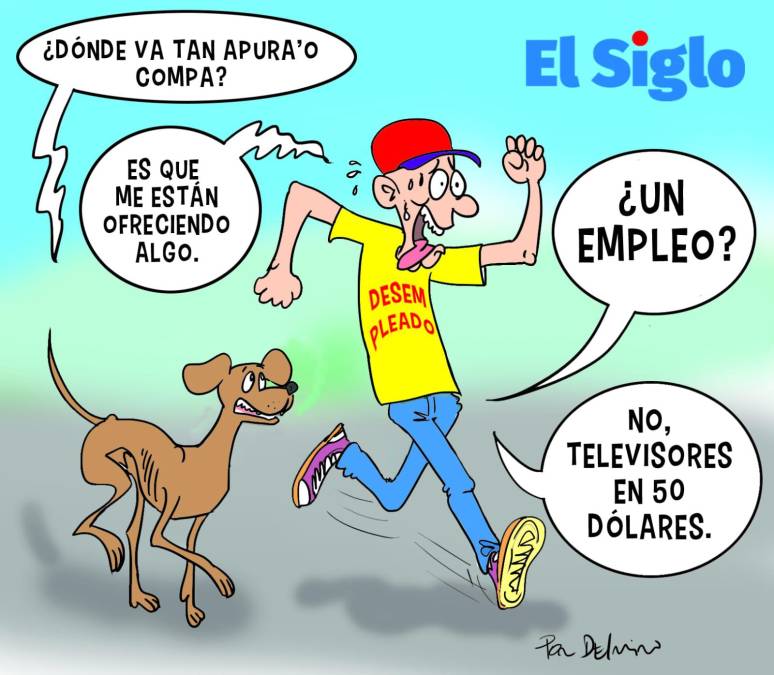
Imagine a scene of frantic energy—a crowd rushing forward, driven by a singular, urgent goal. In a typical economic boom, such a scene might be found at a high-profile job fair or the opening of a new corporate headquarters. However, in the sharp, biting world of Panamanian social satire, the object of this desperation isn’t a career opportunity or a living wage. We see a television priced at 50 dollars.
This jarring contrast—the “rush for cheap TVs” versus the scarcity of stable employment—serves as a poignant metaphor for the current socio-economic climate in Panama. For many, the irony is not lost: in a landscape where professional opportunities can feel elusive, the only thing readily available and affordable is the medium through which one watches the world go by. This tension between consumerism and survival is the heartbeat of recent visual commentary sweeping through the region’s media.
As an entertainment editor who has spent over 15 years analyzing how pop culture reflects societal shifts, I find this specific brand of satire fascinating. It isn’t just about electronics; it is about the psychological toll of economic disparity. When the “large win” of the day is a budget appliance rather than a paycheck, the caricature stops being a joke and starts becoming a mirror. It reflects a reality where the allure of cheap luxury acts as a temporary bandage for systemic financial instability.
The Art of the Critique: Satire as a Social Tool
In Latin American journalism, the political and social caricature occupies a space of immense power. Unlike a standard op-ed, a cartoon can bypass complex political jargon to deliver a visceral truth in a single image. The “Corredera por TV barata” (Rush for cheap TVs) theme utilizes this efficiency, juxtaposing the desire for modern amenities with the struggle for basic economic security.

This form of visual storytelling is essential in societies navigating rapid urban growth and persistent inequality. By reducing a complex economic crisis to a simple interaction—someone asking for a job and being offered a cheap television instead—satirists highlight the absurdity of a consumer-driven economy that prioritizes the sale of goods over the creation of sustainable livelihoods. This is a global phenomenon, but it takes on a specific resonance in Panama, a nation known for its role as a global logistics hub and a symbol of international trade.
For the global audience, this serves as a reminder that the “entertainment” found in comics and caricatures is often the most honest reporting available. It captures the sentimiento popular—the popular sentiment—that often goes unrecorded in official GDP reports or government press releases. When the public laughs at a cartoon about $50 televisions, they are often laughing to keep from crying about the lack of employment options.
Consumption vs. Employment: The Economic Tension
The satire gains its teeth from a very real economic backdrop. Panama has long been viewed as an economic powerhouse in Central America, bolstered by the Panama Canal and a robust financial services sector. However, the gap between macroeconomic growth and the daily reality of the average citizen remains a point of significant friction.
The “no jobs” sentiment echoed in these caricatures aligns with broader challenges regarding youth unemployment and underemployment in the region. While Panama maintains a high Human Development Index (HDI) compared to its neighbors, the distribution of wealth remains uneven. According to data from the World Bank, Panama’s economy is characterized by high productivity in the services sector, yet structural issues continue to affect the labor market’s ability to provide high-quality jobs for all segments of the population.
This creates a vacuum where “cheap luxury” becomes a primary source of gratification. The $50 television represents more than just a piece of hardware; it represents an accessible form of escapism. When the path to professional advancement is blocked, the immediate reward of a low-cost consumer good becomes a substitute for the long-term security of a career. This is the “trap” that Panamanian satirists are currently highlighting: a society where it is easier to buy a screen than it is to find a way to improve the life being viewed on that screen.
The Global Resonance of ‘Cheap Luxury’
While these cartoons are rooted in the Panamanian experience, the theme of “cheap luxury” amidst economic hardship is a global narrative. From the rise of “fast fashion” in Europe to the proliferation of budget electronics in Asia, the trend of substituting long-term stability with short-term, low-cost consumption is a hallmark of the modern era.
This dynamic often leads to what sociologists call “conspicuous consumption” on a budget. In a world dominated by social media, the pressure to own the latest gadgets—even budget versions—is immense. The caricature of the “rush for the cheap TV” mocks this desperation, suggesting that the frenzy for a bargain is a symptom of a deeper malaise. It asks the viewer: What happens when we prioritize the tools of entertainment over the means of production?
From my perspective in Los Angeles, covering the heights of Hollywood glamour, the contrast is stark but the underlying psychology is the same. Whether it is a red-carpet event or a street market in Panama City, the desire for status and the fear of being left behind drive human behavior. The difference is that in the Panamanian caricature, the mask is stripped away, revealing the desperation beneath the bargain.
Key Takeaways on Social Satire and Economics
- Satire as Documentation: Political and social cartoons act as unofficial archives of public frustration and societal tension.
- The Consumption Gap: The juxtaposition of low-cost goods and high unemployment highlights a systemic failure to translate economic growth into individual opportunity.
- Psychological Escapism: Cheap electronics often serve as a temporary emotional substitute for the stability provided by steady employment.
- Global Parallel: The struggle between “budget luxury” and “economic security” is a recurring theme across diverse global economies.
What This Means for the Future of Public Discourse
As visual media continues to evolve, the role of the caricature is shifting from the newspaper page to the digital screen. The “summary of caricatures” format—converting static images into short-form video content—allows these critiques to reach a younger, more digitally native audience. This ensures that the conversation about employment and economic disparity remains current and urgent.

The power of these images lies in their ability to spark conversation. By mocking the “rush for the cheap TV,” artists are not mocking the poor; they are mocking the system that makes a $50 television the most exciting prospect in a job-seeker’s day. This is the essential function of entertainment when it is wedded to social consciousness: it forces the viewer to question the normalcy of the absurd.
For those following the developments in Panama, these visual cues are often leading indicators of social unrest or shifts in public mood. When the satire turns from gentle ribbing to sharp condemnation, it usually signals that the gap between the “official” economic narrative and the “lived” experience has become unsustainable.
The next confirmed checkpoint for understanding these trends will be the release of the upcoming quarterly labor market reports from the Panamanian government, which will provide the hard data to accompany these artistic observations. Until then, the caricatures remain the most vivid record of the people’s struggle.
Do you think visual satire is more effective than traditional news in highlighting economic inequality? Share your thoughts in the comments below or share this article to join the conversation.