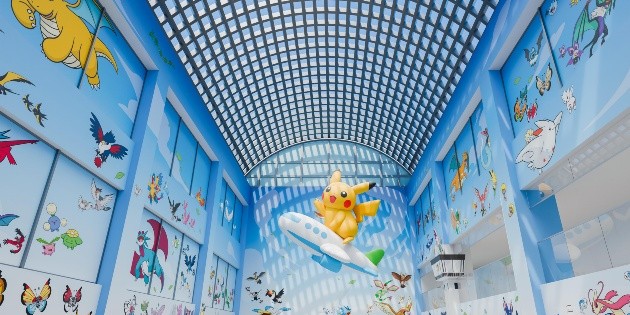
In the intersection of global brand power and regional economic resilience, Japan is launching an ambitious experiment in destination branding. The Noto Satoyama Airport in Ishikawa prefecture is set to undergo a comprehensive transformation, evolving into the world’s first Pokémon-themed airport in Japan. This strategic pivot is designed to do more than just attract fans of the global franchise; it is a calculated effort to revitalize a region still grappling with the aftermath of a devastating natural disaster.
The project, officially titled the “Noto Satoyama Pokémon With You Airport,” represents a fusion of tourism and recovery. By leveraging one of the most recognizable intellectual properties in history, local authorities and stakeholders aim to draw domestic and international travelers back to the Noto Peninsula, stimulating the local economy through increased foot traffic and spending.
Scheduled to unveil its new identity on 7 July 2026, the airport will serve as a hub for themed attractions and events that are planned to run through 30 September 2029. For a region seeking a path toward stability, the initiative transforms a piece of critical infrastructure into a primary tourist draw, shifting the narrative of the area from one of tragedy to one of anticipation and discovery.
Strategic Recovery After the 2024 Noto Peninsula Earthquake
The catalyst for this transformation is the need for urgent economic recovery. The initiative was developed in the wake of the magnitude 7.6 Noto Peninsula earthquake that struck in 2024, an event that caused widespread destruction and severely impacted the region’s tourism industry according to report details. In the business of regional development, “recovery tourism” often requires a powerful catalyst to shift public perception and encourage visitors to return to affected zones.
From an economic perspective, the choice of Pokémon is a high-leverage move. The brand possesses a cross-generational appeal that transcends borders, making it an ideal vehicle for attracting a diverse demographic of travelers. By integrating these characters into the airport—the first point of entry for many visitors—the prefecture is creating a “gateway experience” that encourages exploration of the surrounding Noto region.
The airport currently operates a streamlined flight schedule, with flights running exclusively to and from Tokyo Haneda International Airport. By enhancing the airport’s appeal, the region hopes to maximize the utility of this specific transit corridor, turning a routine flight into a destination event.
A Detailed Look at the Pokémon-Inspired Infrastructure
The renovation of the Noto Satoyama Airport is not merely cosmetic; it is a thematic overhaul of the facility’s four-storey grounds. The design focuses heavily on the concept of flight, aligning the airport’s function with specific categories of the Pokémon universe.
Visitors will be challenged to track down 111 different flying-type characters distributed throughout the airport. This gamification of the terminal experience is likely intended to increase the time spent on-site, potentially boosting revenue for airport concessions and services. The centerpiece of this experience will be located in the atrium, where a figure of Pikachu perched atop an aeroplane will be surrounded by various species inspired by dragons, insects, and birds.
The thematic integration extends across multiple levels of the facility:
- First Floor: The arrivals lobby will feature a mural titled “A Bright Future,” which serves as a nod to the natural beauty of Noto. Outside the terminal, pillars have been decorated with Pokémon characters to create an atmosphere of anticipation for arriving travelers.
- Second Floor: The walls will depict characters in various airport-themed settings, and the Pokémon branding will be integrated directly into the information signposts to assist with navigation.
Interestingly, the airport has specified a boundary for the theme: mega evolutions and regional forms of the characters will not be featured in the installation. This suggests a curated approach to the imagery, focusing on the core “flying-type” identity to maintain a cohesive visual narrative throughout the terminal.
The Economic Logic of Thematic Tourism
As a financial journalist, I view the “Noto Satoyama Pokémon With You Airport” as a case study in “IP-driven regionalism.” When traditional tourism drivers—such as historical sites or natural landscapes—are compromised by disaster, the introduction of a powerful intellectual property (IP) can provide an immediate, artificial boost to demand. Here’s a strategy Japan has utilized with success in other regions, but applying it to an airport is a world-first move.
The success of this initiative will likely be measured by three key metrics: the increase in passenger volume from Tokyo Haneda, the duration of stay for visitors in the Ishikawa prefecture, and the subsequent “spillover” effect on local businesses, hotels, and restaurants in the Noto Peninsula.
By committing to a timeline that extends until September 2029, the planners are signaling that this is not a short-term promotional stunt, but a multi-year recovery strategy. This longevity is crucial for rebuilding investor confidence in the region’s tourism infrastructure.
Key Project Specifications
| Feature | Detail |
|---|---|
| Official Name | Noto Satoyama Pokémon With You Airport |
| Opening Date | 7 July 2026 |
| Event Duration | Through 30 September 2029 |
| Primary Flight Route | Tokyo Haneda International Airport |
| Theme Focus | 111 Flying-type Pokémon |
| Recovery Context | 2024 Noto Peninsula Earthquake (Mag 7.6) |
What Happens Next
The transition of Noto Satoyama Airport into a Pokémon destination is a bold statement on the power of pop culture to aid in civic recovery. While the aesthetic changes are the most visible aspect, the underlying goal is the restoration of economic vitality to the Ishikawa prefecture.

The next major checkpoint for this project is the official unveiling on 7 July 2026, when the airport will officially open its doors as a Pokémon attraction. Until then, the focus remains on the renovation of the four-storey facility and the installation of the themed murals and exhibits.
We invite our readers to share their thoughts on the use of global brands for disaster recovery in the comments below. Do you believe thematic tourism is a sustainable model for regional revitalization?