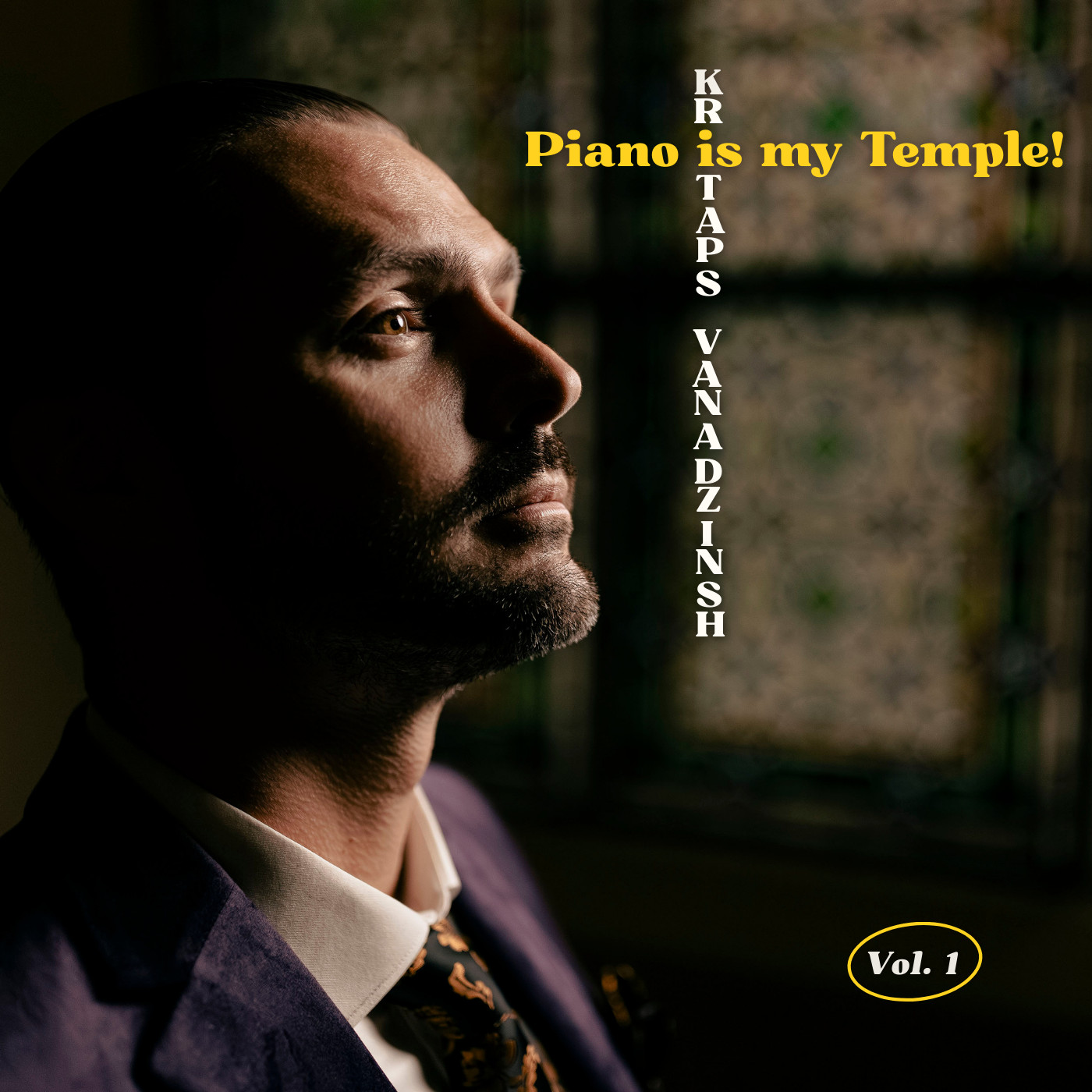
In the world of high-performance athletics, we often speak of the “zone”—that elusive state of total immersion where the boundary between the performer and the action disappears. As someone who has spent over a decade analyzing the mental fortitude of Olympic athletes and footballers from my desk in Lisbon, I have always been fascinated by how this same discipline translates to the arts. It’s this curiosity that led me to the work of Latvian pianist and composer Kristaps Vanadziņš, specifically his evocative release, Piano is my Temple! Vol. 1.
For the uninitiated, the concept of the piano as a “temple” is not merely a poetic flourish. it is a statement of intent. In this debut volume, Vanadziņš treats the keyboard not as a tool for technical display, but as a sanctuary for introspection. The result is a collection of solo piano pieces that lean heavily into the neo-classical and ambient traditions, prioritizing emotional resonance and spatial awareness over the rigid complexities of traditional concertos.
The album arrives at a time when the global appetite for “slow music”—compositions designed to lower the heart rate and encourage mindfulness—is at an all-time high. However, where many contemporary artists fall into the trap of repetitive minimalism, Vanadziņš manages to maintain a narrative thread. Each piece feels less like a loop and more like a conversation, mirroring the rhythmic ebb and flow of a long-distance runner’s breath or the measured patience of a strategist on the pitch.
The Philosophy of Sonic Sanctuary
The title Piano is my Temple! Vol. 1 suggests a spiritual framework for the listening experience. In the context of Latvian musical heritage, there is a long-standing tradition of blending nature, melancholy, and a deep sense of place. Vanadziņš taps into this cultural bloodstream, creating soundscapes that feel expansive yet intimate.
From a technical standpoint, the compositions avoid the flashy virtuosity often associated with professional pianists. Instead, the focus is on the “weight” of the notes. There is a deliberate use of silence and decay—the moments where a note lingers and then fades into nothingness—which forces the listener to engage with the space between the sounds. This approach transforms the listening process into a meditative exercise, effectively turning the auditory space into the “temple” referenced in the title.
For those accustomed to the high-energy environment of sports or the chaotic noise of urban life, this album serves as a necessary counterweight. It is music that does not demand attention through volume or complexity, but earns it through sincerity and a refined sense of pacing.
Compositional Style and Emotional Architecture
Analyzing Piano is my Temple! Vol. 1 requires a shift in perspective. Rather than looking for a traditional hook or a climactic crescendo, the listener must look for the “emotional architecture” of the pieces. Vanadziņš employs a harmonic language that is accessible yet sophisticated, often utilizing suspended chords that create a sense of longing or unresolved tension.
The recording quality is notably crisp, capturing the mechanical nuances of the piano—the soft thud of the dampers and the subtle resonance of the strings. These organic textures prevent the music from feeling sterile, grounding the ethereal compositions in a physical reality. It is a reminder that while the music aims for the spiritual, it is produced by human hands on a physical instrument.
The pacing of the album is carefully curated. It begins with invitations to stillness and gradually explores deeper layers of melancholy and hope. This progression suggests that the “Temple” is not a static place, but a journey of emotional processing. For a sports journalist, this mirrors the psychological recovery phase of an athlete—the quiet, often unseen work of mental realignment that happens after the roar of the crowd has faded.
The Latvian Connection: Art and Identity
To understand the gravity of Vanadziņš’ work, the Latvian landscape. Latvia has a profound relationship with choral and instrumental music, often using art as a means of preserving national identity and expressing a collective soul. Vanadziņš continues this legacy by distilling these broad cultural emotions into the singular voice of the piano.
While the album is designed for a global audience, there is an unmistakable Nordic clarity to the melodies. There is a certain “coolness” to the tone, yet it is warmed by a deep-seated humanism. By labeling this as “Vol. 1,” the artist signals that this is the beginning of a larger exploration. If the first volume is about establishing the sanctuary, future installments may delve further into the specific “rituals” of his musical practice.
This dedication to a long-term artistic vision is something I recognize from the world of elite sports. The commitment to a specific philosophy—whether it is a tactical system in football or a compositional style in neo-classical music—requires a level of discipline that separates the practitioners from the masters.
Practical Utility: How to Experience the Album
Because Piano is my Temple! Vol. 1 is designed as a meditative experience, the environment in which it is consumed significantly alters its impact. To get the most out of the recording, I recommend the following approaches:
- Active Listening: Use high-quality headphones in a darkened room to appreciate the subtle decay of the notes and the spatial depth of the recording.
- Focus Work: Due to its non-intrusive nature, the album is an excellent companion for deep-work sessions, reading, or creative writing, providing a sonic backdrop that encourages concentration without distraction.
- Wind-down Rituals: The album’s pacing makes it an ideal tool for transitioning from a high-stress workday to a state of rest, mirroring the “cool-down” period essential for physical recovery in athletics.
The album is available across major streaming platforms, allowing listeners to integrate these meditative soundscapes into their daily routines. In an era of algorithmic playlists and “lo-fi” beats, the intentionality of a cohesive album like this is refreshing.
As we look forward to subsequent volumes in the series, Kristaps Vanadziņš has successfully laid a foundation of peace and introspection. He has reminded us that music can be more than entertainment; it can be a place of refuge.
The next confirmed update regarding the Piano is my Temple! series is expected to come via the artist’s official release channels and digital distributors as the project evolves. We will continue to monitor the development of this promising Latvian talent.
Do you find that music helps you reach your “zone” of peak performance or relaxation? Share your thoughts and your favorite meditative albums in the comments below.