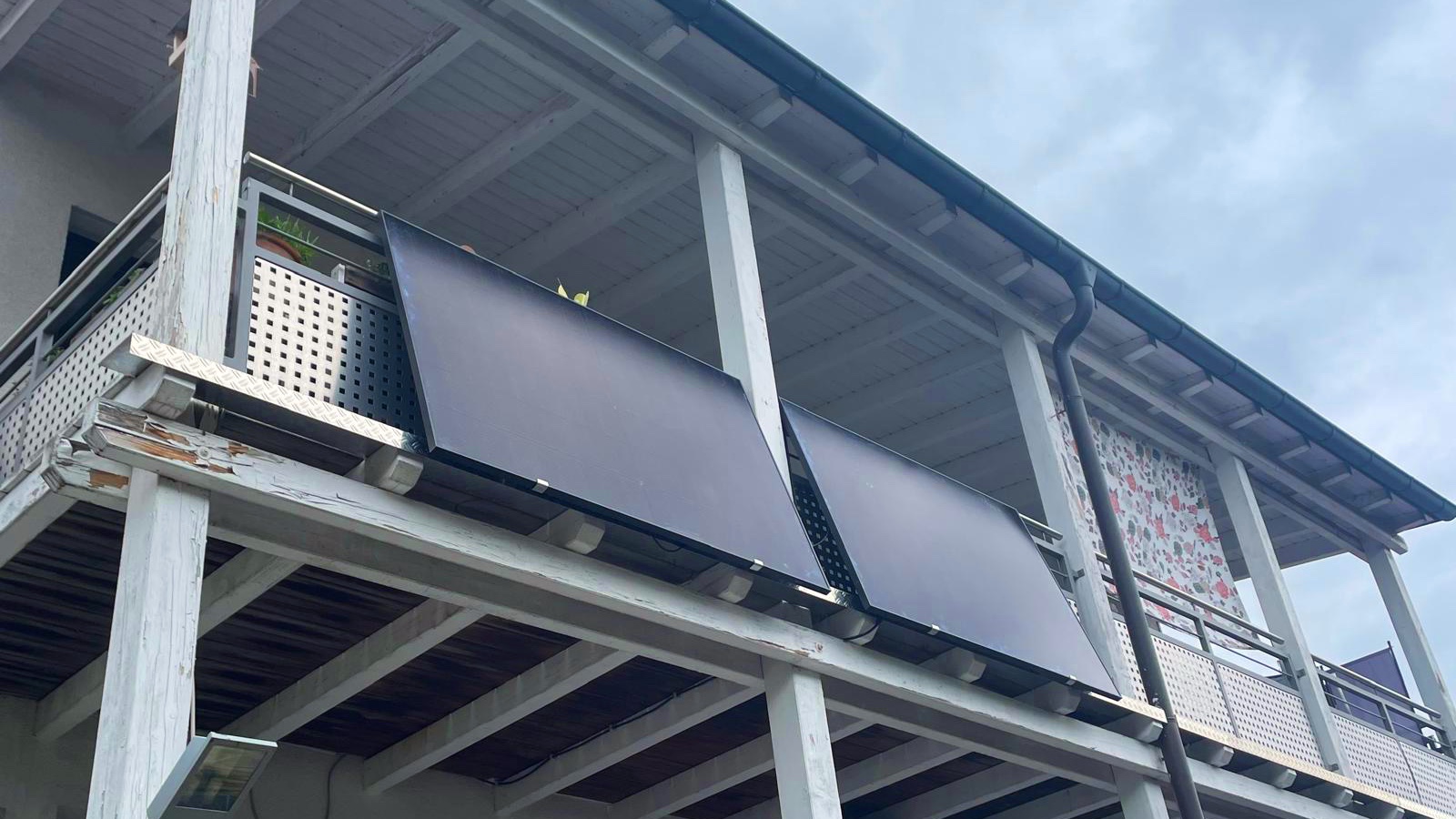
For millions of urban dwellers across Europe, the dream of energy independence has long been hindered by the realities of rental agreements and limited roof access. However, the rise of balcony solar power plants—compact, “plug-and-play” photovoltaic systems—is fundamentally altering the residential energy landscape. By allowing tenants and homeowners to generate their own electricity from a simple balcony railing, these systems are transforming passive consumers into “prosumers.”
The financial appeal of these systems lies in their low barrier to entry. Unlike massive rooftop installations that require significant capital and structural permits, balcony systems are designed for rapid deployment and immediate impact on monthly utility bills. As energy prices remain volatile, the shift toward decentralized, small-scale solar generation is no longer just an environmental statement; it is a calculated financial strategy for the modern household.
To understand the actual efficacy of these systems, a comprehensive one-year field test was conducted in Nordbaden, Germany—one of the country’s most sun-rich regions. The trial focused on a high-efficiency setup featuring a 960 Watt-peak (Wp) system utilizing bifacial glass-glass modules and a micro-inverter. The results provide a transparent look at the production capabilities and the actual return on investment (ROI) for a typical residential user.
The data from this year-long observation reveals a clear trend: while a balcony system cannot power an entire home, its ability to offset “base load” electricity—the constant energy used by refrigerators, routers, and standby devices—creates a meaningful reduction in annual expenditures.
The Financial Breakdown: Cost vs. Real-World Savings
The economic viability of balcony solar power plants depends on the balance between the initial hardware investment and the annual reduction in electricity costs. In the Nordbaden test, the system utilized a “Small Power Plant Duo” kit, which included two 480 Wp bifacial solar modules and an 800 W micro-inverter with integrated WLAN and Bluetooth monitoring. The base cost for this kit was €389.00, though additional costs for mounting hardware typically range between €100 and €130, bringing the total initial investment to approximately €489 to €519.
Over the course of one full year, the system generated a total of 637.38 kWh of electricity. When translated into monetary terms, this production resulted in a calculated saving of roughly €189 in electricity costs. For a resident in Germany, where electricity prices remain among the highest in Europe, this represents a significant offset of daily operational costs.
From a financial analysis perspective, the return on investment is remarkably swift. Based on the total cost of approximately €500 and annual savings of €189, the system reaches its break-even point in roughly 2.6 years. Given that high-quality glass-glass modules are designed to last decades, the subsequent 20+ years of energy production represent essentially free electricity, making it one of the most accessible low-risk investments in the residential energy sector.
Technical Drivers: Bifacial Modules and TopCon Cells
The efficiency of the tested system was driven by two key technological advancements: bifaciality and TopCon (Tunnel Oxide Passivated Contact) cell technology. Traditional solar panels only capture sunlight on the front surface. Bifacial modules, however, are designed to absorb light from both the front and the back. This is particularly advantageous for balcony installations, where light often reflects off the building’s facade or the balcony floor, allowing the rear of the panel to contribute to the total energy yield.
The integration of TopCon cells further enhances this performance. TopCon technology increases the efficiency of the cell by reducing recombination losses, allowing the panel to convert a higher percentage of sunlight into usable electricity even in suboptimal light conditions. In the Nordbaden trial, the modules achieved an efficiency rate of over 23%, contributing to the total output of 637.38 kWh despite the constraints of a balcony setting.
The system’s “brain” was a Hoymiles 800 W micro-inverter (model HMS-800-2WB HiFlow 800 Pro). Micro-inverters are critical for balcony systems because they convert the direct current (DC) produced by the panels into alternating current (AC) immediately at the source. This prevents the “Christmas light effect,” where one shaded panel reduces the output of the entire string, ensuring that each module operates at its maximum potential based on the available light.
Navigating the Regulatory Landscape in Germany
The boom in balcony solar power plants has been supported by a significant shift in German regulatory policy. For years, the complexity of registering small systems acted as a deterrent. However, the introduction of the Bundesnetzagentur (Federal Network Agency) streamlined registration process has lowered the hurdle for entry. Under recent guidelines, including the “Solarpaket I” legislative framework, the bureaucratic burden has been reduced, making it easier for citizens to integrate these systems into the national grid.
Key regulatory updates have focused on three main areas:
- Inverter Capacity: The allowable limit for plug-in inverters has been increased (typically to 800W), allowing users to install more powerful panels to maximize their yield.
- Simplified Registration: The requirement to register systems in the Market Master Data Register (Marktstammdatenregister) has been simplified, reducing the time and effort required for compliance.
- Tenant Rights: There is an increasing legal trend toward recognizing the installation of balcony solar as a “privileged” modification, making it harder for landlords to arbitrarily forbid their installation, provided they do not cause structural damage or safety hazards.
These policy shifts are part of a broader strategy to accelerate the European energy transition, moving away from centralized fossil-fuel power plants toward a distributed network of residential generators. By empowering individuals to contribute to the grid, governments are reducing the peak load on infrastructure and encouraging a culture of energy consciousness.
Optimizing Your Installation for Maximum Yield
The Nordbaden test underscores that location and orientation are the most critical variables in determining the success of a balcony solar system. The test system was positioned with a South-West orientation, which is ideal for capturing the strongest afternoon sun. According to data from the Deutscher Wetterdienst (DWD), regions like Nordbaden benefit from high global radiation, which directly correlates to the 637.38 kWh annual yield observed in the trial.
For those looking to replicate these results, several practical factors must be considered:

- Orientation: While South is the gold standard, South-West or South-East orientations are highly effective. East-West setups can be useful for spreading energy production across the entire day, though they may have a lower peak output.
- Tilt Angle: The angle of the panels significantly affects efficiency. A steeper angle is better for winter months when the sun is lower in the sky, while a flatter angle maximizes summer production.
- Shading: Even partial shading from a neighboring building or a tree can drastically reduce the output of a traditional string inverter. This is why micro-inverters are highly recommended for balcony setups.
- Base Load Management: To maximize the €189-style savings, users should shift high-energy activities—such as running a dishwasher or washing machine—to the middle of the day when the system is producing its peak output.
Strategic Outlook: The Future of Residential Solar
As we move further into 2026, the evolution of balcony solar is likely to move toward integrated storage. While the Nordbaden test deliberately omitted a battery to reflect a “typical” household, the addition of small-scale lithium-iron-phosphate (LiFePO4) batteries would allow users to store excess midday energy for use during the evening. This would further increase the self-consumption rate and accelerate the ROI.
the industry is seeing a trend toward “smart” energy management. Integration with home automation systems allows appliances to trigger automatically when the solar panels hit a certain wattage threshold, ensuring that not a single watt of generated power is wasted. This synergy between hardware and software is transforming the balcony solar plant from a simple gadget into a sophisticated energy management tool.
For the global urban population, the German model of “plug-in solar” serves as a blueprint. The combination of affordable hardware, supportive legislation, and high-efficiency cell technology proves that energy independence is possible even for those without a roof of their own. The transition to a decentralized grid is no longer a distant goal—it is happening one balcony at a time.
Next Milestone: The European Commission is expected to provide updated directives on residential renewable integration in the coming quarter, which may further standardize the “plug-and-play” requirements across EU member states.
Do you believe balcony solar is a viable solution for your city? Share your thoughts in the comments below or share this analysis with your neighbors to start the conversation on residential energy independence.
Keep reading
- ICE Spending Millions on Shock Gloves to Overpower Subjects With Intense Pain
- Thia Vittek Finally Reveals Her New Boyfriend: Romantic Vacation Photos Unveiled
- Tokenmaxxing, Agentic Outcomes, and the Future of Junior Developers (newsdirectory3.com)
- Mississippi Valley Employee Count and Hiring Trends 2026 (news-usa.today)