
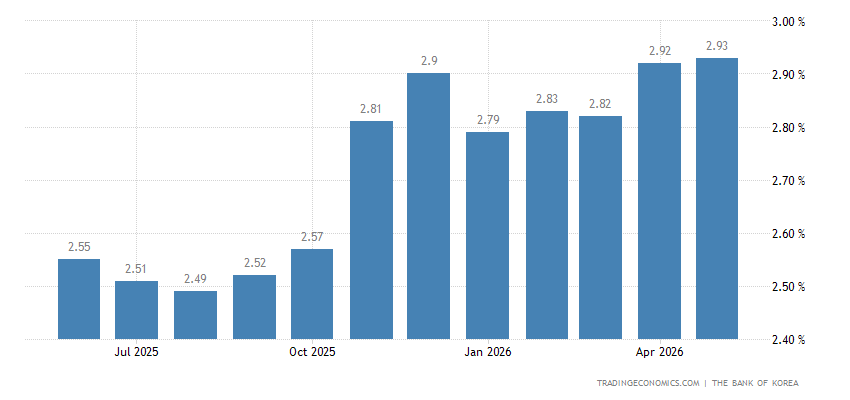
South Korea’s banking sector is entering a new phase of competition as major financial institutions race to adjust deposit rates in response to shifting market conditions. On Monday, May 18, 2026, KB Kookmin Bank (KB국민은행) announced increases of up to 0.1 percentage points on key deposit products, marking the latest move in a broader trend of banks seeking to attract customer funds amid rising liquidity pressures. The adjustments come as financial regulators and market analysts warn of intensifying “money moves” — a phenomenon where depositors shift savings between institutions to maximize returns in a low-yield environment.
This development underscores a critical juncture for South Korea’s financial system, where traditional banks and digital-first competitors are locked in a high-stakes battle for customer deposits. While KB Kookmin Bank’s decision to raise rates on its flagship “KB Star” term deposit product by up to 0.1 percentage points represents a modest increment, the move signals a strategic pivot toward short-term deposit segments — a segment that has seen particular volatility in recent months. Industry observers suggest this reflects both competitive pressures and an effort to stabilize liquidity amid broader economic uncertainties.
The bank’s official statement, provided to financial news outlets, cited “market liquidity conditions and money movement trends” as key factors in the decision. While the exact terms of the rate adjustments have not been publicly detailed beyond the 0.1 percentage point increase, the move follows similar actions by other major institutions in recent weeks. Notably, digital banks like KakaoBank have also raised rates on term deposits and savings accounts by comparable margins, further compressing profit margins for traditional lenders.
This competitive tightening of deposit rates comes against a backdrop of global monetary policy shifts and domestic economic indicators that suggest a potential slowdown in growth. While the Bank of Korea has maintained relatively accommodative policies, market participants remain sensitive to signals from central banks worldwide, particularly in the United States, where tightening cycles have ripple effects across Asian financial markets.
Why the Deposit Rate War Matters
For ordinary South Korean savers, the deposit rate competition presents both opportunities and risks. On one hand, higher yields on term deposits and savings accounts provide a rare bright spot in an environment where broader investment returns have stagnated. However, the race to attract deposits also raises concerns about the sustainability of bank profitability, particularly for mid-tier institutions that may struggle to match the rate hikes of larger competitors.
Financial regulators are watching these developments closely. While deposit insurance systems remain robust, the rapid pace of rate adjustments could signal underlying liquidity stresses that may require policy responses. The Financial Services Commission (FSC) has not yet issued a formal statement on the matter, but industry analysts suggest that any intervention would likely focus on maintaining stability rather than imposing caps on rate increases.
For consumers, the immediate impact is clear: depositors with maturing accounts may find themselves with more attractive alternatives across the banking spectrum. However, experts caution that rate wars can sometimes lead to unintended consequences, such as reduced lending capacity or higher borrowing costs for businesses and consumers alike.
Who Is Leading the Rate Adjustments?
Beyond KB Kookmin Bank, several other major financial institutions have made similar moves in recent weeks. While the exact timing and scale of these adjustments vary, the trend is unmistakable:
- KB Kookmin Bank: Raised rates on its “KB Star” term deposit product by up to 0.1 percentage points, effective May 18, 2026.
- KakaoBank: Increased rates on term deposits and savings accounts by up to 0.1 percentage points on May 16, 2026.
- Other major banks: While specific details are not yet publicly confirmed, industry sources indicate that Hana Bank, Woori Bank, and Shinhan Bank are also reviewing deposit rate structures in response to competitive pressures.
This coordinated movement suggests a deliberate strategy to preempt customer attrition, particularly among tech-savvy depositors who have grown accustomed to the flexibility and higher yields offered by digital banks. The data indicates that younger demographics, in particular, are more likely to engage in “money moves,” shifting funds between institutions in search of better returns.
What This Means for Savers and Investors
For individuals with substantial savings, the current environment presents a rare opportunity to negotiate better terms on deposits. However, potential pitfalls include:
- Lock-in risks: Higher term deposit rates often come with penalties for early withdrawal, which could limit liquidity during economic downturns.
- Tax implications: In South Korea, interest income above certain thresholds is subject to withholding tax, which may offset some of the benefits of higher yields.
- Bank stability: While deposit insurance protects up to ₩50 million per account, the financial health of individual banks remains a consideration for large depositors.
Investors, meanwhile, should monitor whether the deposit rate competition leads to tighter lending standards or higher borrowing costs for mortgages and business loans. Historical precedents suggest that prolonged rate wars can eventually force consolidation in the banking sector, particularly among smaller institutions.
Looking Ahead: What’s Next for Deposit Rates?
The next critical checkpoint will be the Bank of Korea’s policy announcement on June 13, 2026, where officials are expected to provide updated economic forecasts and potential signals on future interest rate directions. While the central bank has thus far resisted drastic policy shifts, any indication of a more hawkish stance could further intensify the deposit rate competition among commercial banks.
In the shorter term, depositors should closely track:
- Further rate adjustments from KB Kookmin Bank and other major institutions, which may be announced as early as late May or early June.
- Regulatory guidance from the Financial Services Commission, particularly regarding liquidity management and capital adequacy requirements.
- Market reactions to global central bank meetings, including the Federal Reserve’s June policy decision.
For those considering a deposit rate switch, financial advisors recommend comparing not only the headline rates but also the terms and conditions, including early withdrawal penalties, account maintenance fees, and the reputation of the institution for customer service.
Key Takeaways
- Competitive pressure: KB Kookmin Bank’s rate hike follows similar moves by KakaoBank and other institutions, signaling a broader industry shift.
- Short-term focus: Adjustments are concentrated on term deposits and savings accounts, reflecting depositor behavior patterns.
- Regulatory watch: Authorities are monitoring liquidity risks but have not yet intervened to cap rate increases.
- Opportunity for savers: Higher yields are available, but depositors should weigh lock-in risks and tax implications.
- Next policy checkpoint: The Bank of Korea’s June 13 announcement will be pivotal for future rate trends.
As the deposit rate competition intensifies, consumers and investors alike would be wise to stay informed and proactive. Whether you’re a saver looking to maximize returns or a business planning for borrowing needs, the evolving landscape of South Korea’s banking sector demands careful attention.
We welcome your insights and experiences in the comments below. Have you recently switched banks for better deposit rates? Share your story or ask questions — our financial experts are standing by to help.
Related reading