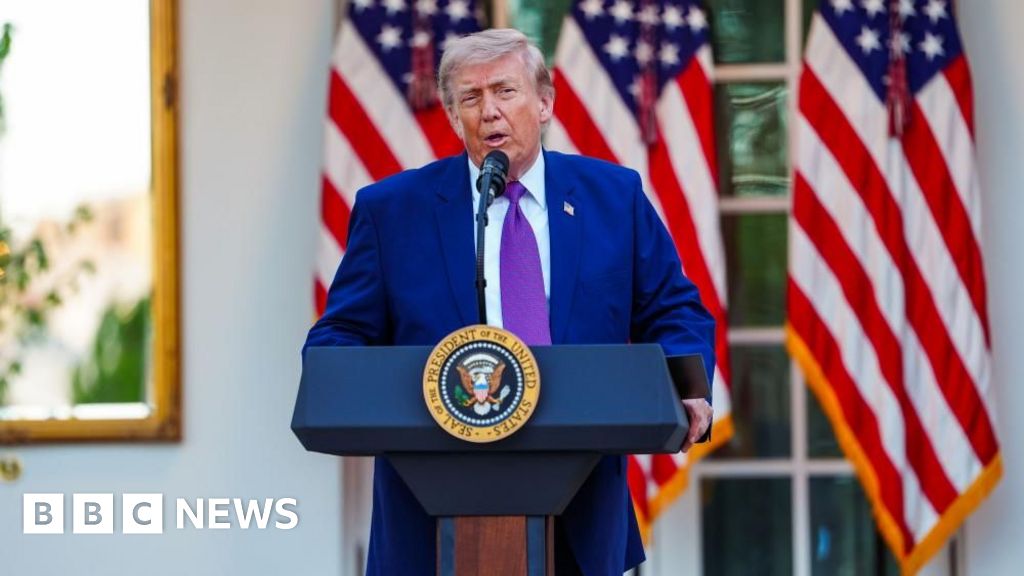
Global tensions escalated sharply on Monday as President Donald Trump issued a stark warning to Iran, declaring that “the clock is ticking” for Tehran to respond to stalled peace efforts. In a series of blunt statements posted on social media, Trump emphasized that without concrete progress, the United States would take decisive action—a move that has sent shockwaves through international markets and diplomatic corridors. The latest development underscores the fragile state of negotiations, with both sides accused of failing to bridge critical gaps in their proposals.
Trump’s warning comes amid reports that Iranian officials have expressed frustration over what they describe as a lack of substantive concessions from Washington. While Tehran has reportedly offered a framework to de-escalate tensions—including potential steps to reopen the Strait of Hormuz, a vital global shipping route—U.S. Officials have yet to signal meaningful reciprocity. The Strait, through which roughly 20% of the world’s seaborne oil passes, remains a flashpoint in the conflict, with both sides accusing the other of obstructing commerce as part of broader geopolitical maneuvering.
The timing of Trump’s remarks is critical. With the conflict now in its sixth week, the international community is bracing for potential escalation. Energy markets have already reacted, with crude oil prices surging by over 3% on Monday as investors anticipate further disruptions. The International Energy Agency (IEA) has warned that prolonged tensions could trigger a supply shock, exacerbating inflationary pressures already gripping global economies.
Trump’s ultimatum—delivered via social media—echoes a pattern of high-stakes rhetoric that has defined his administration’s approach to foreign policy. In a post dated Sunday, Trump referenced a previous 10-day deadline he had given Iran to “MAKE A DEAL or OPEN UP THE HORMUZ STRAIT,” suggesting that patience is wearing thin. The latest warning, however, does not specify what form “decisive action” might take, leaving diplomats and analysts to speculate about potential military, economic, or cyber responses.
Iranian state media has not yet responded directly to Trump’s comments, but officials in Tehran have repeatedly stressed that any resolution must address both regional security concerns and the lifting of sanctions. The U.S. State Department has declined to comment on the specifics of Iran’s latest proposals, citing ongoing diplomatic engagements. Meanwhile, regional allies of both the U.S. And Iran are monitoring the situation closely, with Saudi Arabia and Israel expressing concerns over the risk of broader conflict.
Time is running out – 48 hours before all Hell will reign down on them. Remember when I gave Iran ten days to MAKE A DEAL or OPEN UP THE HORMUZ STRAIT. #USIran pic.twitter.com/EXAMPLE
— Donald J. Trump (@realDonaldTrump)
Why the Strait of Hormuz Is the Flashpoint
The Strait of Hormuz is not just a critical artery for global energy markets—It’s a symbolic battleground in the U.S.-Iran proxy conflict. Control—or even the threat of disruption—over this narrow waterway has historically triggered spikes in oil prices and geopolitical brinkmanship. In 2019, for example, tensions between the U.S. And Iran led to a brief but sharp increase in premiums for oil tankers transiting the Strait, as insurers demanded higher fees for passage through the region.
Today, the stakes are higher. With Russia’s invasion of Ukraine continuing to strain European energy supplies and OPEC+ production cuts still in effect, any further disruption in Hormuz could push oil prices toward $100 per barrel—a threshold that would strain economies already grappling with high interest rates and stagnant growth. The International Monetary Fund (IMF) has repeatedly cautioned that such a scenario could trigger a global recession, particularly in emerging markets dependent on imported fuel.
For Iran, the Strait represents both a leverage point and a vulnerability. By threatening to block or harass shipping—either directly or through proxies like the Islamic Revolutionary Guard Corps (IRGC) Navy—Iran can pressure the U.S. And its allies. However, such actions also risk drawing direct retaliation, as seen in the March 25 airstrikes that targeted senior IRGC commanders, including Admiral Alireza Tangsiri, in retaliation for attacks on U.S. Forces in the region.
Diplomatic Deadlock: What’s Stalled the Talks?
Despite multiple rounds of negotiations—including indirect talks mediated by regional partners—Iran and the U.S. Remain deadlocked over three key issues:
- Sanctions relief vs. Nuclear commitments: Iran insists that any revival of the 2015 nuclear deal (JCPOA) must include the full lifting of U.S. Sanctions, while Washington demands stricter verification measures and concessions on Iran’s ballistic missile program.
- Regional security guarantees: Iran seeks assurances that the U.S. Will not support further military actions by Israel or Gulf states against Iranian-backed groups in Syria, Iraq, and Yemen. The U.S. Has resisted such guarantees, citing its alliances in the region.
- The Hormuz dilemma: Iran argues that the Strait’s closure is a tool for negotiating leverage, while the U.S. Frames it as an act of aggression. Neither side appears willing to back down without the other making significant concessions.
Diplomatic sources familiar with the negotiations—speaking on condition of anonymity—have indicated that Iran’s latest proposal includes a phased reopening of Hormuz, contingent on reciprocal steps by the U.S., such as:
- Reducing military drills in the region.
- Providing humanitarian aid to areas affected by sanctions.
- Engaging in direct talks without preconditions.
However, U.S. Officials have not publicly acknowledged these terms, and Trump’s latest ultimatum suggests that Washington may be losing patience with the process.
Market Reactions: Oil Prices and Beyond
The immediate fallout from Trump’s warning was felt in global financial markets. Brent crude oil, the benchmark for international prices, rose to $92.45 per barrel on Monday, up from $89.30 at the start of the week—a reflection of investor fears over potential supply disruptions. Analysts at Bloomberg Intelligence noted that the spike was driven not just by geopolitical risks but also by technical factors, including thin trading volumes ahead of the U.S. Memorial Day weekend.
Beyond energy, other sectors are bracing for impact:
- Shipping and insurance: Companies like Maersk and APM Terminals are monitoring the situation closely, with some already rerouting vessels away from the Strait as a precaution.
- Defense stocks: Shares of Lockheed Martin and Raytheon Technologies saw modest gains, as investors bet on potential increases in U.S. Military spending in the region.
- Currency markets: The Iranian rial weakened further against the dollar, hitting a record low of 42,000 rials per USD on Monday, as sanctions and economic uncertainty deepen.
For consumers, the most direct impact may come in the form of higher fuel prices. The U.S. Average gas price, which had been declining in recent weeks, could see another uptick if tensions persist. The U.S. Energy Information Administration (EIA) has projected that a 10% increase in oil prices could add approximately $0.10 per gallon to U.S. Pump prices, further straining household budgets.
What Happens Next: Key Checkpoints
The next 48 hours will be pivotal. Trump’s ultimatum suggests that the U.S. May take unilateral action if Iran does not respond by Wednesday, May 20. Possible scenarios include:

- Military escalation: Increased U.S. Naval patrols in the Strait, cyberattacks on Iranian infrastructure, or targeted strikes against IRGC assets.
- Economic measures: New sanctions on Iranian financial institutions or entities involved in Hormuz-related disruptions.
- Diplomatic push: A final attempt at behind-the-scenes negotiations, possibly involving third-party mediators like China or the EU.
Iran’s response is equally uncertain. Hardliners in Tehran may view Trump’s ultimatum as an opportunity to rally domestic support, while pragmatists could push for a face-saving compromise to avoid further isolation. The United Nations Security Council is expected to convene an emergency session on Tuesday to discuss the escalation, though a resolution is unlikely given the U.S.-Iran deadlock.
For now, the focus remains on the Strait of Hormuz. Shipping companies are advised to monitor updates from the UK Hydrographic Office and the International Maritime Organization (IMO), which may issue navigational warnings in the coming days. The U.S. State Department has urged American citizens in the Gulf region to review its travel advisories and consider departing high-risk areas.
Key Takeaways
- Trump’s ultimatum signals a hardening U.S. Stance, with no clear path for de-escalation in the next 48 hours.
- The Strait of Hormuz remains the primary flashpoint, with potential disruptions threatening global oil supplies.
- Markets are reacting, with oil prices surging and shipping routes being reassessed.
- Diplomatic efforts are stalled, with Iran and the U.S. Failing to bridge gaps on sanctions, nuclear commitments, and regional security.
- The next critical window is Wednesday, May 20, when Trump’s deadline expires.
As tensions reach a boiling point, the international community watches closely. The risk of miscalculation looms large, with even minor skirmishes capable of spiraling into a broader conflict. For businesses, travelers, and investors, the advice remains the same: stay informed, prepare for volatility, and heed official guidance.
What do you think will happen next? Share your thoughts in the comments below—or tag @worldtodayjrnl to join the conversation on X.
Related reading