US Military Power at a Crossroads: Can It Defeat the ‘Final 10%’ of Adversaries?
The United States military has long been the world’s most formidable fighting force—capable of devastating adversaries with precision strikes, overwhelming firepower, and technological superiority. Yet in an era defined by drone swarms, economic warfare, and distributed command systems, a new strategic paradox has emerged: the “final 10% problem.” While the US can degrade enemy infrastructure with relative ease, achieving political victory—coercing an adversary into surrender or capitulation—now requires conquering the last 10% of resistance, where cost curves invert and attrition favors asymmetric tactics over conventional dominance.
This dilemma is playing out in two of the most consequential conflicts of the past decade: Russia’s war in Ukraine and the US-led strikes against Iran. In both cases, the Pentagon has demonstrated its ability to inflict massive damage—yet the battlefield has frozen, stalemates persist, and the question lingers: Can the world’s most powerful military still win wars in the 21st century?
The answer, according to defense analysts and the latest National Security Strategy (NSS), lies in a radical rethinking of military strategy. The document acknowledges that “the huge gap between low-cost drones and missiles versus the expensive systems required to defend against them has laid bare our need to change, and adapt.” Yet the political will to execute this shift remains untested, leaving the US military trapped between its unmatched capabilities and the new realities of modern warfare.
The Final 10% Problem: Why Superior Firepower Isn’t Enough
The term “final 10%” describes the structural condition under which conventionally superior militaries now operate. In the first 90% of a conflict, the US can achieve decisive advantages: destroying command centers, crippling supply chains, and neutralizing high-value targets with minimal risk to its own forces. But the last 10%—where adversaries adapt, disperse, and exploit economic asymmetries—proves far more costly.
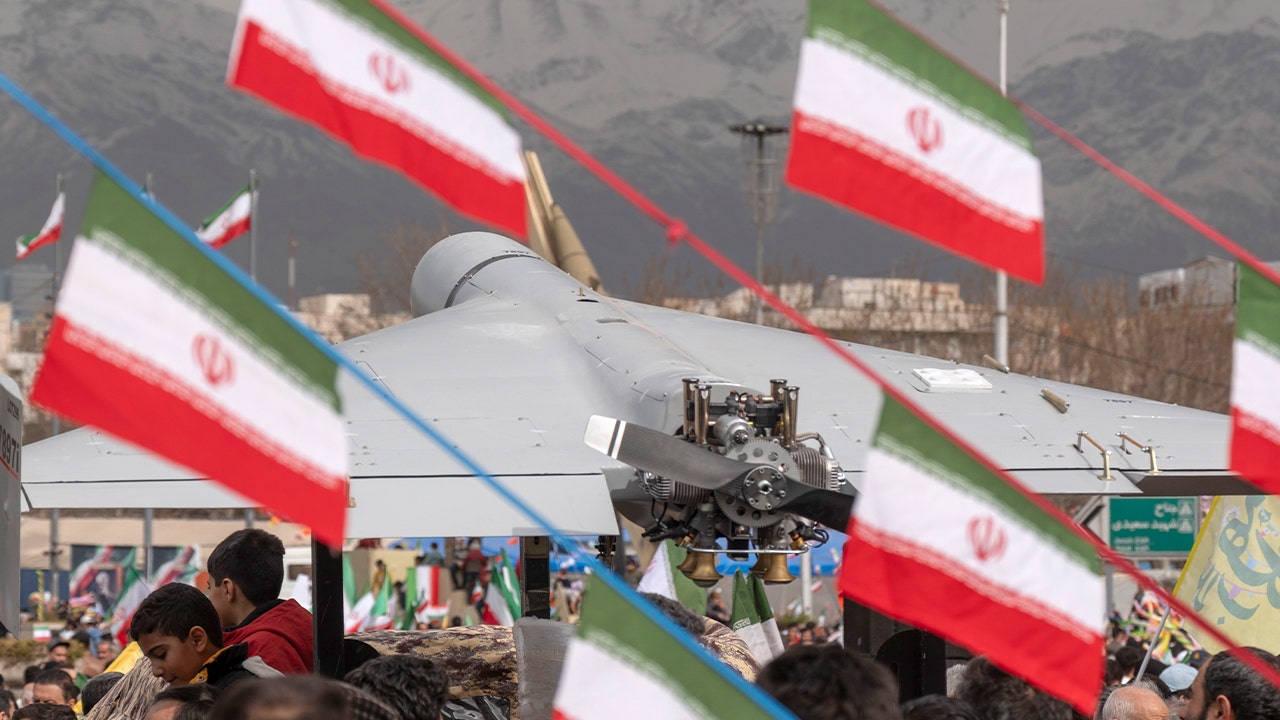
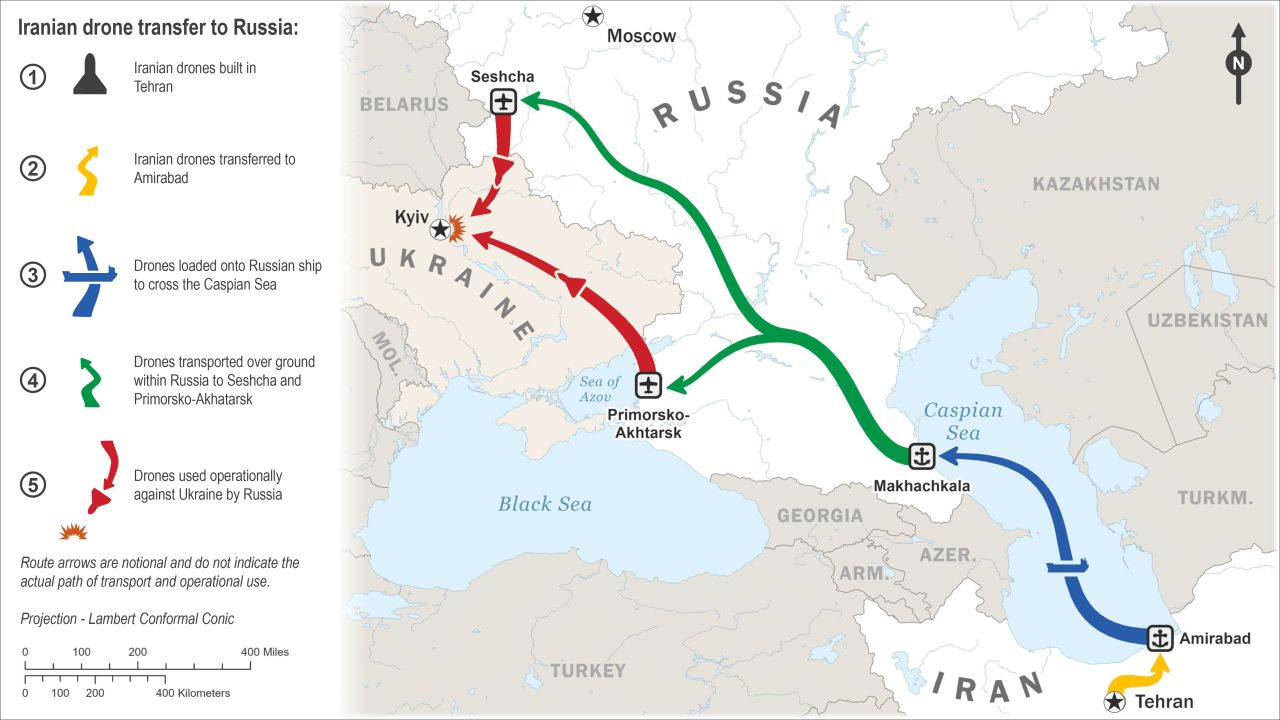
Consider the arithmetic of modern air warfare. Iran’s Shahed-136 drones, costing between $20,000 and $50,000 each, have overwhelmed US air defenses in the Middle East. Each drone forces a response from a Patriot PAC-3 interceptor, which costs over $4 million per unit, or a THAAD interceptor at $15 million each. By April 2026, CENTCOM’s interceptor expenditure against Shaheds alone exceeded $3 billion in the first six months of the Iran conflict—even as tactical interception rates approached 90%. The problem? Each drone that forces a Patriot launch fulfills its strategic purpose by saturating defenses, even if destroyed mid-flight.
The cost inversion is stark: an adversary can flood the battlefield with cheap, expendable systems while a conventionally superior force bleeds resources defending against them. This dynamic wasn’t lost on the Trump administration, which launched Operation Midnight Hammer in June 2025, striking Iran’s nuclear facilities with 14 GBU-57 Massive Ordnance Penetrators and 24 Tomahawk cruise missiles in 25 minutes. The strike ended the Twelve-Day War within 48 hours—but the conflict reignited months later with Operation Epic Fury, a 900-strike assault that killed Supreme Leader Ali Khamenei and decapitated Iran’s military leadership.
Iran’s response was immediate: hundreds of ballistic missiles and thousands of drones launched across the region. By April 1, 2026, the UAE alone had engaged 438 ballistic missiles, 2,012 drones, and 19 cruise missiles from Iran, resulting in 13 US service members killed and 381 wounded before a ceasefire on April 8. The Pentagon’s reluctance to escalate further reflects a grim calculus: the next 10% of military degradation would come at a far higher price than the first 90%.
“The cost curve has inverted. The first 90% of a conflict is where we dominate. The final 10% is where we struggle—and that’s where the real political battles are fought.”
Ukraine: The War That Never Ended
Ukraine offers a case study in the final 10% problem. Since Russia’s full-scale invasion in 2022, the conflict has become the deadliest interstate war in Europe since 1945, with Russian casualties exceeding 1 million killed and wounded and Ukrainian losses estimated between 250,000 and 300,000. Yet despite this staggering human toll, the frontlines have remained remarkably stable, with Russia controlling roughly 20% of Ukraine—an area equivalent to Pennsylvania—and gaining just 1,669 square miles (0.7% of Ukrainian territory) in the past year alone.
The paradox is clear: with such immense casualties, one would expect dramatic territorial shifts. Instead, the contact line has been frozen for over two years, even as violence continues at an apocalyptic pace. The reason? Ukraine has mastered asymmetric warfare, using Magura V5 maritime drones costing $250,000–$300,000 each to force the withdrawal of Russia’s Black Sea Fleet from Sevastopol to Novorossiysk. These drones have damaged or sunk approximately one-third of the fleet, achieving sea denial against the inheritor of the Soviet Black Sea Fleet at a capital cost that is a fraction of a percent of the value displaced.
The lesson is unambiguous: inferior militaries can now harness significant military effect in ways that were impossible before the digital age. Drones, AI-driven targeting, and distributed command systems have democratized violence, forcing even the world’s hegemon to question whether traditional notions of victory remain worth their dramatically increased costs.
The Pentagon’s Broken Buying System: Can Washington Adapt?
The 2025 National Security Strategy calls for a “national mobilization to innovate powerful defenses at low cost”—yet the Defense Department’s procurement system remains stuck in the past. While the US still invests in exquisite platforms at exquisite cost (F-35s, Virginia-class submarines, and next-gen bombers), it has failed to match the scale and affordability of adversary innovations.
The gap is glaring:
- Attritable mass: The US does not produce interceptor drones at the $2,000–$5,000 price point that Ukrainian manufacturers have demonstrated.
- Gun-based and directed-energy systems: These could engage Shaheds for hundreds of dollars per shot instead of millions—but the Pentagon has not prioritized them.
- Software and AI: While the US leads in autonomous targeting, it has not matched the rapid iteration of adversary drone programs.
The result? A broken procurement system that cannot keep pace with the speed of modern warfare. The NSS’s call for reinvestment in low-cost defenses remains unfulfilled, leaving the military ill-equipped for the final 10% of future conflicts.
A New Middle East Paradigm: Stalemate Without Victory
The Middle East has become a proving ground for this new era of warfare. After Operation Midnight Hammer and Operation Epic Fury, Iran’s military infrastructure was massively degraded—yet the regime remains standing. The US has avoided further escalation, acknowledging that the final 10% of degradation would come at an unsustainable cost.
The stalemate is bizarre: conventional metrics show American superiority, yet the political outcome remains elusive. This reflects the inversion of the cost curve—where the attacker’s cheap, expendable systems force the defender into a losing economic spiral.
The Trump administration’s response has been twofold:
- Restraint: Avoiding “forever wars” in the Middle East, focusing instead on homeland defense, the Trump Corollary to the Monroe Doctrine, and deterring China in the Indo-Pacific.
- Reinvestment: Accelerating development of low-cost defenses, attritable systems, and AI-driven warfare—but progress has been gradual against the defense-industrial status quo.
What’s Next? The Future of War in the 21st Century
The final 10% problem forces a fundamental question: Is war still a viable tool for achieving political ends? If the world’s hegemon, in coalition with one of the most capable expeditionary militaries, struggles to achieve decisive outcomes, then the answer may be no.

The future of warfare will likely feature:
- More robots, fewer boots: Armies composed of drones, autonomous systems, and AI-driven logistics.
- Economic warfare as primary theater: Sanctions, cyberattacks, and supply-chain disruption becoming as critical as kinetic strikes.
- A shift in deterrence: The US may need to rely more on attritable mass and distributed defenses rather than high-end platforms.
The Pentagon’s ability to adapt will determine whether the US remains the world’s preeminent military—or whether the final 10% problem redefines the limits of American power.
Key Takeaways
- The “final 10%” problem: The last 10% of military degradation in modern conflicts costs more than the first 90%, inverting traditional cost curves.
- Ukraine and Iran case studies: Both conflicts show that superior firepower alone cannot achieve political victory against determined adversaries using asymmetric tactics.
- Cost inversion in air warfare: Iran’s $20K–$50K drones force the US to spend millions per interceptor, creating an unsustainable economic dynamic.
- Pentagon’s procurement gap: The US still prioritizes expensive platforms over low-cost, attritable defenses needed for modern warfare.
- New Middle East paradigm: Stalemate without decisive victory suggests traditional notions of military success may no longer apply.
- Future of warfare: More robots, economic warfare, and a shift in deterrence strategies will define 21st-century conflict.
What Happens Next?
The next critical checkpoint will be the 2026 Defense Posture Review, expected in late June. This report will outline whether the Pentagon has begun shifting its procurement priorities toward low-cost, attritable systems—or if it remains locked in the high-end platform model of the past.
In the meantime, the US military faces a stark choice: Double down on traditional superiority and risk strategic irrelevance, or embrace the final 10% and redefine what victory means in the digital age.
Worth a look
- Marc-Marie over tolerantie en B&B Vol Liefde op YouTube
- New York Extends Pied-à-Terre Tax Deadline: What Wealthy Homeowners Need to Know
- Commonwealth Games: Jamaica to face Silver Ferns in netball final (archyworldys.com)
- Josh Kerr and Jake Wightman Face Australian Threat in Glasgow Mile Final (time.news)