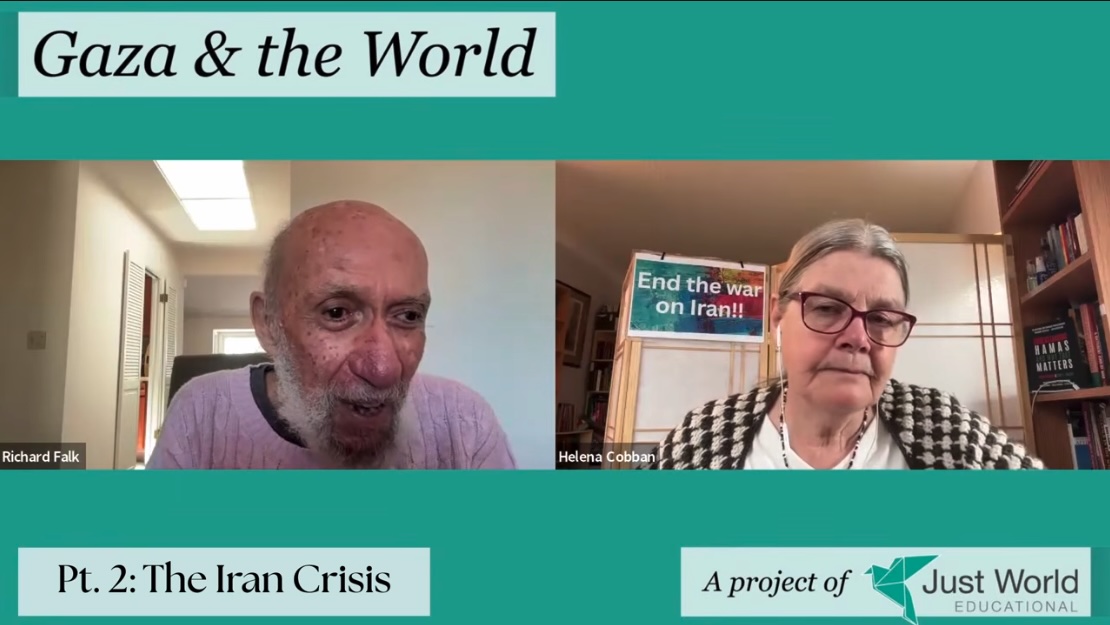
Richard Falk on Khomeini, the Delusion of International Law, and Iran’s Nuclear Standoff
Forty-seven years ago, as the Iranian Revolution reached its climax, a little-known meeting in a quiet French compound would shape the geopolitical calculus of the modern Middle East. In late January 1979, just days before Ayatollah Ruhollah Khomeini returned to Tehran to lead the newly Islamic Republic, he sat down with three unlikely visitors: international law scholar Richard Falk, former U.S. Attorney General Ramsey Clark, and journalist Philip Luce. The conversation, recounted in a recent interview, laid bare the tensions between revolutionary idealism and the harsh realities of global power—realities that Falk argues remain unaddressed today.
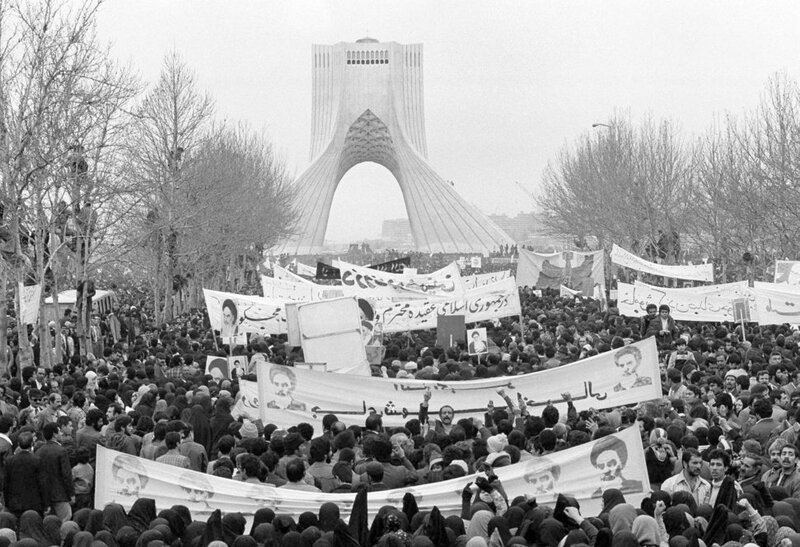
The meeting came at a pivotal moment. Two weeks earlier, mass protests had forced Shah Mohammad Reza Pahlavi into exile, ending 2,500 years of imperial rule. Khomeini, who would return to Iran the very next day, was already grappling with the specter of another U.S. Intervention—echoing the 1953 CIA-backed coup that had toppled his predecessor, Mohammad Mossadegh. Falk, then a professor of international law at Princeton, described Khomeini’s opening question as a direct challenge to Western powers: *Would history repeat itself?*
Yet Khomeini also signaled an unexpected openness. Despite the revolutionary fervor, he expressed hope for normalization with the West, framing Islamic governance in notably non-sectarian terms. Falk recalled Khomeini’s striking contrast in how he spoke about Iran’s Jewish minority and Bahá’í community, rejecting the narrative of religious persecution that would later dominate Western discourse.
What began as a diplomatic overture quickly evolved into a broader critique of the UN Charter and the Nuremberg Principles. Falk, now a UN Special Rapporteur emeritus, argued that these foundational documents were never intended to nullify the discretion of geopolitical actors. Instead, they were designed to regulate the mice but let the tigers run free—a phrase attributed to a Mexican delegate at the UN’s founding. For Falk, this dynamic has only intensified since 1945, with major powers selectively enforcing international law while ignoring its constraints when convenient.
The Limits of Moral Legitimacy in Anti-Colonial Struggles
Falk rejected outright cynicism, however. Even if international law lacked teeth, he noted, it retained moral power—particularly for marginalized movements. He pointed to the Gaza People’s Tribunal, which he helped lead, and South Africa’s landmark case against Israel at the International Criminal Court (ICC). “The Palestinians have won the legitimacy war,” Falk stated. “And most winners of the legitimacy wars in the anti-colonial context have gone on to control the political outcome, though suffering great devastation and human casualties in the process. Vietnam is one of the principal examples.”
This moral framing extended to Iran’s nuclear program, which Falk described as a pretext for sustained hostility from the U.S. And Israel. Iran, he emphasized, had repeatedly declared nuclear weapons immoral, and no reliable intelligence supported claims that Tehran sought them. Instead, the program became a casus belli for Western interventionism—a dynamic Falk traced back to Article 6 of the Nuclear Non-Proliferation Treaty (NPT), which committed nuclear states to disarmament. Western powers, Falk noted, treated this obligation as a “useful fiction”, ignoring it while demanding compliance from non-nuclear states.
A Double Standard: Israel’s Undeclared Arsenal and the NPT Review Conference
The hypocrisy of nuclear non-proliferation was laid bare in 2026, as Iran’s ambassador was nominated as a vice president of the NPT Review Conference. The move provoked U.S. Objections, highlighting the profound double standard surrounding Israel’s undeclared nuclear arsenal. While Iran faced sanctions and threats over its civilian nuclear program, Israel—estimated to possess 80–90 nuclear warheads—operated with impunity.
Falk’s analysis resonates with recent developments. In April 2026, the International Atomic Energy Agency (IAEA) reported that Iran had reduced its stockpile of enriched uranium in compliance with the JCPOA, yet U.S. Sanctions remained in place. Meanwhile, Israel’s nuclear program—never subject to IAEA inspections—continued unchecked.
Why This History Matters Today
Falk’s 1979 meeting with Khomeini was not just a historical footnote; it was a microcosm of the challenges facing international law today. The Westphalian system, designed to prevent great-power wars, has instead enabled selective enforcement, where legitimacy is weaponized against states that defy U.S. Or Israeli interests. The Responsibility to Protect (R2P) doctrine, invoked to justify interventions in Libya and Iraq, was never applied to Saudi Arabia’s war in Yemen or Israel’s occupation of Palestine.
For Falk, the real delusion lies in assuming international law can constrain superpowers when it serves their interests. Yet he also cautioned against despair. The Global South—from Vietnam to South Africa—has repeatedly used moral and legal frameworks to shift the terms of debate, even when military outcomes favored their adversaries. The question, Falk implied, is whether the Non-Aligned Movement can unite to challenge the nuclear duopoly of the U.S. And Russia, or whether the Euro-Atlantic security architecture will continue to dictate global norms.
Key Takeaways
- Khomeini’s 1979 concerns: Fear of U.S. Intervention and hope for Western normalization shaped early Islamic Republic diplomacy.
- International law’s hypocrisy: The UN Charter and Nuremberg Principles were designed to regulate smaller states, not constrain superpowers.
- Legitimacy as a tool: Movements like Palestine’s have used tribunals and ICC cases to shift global narratives, even when military outcomes favor oppressors.
- Nuclear double standards: Iran’s compliance with the NPT contrasts with Israel’s undeclared arsenal, exposing Western hypocrisy on non-proliferation.
- Article 6’s failure: The NPT’s disarmament clause was treated as a “useful fiction” by nuclear states, while non-nuclear states faced sanctions.
- Current stakes: Iran’s reduced uranium stockpiles (2026 IAEA report) and U.S. Objections to its NPT role highlight ongoing tensions.
What Happens Next?
The next critical checkpoint is the 2026 NPT Review Conference, scheduled for August 1–26, where Iran’s role as a vice president will test U.S. Resistance to any normalization. Meanwhile, the IAEA continues monitoring Iran’s nuclear facilities, though no major violations have been reported since the JCPOA’s revival in 2023.

Falk’s insights suggest that the real battle is no longer over nuclear proliferation but over who controls the narrative of legitimacy. As he noted, “The winners of the legitimacy wars have gone on to control the political outcome—though at a terrible human cost.” The question for 2026 is whether Iran, Palestine, or other Global South actors can leverage moral and legal frameworks to force a reckoning with the tigers of the international system.
We welcome your thoughts on this analysis. Share your perspective or discuss in the comments below.
Keep reading
- Ukraine Drone Strikes Hit Russian Oil Refinery and Wildberries Logistics Center
- Beluga Whales Transferred from Marineland Canada to Chicago and San Antonio
- NRL Round 23 Team News: Broncos Shake-up and Tigers Team Tips (newsdirectory3.com)
- Why Museums Still Ban Your Camera Flash, Even Though It's Harmless (daybreakwire.com)