
MAP Violations: Are You Losing Control Over Your Brand’s Pricing?
Your brand’s reputation is built on consistency—its logo, its voice, its promise of quality. But one critical element often slips through the cracks: pricing. When retailers advertise your premium product below the Minimum Advertised Price (MAP), the damage isn’t just to your bottom line. It’s to the very perception of your brand. Customers begin to question whether your product is truly elite—or just another cheap alternative.
This isn’t hypothetical. In 2026, global e-commerce revenue surpassed $5.3 trillion, with platforms like Amazon, Pinduoduo, and TikTok Shop driving explosive growth. Yet, alongside counterfeit goods and unauthorized sellers, MAP violations have become a silent threat to brand integrity. According to the U.S. Federal Trade Commission (FTC), MAP policies are legally enforceable in many jurisdictions, but retailers still find loopholes to undercut advertised prices—often without facing consequences.
So how do you reclaim control? This guide explains what MAP violations are, why they matter, and the step-by-step process to detect, enforce, and prevent them—before they dilute your brand’s value.
Why MAP Violations Matter: The Stakes for Brands
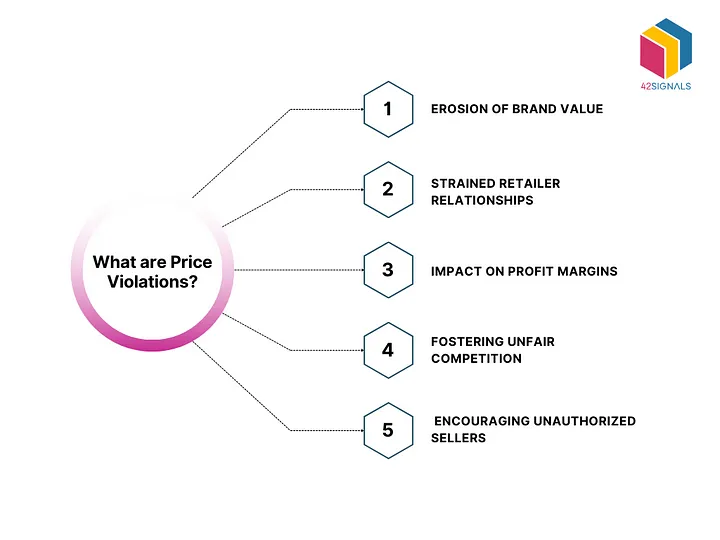
- Brand Devaluation: Frequent price cuts erode perceived value, turning premium products into commoditized items.
- Retailer Imbalance: Large retailers can undercut small sellers, reducing consumer choice and fairness.
- Legal Gray Areas: MAP policies regulate advertised prices, not sale prices—leaving room for creative (and often illegal) workarounds.
- Global Risks: Currency fluctuations and regional pricing discrepancies create new violation opportunities.
- Enforcement Costs: Without automated tools, brands spend thousands manually tracking violations—often too late.
What Is a MAP Violation—and Why Does It Happen?
A Minimum Advertised Price (MAP) is a policy set by manufacturers or brands to establish the lowest price at which a product can be advertised. If a retailer lists or promotes a product below this threshold, it’s a MAP violation. Crucially, MAP policies do not restrict the final sale price—only how it’s marketed. This distinction creates a legal gray area that retailers exploit.
For example, a luxury watch brand might set a MAP of $500. A retailer could advertise the watch at $500 but offer a “limited-time discount” of 20% at checkout—effectively selling it for $400 without violating the policy. Or, they might bundle the watch with a free accessory, making the effective price lower than advertised.
According to a 2023 Nielsen report, 68% of consumers now research prices across multiple retailers before purchasing, making MAP compliance more critical than ever. Yet, industry studies show that 40% of brands lack the tools to detect violations in real time.
How MAP Policies Protect Brands—and Retailers
MAP policies serve three primary purposes:
-
1. Preserve Brand Prestige
Premium brands rely on exclusivity. When retailers engage in price wars, customers associate the brand with discounts rather than quality. For instance, a study by Harvard Business Review found that brands experiencing price erosion saw a 23% drop in perceived value within 12 months.
-
2. Level the Playing Field
Large retailers like Walmart or Amazon can absorb losses from price cuts, while small businesses cannot. MAP policies ensure that all sellers—from boutique shops to online marketplaces—compete on equal terms. The U.S. Small Business Administration highlights this as a key factor in reducing retailer consolidation.
-
3. Combat Gray Market Sales
Gray market sales occur when products are sold in regions where they’re not officially distributed, often at lower prices. For example, a European brand’s product might be resold in the U.S. At a fraction of the intended price. MAP policies help brands protect against unauthorized distribution.
Beyond these benefits, MAP policies also:
- Ensure consistent pricing across global markets.
- Improve retailer relationships by setting clear expectations.
- Reduce customer confusion from fluctuating prices.
The 7-Step Process to Stop MAP Violations
Enforcing MAP policies requires a structured approach. Below is the verified lifecycle of handling violations, from detection to resolution:
-
1. Implement Automated Monitoring
Manual tracking is obsolete. Brands now use AI-powered tools like RepricerExpress or Feedvisor to scan millions of listings daily across:
- Marketplaces (Amazon, eBay, Walmart)
- Retailer websites
- Social media ads (Facebook, Instagram)
- Search engines (Google Shopping)
These tools flag violations in real time, reducing false positives caused by currency conversion errors or bundled items.
-
2. Verify the Violation
Not every alert is a true breach. Common false positives include:
- Currency conversion discrepancies (e.g., €100 vs. $110).
- Out-of-stock pricing (e.g., “Starting at $X”).
- Region-specific listings (e.g., U.S. Vs. EU prices).
Brands must cross-reference violations with FTC guidelines to ensure compliance.
-
3. Identify the Source and Document Evidence
Once confirmed, trace the violation to its origin:
- Was it an authorized retailer?
- Did an unauthorized reseller manipulate stock?
- Was the violation on a third-party marketplace?
Documentation is critical. Platforms like Amazon require evidence (screenshots, timestamps) to process takedowns. Repeat offenders should be logged for escalation.
-
4. Issue Notifications and Warnings
Contact the violating retailer with:
- A clear explanation of the breach.
- Evidence (screenshots, links).
- A deadline for correction (typically 48–72 hours).
Track responses. If ignored, proceed to escalation.
-
5. Escalate with Legal and Platform Action
If corrections aren’t made:
- Issue a final warning with a shorter deadline.
- Engage legal teams to send cease-and-desist letters.
- Notify the marketplace (e.g., Amazon’s Brand Registry) for account suspension.
For unauthorized resellers, inform distributors to cut off supply.
-
6. Apply Penalties Consistently
Penalties vary by brand but may include:
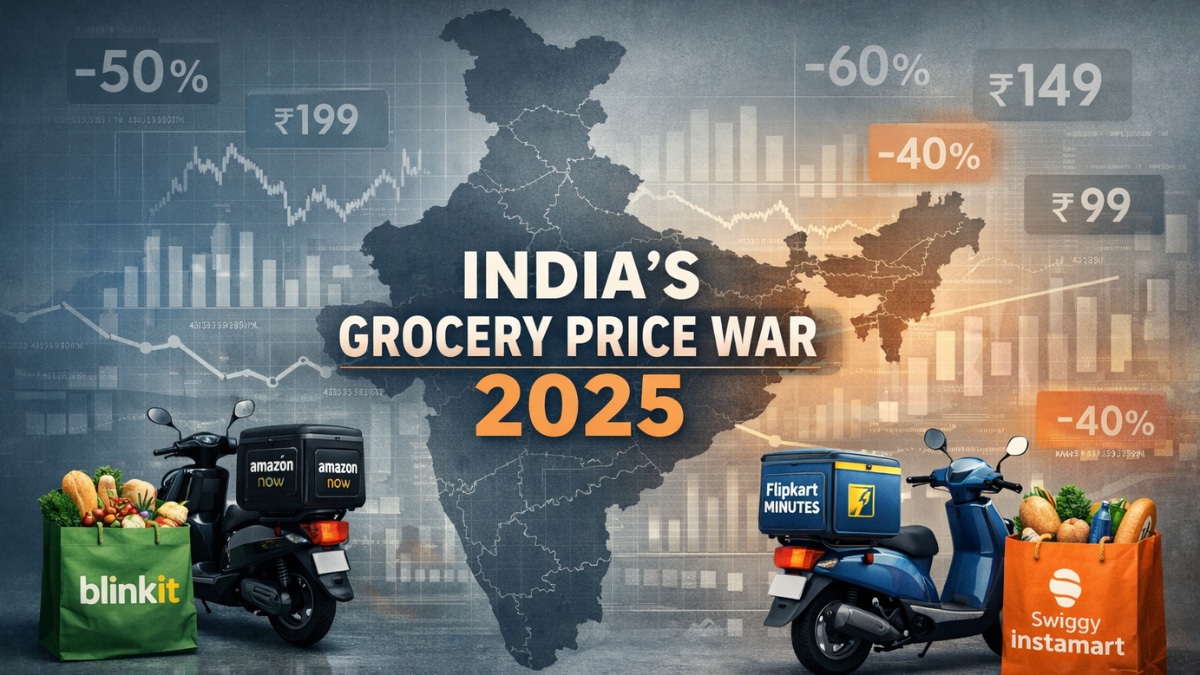
retailer price war graphic - Termination of retailer agreements.
- Fines (typically $500–$5,000 per violation).
- Blacklisting from future partnerships.
Penalties are not about punishment—they’re about deterrence. Without consequences, MAP policies become meaningless.
-
7. Resolve and Document for Future Reference
Once corrected:
- Verify compliance.
- Document the outcome.
- Update the retailer’s history for pattern recognition.
- Conduct an internal debrief to refine enforcement strategies.
7 Sneaky MAP Violation Tactics Retailers Use
Retailers are creative when it comes to bypassing MAP policies. Here are the most common—and often legal but unethical—workarounds:
-
1. Direct Price Violations
Advertising a product below MAP on:
- Website product pages.
- Marketplace listings (Amazon, eBay).
- Social media ads.
Example: A $200 shoe advertised for $180.
-
2. Discounts and Promotions
Offers that imply a lower price without stating it outright:
- “Buy 1 Get 1 Free” (effectively 50% off).
- “Flat $50 off” (reducing the advertised price).
-
3. Public Coupons and Codes
Promoting discount codes (e.g., “Use CODE: SAVE20”) that reduce the final price below MAP.
-
4. Cart Price Manipulation
Advertising a product at MAP but showing a lower price only after adding to cart.

retailer price war graphic -
5. Bundle Sales
Combining products to lower the effective price. For example:
- A $500 phone + $50 case = “Just $499!”
- Free accessories with purchase.
-
6. Marketplace Violations
Rogue sellers on platforms like Amazon or Walmart exploit:
- Automated repricing tools.
- Listing errors (e.g., wrong currency).
- Unauthorized third-party sellers.
-
7. Global Pricing Loopholes
International sellers manipulate:
- Currency conversion (e.g., €1 = $1.10 vs. $1.20).
- Region-specific listings visible globally.
Proactive Strategies to Avoid MAP Violations
Prevention is far more effective than enforcement. Here’s how brands can minimize violations:
-
1. Draft a Clear, Enforceable MAP Policy
Your policy should include:
- Definitions of what constitutes a violation.
- Consequences for non-compliance (e.g., termination).
- An appeals process for false positives.
- Geographic scope (e.g., “This policy applies to all U.S. And EU retailers”).
FTC guidelines recommend using plain language to avoid confusion.
-
2. Balance MAP with MSRP
MAP is typically 20–30% below the Manufacturer’s Suggested Retail Price (MSRP). This gives retailers flexibility while maintaining brand integrity. For example:
- MSRP: $1,000 (laptop).
- MAP: $700–$800.
Brands should conduct competitor analysis to ensure MAP aligns with market expectations.
-
3. Communicate the Policy Effectively
Retailers won’t comply if they don’t understand the rules. Ensure:
brand prestige MAP violation visual - Clear onboarding materials for new resellers.
- FAQs addressing common questions (e.g., “Can I offer free shipping?”).
- Regular check-ins with the sales team to reinforce compliance.
-
4. Enforce Consistently Across All Channels
MAP policies must apply equally to:
- Online and offline retailers.
- Direct-to-consumer (DTC) sites.
- Third-party marketplaces.
Use automated enforcement tools to eliminate bias.
-
5. Educate and Support Retailers
Host training sessions on:
- Why MAP policies benefit their business.
- How to avoid common pitfalls (e.g., bundle pricing).
- Where to find help (e.g., a dedicated MAP compliance contact).
Retailers are more likely to comply when they see the mutual benefits.
-
6. Review and Update Policies Annually
The e-commerce landscape evolves rapidly. Brands should:
- Conduct quarterly audits of MAP compliance.
- Adjust policies for major events (e.g., Black Friday “MAP holidays”).
- Gather retailer feedback to refine enforcement.
MAP Policies and the Law: What Brands Need to Know
MAP policies are legally enforceable in many jurisdictions, but their validity depends on how they’re structured:
- U.S. Federal Trade Commission (FTC):
MAP policies are legal as long as they don’t restrict actual sale prices. However, retailers cannot be forced to adhere to MAP—only penalized for violating it.
- European Union (EU):
The Vertical Block Exemption Regulation (VBER) allows MAP policies if they don’t restrict competition or include hardcore restrictions (e.g., mandatory resale prices).
- China:
MAP policies are recognized under the Anti-Unfair Competition Law, but enforcement varies by province.
Key Legal Risks:
- If MAP policies are deemed anti-competitive, brands could face antitrust lawsuits.
- Retailers can challenge violations in court, requiring documentation.
- Gray market sales may still occur if distributors bypass authorized channels.
Frequently Asked Questions About MAP Violations
- Q: Can retailers sell below MAP if they don’t advertise it?
-
Yes. MAP policies only regulate advertised prices, not final sale prices. However, if the discount is implied (e.g., “Today Only!” signs), it may still violate the policy.
- Q: How do I handle a retailer who refuses to comply?
-
Escalate by:
- Issuing a final warning with legal backing.
- Reporting to the marketplace (e.g., Amazon’s Brand Registry).
- Terminating the retailer agreement if repeat violations occur.
- Q: Are MAP violations more common on Amazon?
-
Yes. Amazon’s vast network of third-party sellers increases the risk of rogue listings, automated repricing tools, and unauthorized resellers. Brands using Amazon Brand Registry have better tools to detect violations.
- Q: Can I set different MAPs for different regions?
-
Yes, but ensure compliance with local laws. For example, the EU’s VBER allows region-specific pricing if it doesn’t restrict competition.
- Q: How much does MAP enforcement cost?
-
Costs vary:
- Manual enforcement: $5,000–$50,000/year (for small brands).
- Automated tools: $2,000–$10,000/month (e.g., RepricerExpress).
- Legal action: $10,000–$100,000+ for cease-and-desist letters.
Reclaiming Control: Your Brand’s Next Steps
MAP violations aren’t just a pricing issue—they’re a brand integrity crisis. When retailers undermine your advertised prices, they erode trust, confuse customers, and create an uneven playing field. The great news? With the right tools, policies, and enforcement strategies, you can protect your brand’s value.
Next Steps for Brands:
- Audit your current MAP policy—is it clear, enforceable, and communicated effectively?
- Invest in automated monitoring to detect violations before they escalate.
- Train retailers on why MAP compliance benefits them.
- Escalate repeat offenders with legal action if necessary.
- Review policies annually to adapt to new e-commerce trends.
For further guidance, consult:
- FTC Price Advertising Guidelines.
- Amazon Brand Registry for MAP Enforcement.
- Automated MAP Monitoring Tools.
Have you experienced MAP violations? Share your challenges or solutions in the comments—and let’s discuss how we can collectively strengthen brand protection in the digital age.