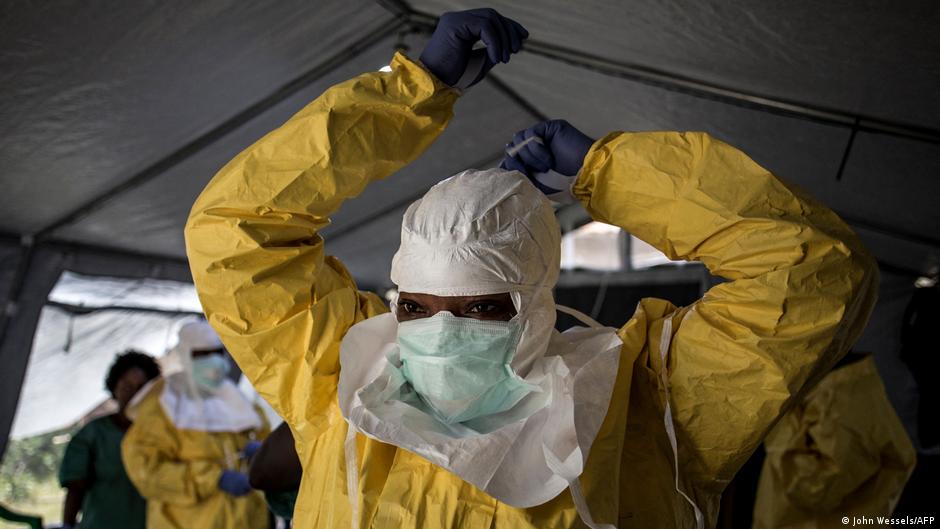
The World Health Organization (WHO) has officially downgraded the global risk assessment regarding the ongoing Ebola virus disease outbreak in the Democratic Republic of the Congo (DRC), citing successful containment measures and stabilized transmission rates. The decision marks a significant turning point in the international response to the epidemic, suggesting that while the virus remains a localized threat, the immediate danger of a wider international spread has diminished.
This shift in the WHO’s risk profile follows weeks of intensive surveillance, rapid vaccination campaigns, and strengthened contact-tracing protocols in the affected regions of the DRC. However, health officials warn that a lower global risk level does not equate to the end of the crisis; rather, it reflects a transition from an emergency response phase to a period of heightened monitoring and localized management.
For the international community, the downgrade provides a measure of relief, but for those on the front lines in eastern Congo, the mission remains critical. As medical teams work to prevent further clusters, the outbreak continues to exert significant pressure on regional stability, social gatherings, and the local economy.
The WHO Assessment: A Shift in Risk Profile
The WHO’s risk assessment is a vital metric used to coordinate international resources and determine the scale of the response required. By downgrading the global risk level, the organization is signaling that the current epidemiological data—including the rate of new infections and the geographic spread of the virus—does not currently meet the threshold for a widespread international public health emergency.
According to the World Health Organization, risk assessments are based on several key factors: the severity of the disease, the speed of transmission, and the potential for the virus to cross borders through travel or trade. The recent stabilization of case numbers in the DRC suggests that the current containment strategies are effectively breaking the chains of transmission within high-risk communities.
Despite this positive development, the WHO has emphasized that the “epidemic risk” remains a concern at the regional level. The presence of the virus in areas with limited healthcare infrastructure and high population mobility means that localized outbreaks can still escalate rapidly if surveillance gaps are not addressed.
Containment and Control: The Pillars of Success
The stabilization of the outbreak is largely attributed to a multi-pronged public health approach that combines rapid medical intervention with community-based prevention. The success of these efforts rests on three primary pillars: vaccination, surveillance, and community engagement.
1. Targeted Vaccination Campaigns: One of the most effective tools in the current response has been the deployment of Ebola vaccines. These vaccines are strategically administered to frontline healthcare workers and individuals who have had close contact with confirmed cases, creating a “ring of protection” around known infection sites. This proactive approach has been instrumental in preventing secondary and tertiary transmission chains.
2. Enhanced Surveillance and Contact Tracing: Digital tools and mobile health units have enabled health workers to track potential exposures with unprecedented speed. By identifying and monitoring every individual who has come into contact with a patient, teams can intercept new cases before they can spread the virus to others. This granular level of surveillance is essential in the dense and often remote environments of the DRC.
3. Clinical Management and Infection Control: The establishment of specialized treatment centers has improved survival rates for those infected. Improved infection prevention and control (IPC) protocols within these facilities have also prevented the virus from spreading among healthcare providers, a common challenge in previous outbreaks. Detailed guidance on managing hemorrhagic fever viruses can be found through resources provided by the Centers for Disease Control and Prevention (CDC).
The Human Cost: Socio-Economic and Regional Disruptions
While the downgrade in global risk is a scientific milestone, the sociological and economic impact of the Ebola outbreak in the DRC remains profound. The necessity of implementing strict quarantine measures and movement restrictions has had a ripple effect across the region, disrupting the rhythms of daily life and local commerce.
In many affected provinces, community gatherings—ranging from religious services to local markets and sporting events—have been curtailed or canceled to minimize person-to-person contact. These disruptions, while necessary for public health, have significant consequences for social cohesion and the livelihoods of those who depend on communal interaction for their income.
the psychological toll on communities living under the shadow of an epidemic cannot be overstated. The stigma sometimes associated with Ebola, combined with the fear of sudden illness, has occasionally led to mistrust of health authorities. This highlights the ongoing need for culturally sensitive communication and deep engagement with local leaders to ensure that public health measures are both understood, and embraced.
Key Takeaways: Understanding the Current Situation
- Risk Downgrade: The WHO has lowered the global risk level, indicating a lower probability of international spread, though local risk remains high.
- Containment Success: Vaccination, contact tracing, and improved clinical management are the primary drivers of the current stabilization.
- Localized Impact: The outbreak continues to disrupt regional social, economic, and community activities in the DRC.
- Continued Vigilance: Public health authorities emphasize that monitoring must continue to prevent a resurgence of the epidemic.
Looking Ahead: Sustaining Public Health Vigilance
The path forward requires a transition from emergency response to long-term health security. The primary challenge for the DRC and its international partners will be to maintain the current level of surveillance and vaccine availability even as the immediate sense of crisis fades. Strengthening the underlying healthcare systems is essential to ensure that the region is better prepared for future infectious disease threats.
The next critical checkpoint will be the release of the WHO’s upcoming weekly epidemiological update, which will provide the most recent confirmed case counts and transmission trends in the DRC. Health authorities will continue to monitor the situation closely to determine if any changes to the risk assessment are necessary.
Dr. Helena Fischer is the Editor of Health at World Today Journal. She holds an MD from Charité – Universitätsmedizin Berlin and specializes in infectious disease journalism.
What are your thoughts on the balance between public health measures and community stability during an outbreak? Share your comments below and please share this article to keep your network informed.
Related reading