As the summer beach season begins along the East Coast of the United States, marine researchers and coastal officials are intensifying their efforts to track apex predators. Recent data indicates that white sharks are already navigating coastal waters, prompting experts to emphasize the importance of public awareness regarding marine wildlife behavior as beachgoers prepare for the warmer months ahead.
The presence of these animals near popular recreational areas is a recurring seasonal phenomenon, though modern tracking technology has provided a more granular look at their movements than in previous years. Organizations such as OCEARCH, which utilizes satellite telemetry to monitor migratory patterns, recently recorded a 9-foot, 8-inch white shark identified as Quint off the South Shore of Long Island, positioned due south of Fire Island. Such tracking efforts are instrumental in helping scientists understand the ecological role of these sharks as they move through the Atlantic corridor.
Understanding Shark Movement and Seasonal Patterns
The transition into summer marks a period of increased activity for several shark species in the Atlantic. Beyond the movements of white sharks like Quint, researchers are also monitoring other individuals, such as a nearly 9-foot white shark named Nori. According to tracking data, Nori was observed near the Hamptons on May 8, though subsequent movements have placed the shark in waters off the coasts of Maine and Newfoundland, Canada. These long-distance migrations highlight the expansive range of these marine animals as they follow prey populations and shifting water temperatures.
To better understand these interactions, organizations like the Atlantic White Shark Conservancy are employing advanced research methods, including camera tags. These devices provide a “shark’s eye view,” allowing biologists to observe predatory behavior and habitat use in real time. This technology is vital for identifying how these animals interact with their environment, particularly as they approach shallower waters closer to the shoreline.
Instagram: https://www.instagram.com/p/DYNF8LBjKZF/
Emerging Research on Predatory Behavior
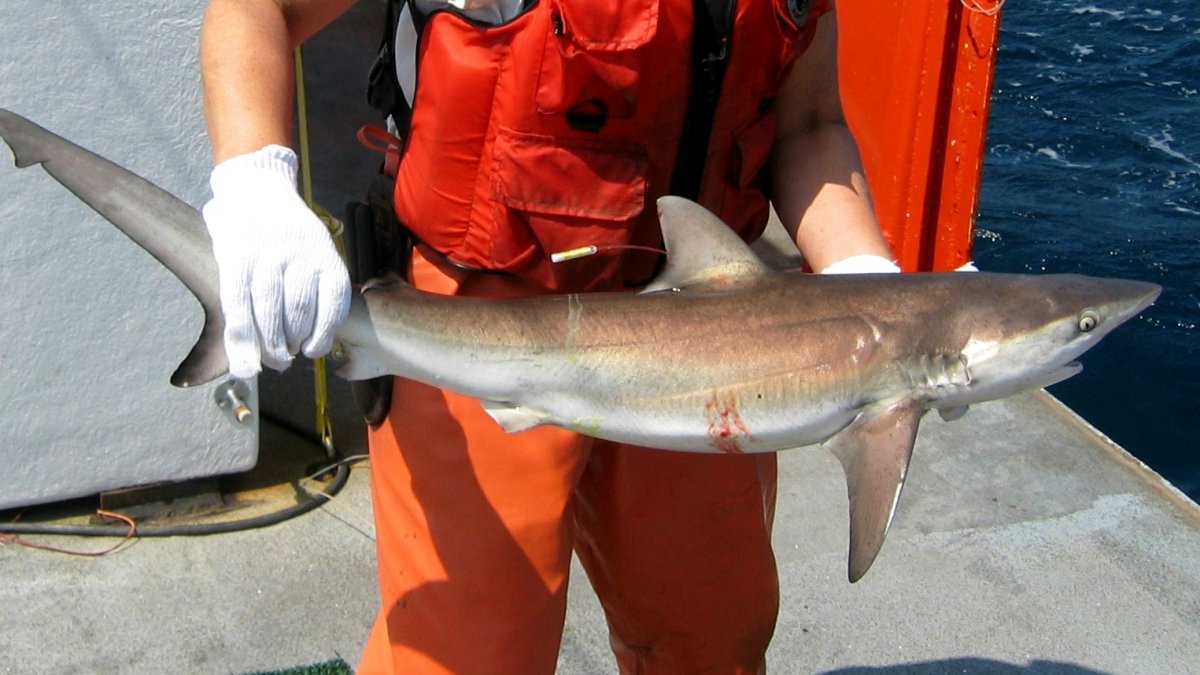
A significant focus of current marine research involves the behavioral patterns of the dusky shark. Recent field observations, including reports from 2025, have highlighted sightings of dusky sharks near Nantucket. Of particular interest to the scientific community is the documentation of these sharks engaging in seal hunting, a behavior that provides new insights into the predator-prey dynamics within the region.

Megan Winton, a senior scientist at the Atlantic White Shark Conservancy, has noted the significance of these observations. While the dusky shark is generally smaller than the white shark, it possesses distinct physical characteristics, including a crescent-shaped tail, a rounded snout, and a characteristic swimming motion. Understanding these behaviors is essential for coastal management, as both species may frequent shallower waters while searching for food.
Safety and Coexistence at the Shoreline
Despite the increased visibility of sharks due to modern tracking, experts maintain that the risk of unprovoked interactions remains low. Data suggests that such incidents involving dusky sharks have decreased over the past five years. However, marine biologists continue to advocate for proactive safety measures. Beachgoers are encouraged to remain vigilant, particularly by avoiding areas where sharks may be hunting, such as locations where seals are present or where there is visible bait fish activity.
For those interested in the latest updates, official resources provide ongoing information regarding shark presence and safety protocols:
- National Park Service: Fire Island National Seashore Safety
- Sharktivity App (Atlantic White Shark Conservancy)
Looking Ahead to the Summer Season
As the summer progresses, researchers will continue their efforts to monitor shark populations and refine our understanding of their ecological impact. The use of satellite tracking and camera tags remains a cornerstone of these efforts, providing the data necessary to balance human recreation with the preservation of marine ecosystems. Further updates from ongoing research projects are expected as the season peaks, with scientists continuing to analyze the movement of tagged individuals throughout the North Atlantic.
We invite our readers to share their thoughts on the importance of marine conservation and the measures taken to keep our beaches safe. Stay tuned to our business and science sections for further updates on coastal environmental policies and wildlife tracking initiatives.
Related reading