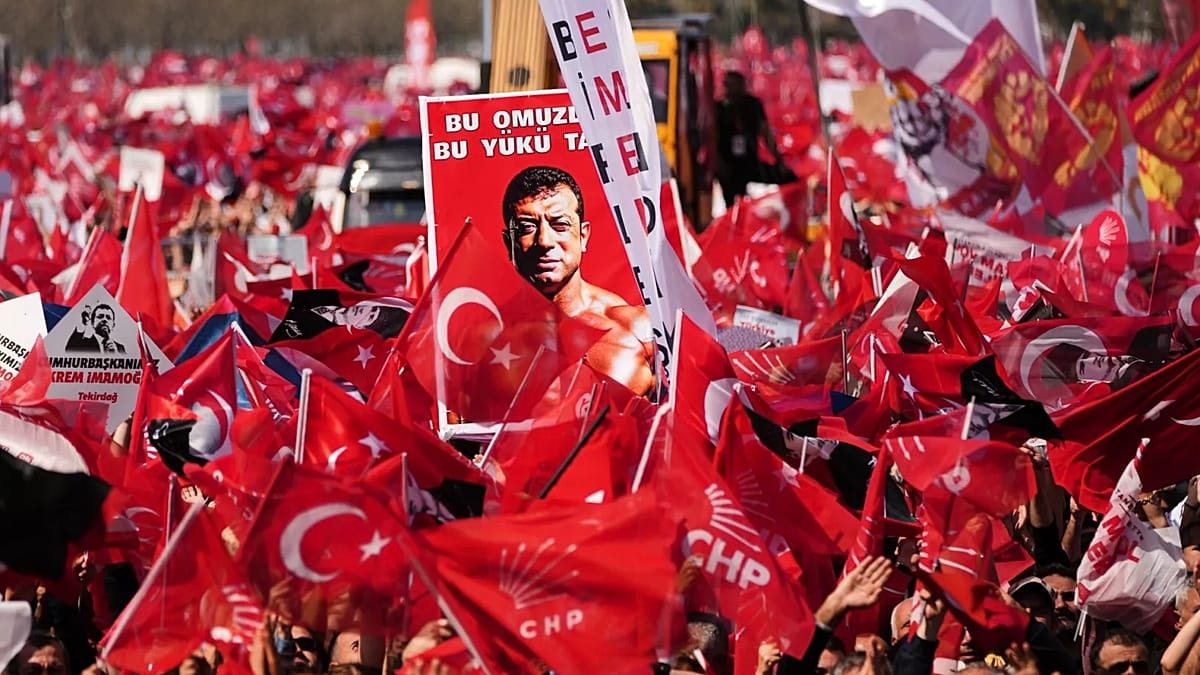
In a significant development for Turkey’s political landscape, the judicial scrutiny surrounding the main opposition party, the Republican People’s Party (CHP), has reached a critical juncture. A Turkish court has recently dismissed a high-profile case that sought to remove the party’s leader, Özgür Özel, effectively stabilizing the leadership of the country’s primary opposition force. The legal challenge had centered on allegations of irregularities during the party’s November 2023 congress, raising questions about internal governance and the integrity of party elections.
As the Editor of the World section at World Today Journal, I have spent over 14 years monitoring the complexities of geopolitical shifts across the Balkans and the broader region. This particular legal episode underscores the intense pressure facing political institutions in the current climate. While the court’s decision to dismiss the case provides a measure of legal clarity, the underlying tensions within the political sphere remain a subject of intense public discourse.
Understanding the Legal Challenge
The controversy originated from accusations regarding the conduct of the CHP’s November 2023 congress, where Özgür Özel was elected as the leader of the party. Prosecutors and petitioners had alleged that the election process was compromised by improper influence, specifically citing claims of vote-buying and promises of professional kickbacks to secure delegate support. These allegations brought the internal mechanics of Turkey’s oldest political party into the public spotlight, forcing a confrontation between judicial oversight and political autonomy.
In many democratic systems, the legal regulation of party congresses is a delicate matter. The recent court ruling, which rejected the attempt to oust Özel, serves as a pivotal moment for the CHP, allowing the party to move forward with its current leadership structure intact. By dismissing the case, the court has effectively signaled that the threshold for judicial intervention in the internal affairs of political parties remains high, a stance that has significant implications for how opposition movements operate in Turkey.
The Political Landscape of the CHP
The Republican People’s Party, or Cumhuriyet Halk Partisi (CHP), holds a unique position in Turkish history. Founded by Mustafa Kemal Atatürk, it remains the primary vehicle for secularist and social-democratic political expression in the country. The leadership transition that brought Özgür Özel to the helm in 2023 was viewed by many analysts as a generational shift, intended to revitalize the party’s appeal to a broader demographic. Any legal threat to that leadership—particularly one involving allegations of corruption—posed an existential risk to the party’s strategic planning and its ability to challenge the ruling government.
For observers of Turkish politics, the stability of the opposition is often seen as a barometer for the health of the broader democratic process. The dismissal of the case allows the CHP to refocus its efforts on policy initiatives and legislative agendas rather than being preoccupied with internal legal battles. This shift is essential for maintaining a functional parliamentary system, where effective opposition is necessary for governmental accountability.
What Happens Next?
While the immediate legal threat to Özgür Özel’s leadership has been removed by the court’s decision, the political discourse surrounding the 2023 congress is unlikely to vanish entirely. Political opponents may continue to cite the allegations as part of their broader critiques of the CHP’s organizational culture. However, with the judiciary having spoken, the focus now returns to the political arena, where the party must demonstrate its effectiveness in the upcoming legislative sessions.

We will continue to monitor the situation as the CHP navigates its post-congress agenda. Official statements regarding the court’s ruling are expected to be released through the party’s central executive committee, and further updates will be provided as they become available. For readers interested in the ongoing developments of Turkish governance and judicial affairs, we encourage you to follow our coverage for the latest verified updates.
What are your thoughts on the role of the judiciary in political party governance? Share your perspectives in the comments below, and join our community of readers by subscribing to our newsletter for daily global insights.
Related reading