
For many across Europe, the Monday following Pentecost—often referred to as Whit Monday—is a time-honored tradition marked by a day of rest and reflection. In nations such as Germany, France, Switzerland, and Austria, the day remains a fixture on the national calendar. Yet, for travelers and residents in Italy, the day passes as a standard working day, a curiosity that often prompts questions about why a country so deeply tied to Catholic history would omit such a significant religious observance from its list of national public holidays.
The absence of Pentecost Monday as a public holiday in Italy is not the result of a singular, ancient decree, but rather the product of a deliberate legislative shift in the late 20th century. While Italy remains culturally and historically synonymous with the Catholic Church, the secularization of the national calendar has been a gradual process, one driven by economic modernization and the pursuit of administrative efficiency.
The 1977 Legislative Shift
To understand the current status of the calendar, one must look back to the late 1970s. In 1977, the Italian government, led by Prime Minister Giulio Andreotti, enacted significant changes to the nation’s holiday structure. At that time, Italy observed nearly 20 national holidays, a density that policymakers argued hindered the productivity of the country’s public administration.
As part of an effort to modernize the Italian economy, the government moved to strip several religious holidays from the official calendar. Among those removed were St. Joseph’s Day, the Feast of Saints Peter and Paul, and Pentecost Monday. This legislative move was framed as a necessary step to align Italy with its European neighbors in terms of working days, reflecting a broader trend of post-war secularization and a focus on economic output over traditional religious observance. According to records of Italian labor regulations, these changes were solidified through Law No. 54 of 1977, which redefined the scope of public holidays across the peninsula.
Regional Exceptions and Cultural Nuance
While the national status of Pentecost Monday was revoked, the holiday remains an outlier in specific geographic pockets. The most notable exception is the region of South Tyrol. Due to its unique cultural and historical ties to the German-speaking world, South Tyrol retains Pentecost Monday as an official public holiday, serving as a reminder of the regional autonomy granted to the province under the Italian Constitution. In this northern mountainous region, the day is celebrated in accordance with the traditions observed in neighboring Austria and Germany.
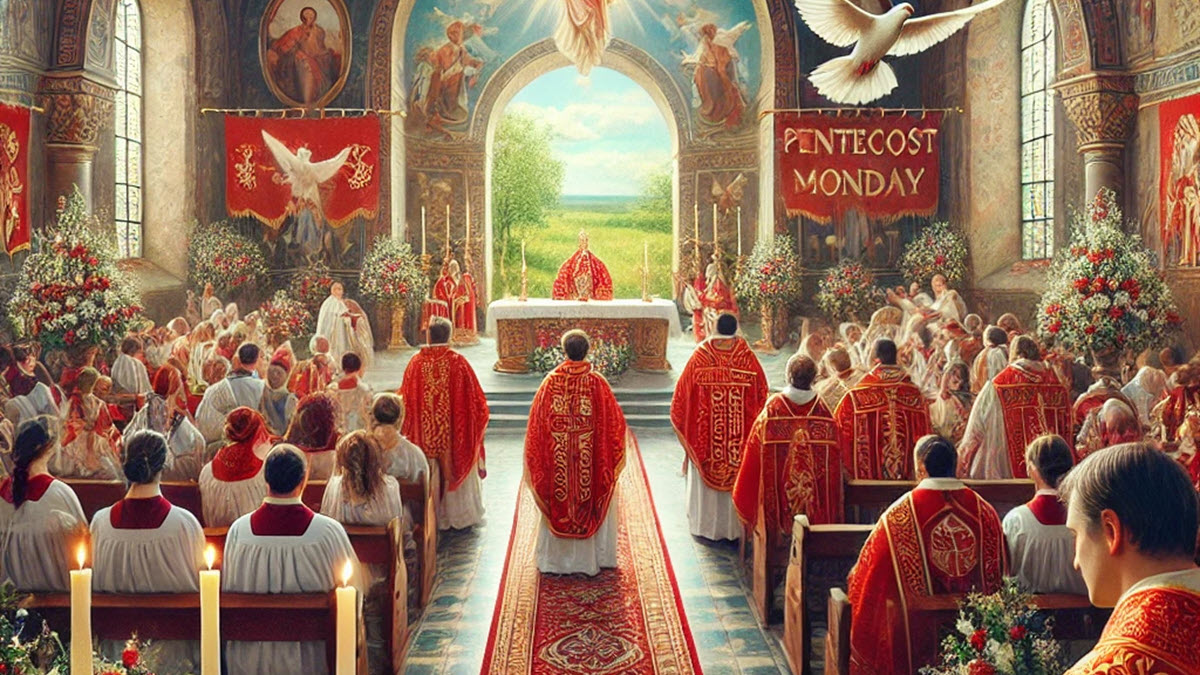
For the rest of the country, however, the day is a standard working day. It’s a “festa mobile,” or movable feast, as its date is calculated based on the timing of Easter—specifically, it occurs 50 days after Easter Sunday. Because the date of Easter shifts annually, the potential impact on the work calendar varies, but it never triggers a national day off. This contrasts sharply with holidays such as April 25 (Liberation Day) or June 2 (Republic Day), which are fixed, nationally recognized celebrations that hold significant political and historical weight in modern Italy.
Why the Change Stuck
In the decades since the 1977 reforms, there have been various attempts to reinstate some of the removed religious holidays. Political discourse in Italy has occasionally seen proposals to restore these dates, often championed by parties with traditionalist or religious platforms. For instance, in 2016, a proposal aimed at restoring certain religious holidays reached the Italian Parliament, backed by a coalition of political groups. However, these efforts have consistently failed to gain the necessary traction to overturn the established administrative order.
The persistence of the current calendar suggests that the 1977 reforms successfully integrated into the rhythm of Italian life. While the Catholic Church continues to observe Pentecost as a major liturgical event, the separation between the state’s working calendar and the church’s liturgical calendar is now firmly entrenched. For the modern Italian state, the priority remains the consistency of the public and private sectors, with few political incentives to reintroduce a holiday that was removed specifically to increase annual working hours.
Looking Ahead
As of May 2026, We find no active, high-level legislative proposals to reinstate Pentecost Monday as a national holiday in Italy. The calendar for the remainder of the year continues to follow the established structure, with the next significant national observances falling in the summer months, most notably Ferragosto (the Assumption of the Virgin) on August 15. For those planning travel or business in Italy, it is essential to consult the official calendar of the Italian Ministry of Labour and Social Policies, which provides the definitive schedule of national holidays and working days for each calendar year.

The story of Pentecost Monday in Italy serves as a microcosm of the tension between historical religious identity and the requirements of a modern, efficient state. While the holiday may have vanished from the payroll, its cultural and spiritual significance persists in the private sphere, even as the country continues to operate on a schedule designed for a secular, industrial-era economy.
Do you have questions about regional holidays in Italy or how administrative calendars are managed? We invite our readers to share their experiences in the comments section below. For ongoing updates regarding Italian labor regulations and public observances, continue to follow our World section for the latest reports.