
The city of Jelgava, Latvia, has once again transformed its historic Pasta Sala into a realm of prehistoric wonder, marking the conclusion of the 20th International Sand Sculpture Competition. As an editor who has followed international creative arts and competitive sculpture for over a decade, I find the evolution of this particular event—which consistently draws master artisans from across the globe—to be a fascinating intersection of technical precision and environmental storytelling. This year’s theme, which transported visitors back to the Jurassic Era, challenged artists to balance the fragility of sand as a medium with the immense, awe-inspiring scale of ancient life.
The competition, which serves as a cornerstone of the regional cultural calendar, requires participants to work under rigorous conditions to produce intricate, large-scale displays. The selection of the “Jurassic Era” theme provided a unique canvas for artists to interpret the anatomical complexity of dinosaurs and the lush, untamed flora of a bygone geological period. For those interested in the official results and the specific accolades awarded to the winning sculptors, the Jelgava City Municipality provides comprehensive documentation on the outcomes and the artists involved in this landmark 20th-anniversary event.
The Technical Art of Sand Sculpture
Sand sculpture is a demanding discipline that requires much more than artistic vision; it necessitates a deep understanding of structural engineering and material science. To achieve the towering heights and fine details observed at the Jelgava festival, sculptors must utilize specialized compaction techniques to ensure the sand particles remain cohesive despite the environmental stressors of heat and wind. The transition from a simple mound of sand to a detailed Jurassic-themed tableau involves a multi-day process of carving, moisture control and structural reinforcement.
According to reports from the Latvian Public Broadcasting (LSM), the festival organizers emphasized the complexity of this year’s submissions, noting that the international panel of judges evaluated entries based on composition, technical difficulty, and thematic adherence. The ability to render reptilian scales, skeletal structures, and environmental textures in sand requires a mastery of subtractive carving techniques, where the artist must visualize the final form within the compressed block before the first cut is made.
A Milestone Anniversary for Jelgava
The 20th iteration of this event represents a significant milestone for the Jelgava region. Since its inception, the festival has grown from a local exhibition into a internationally recognized competition. This growth has not only bolstered the city’s profile as a destination for cultural tourism but has also fostered a community of practice among professional sand sculptors who return to the city year after year.
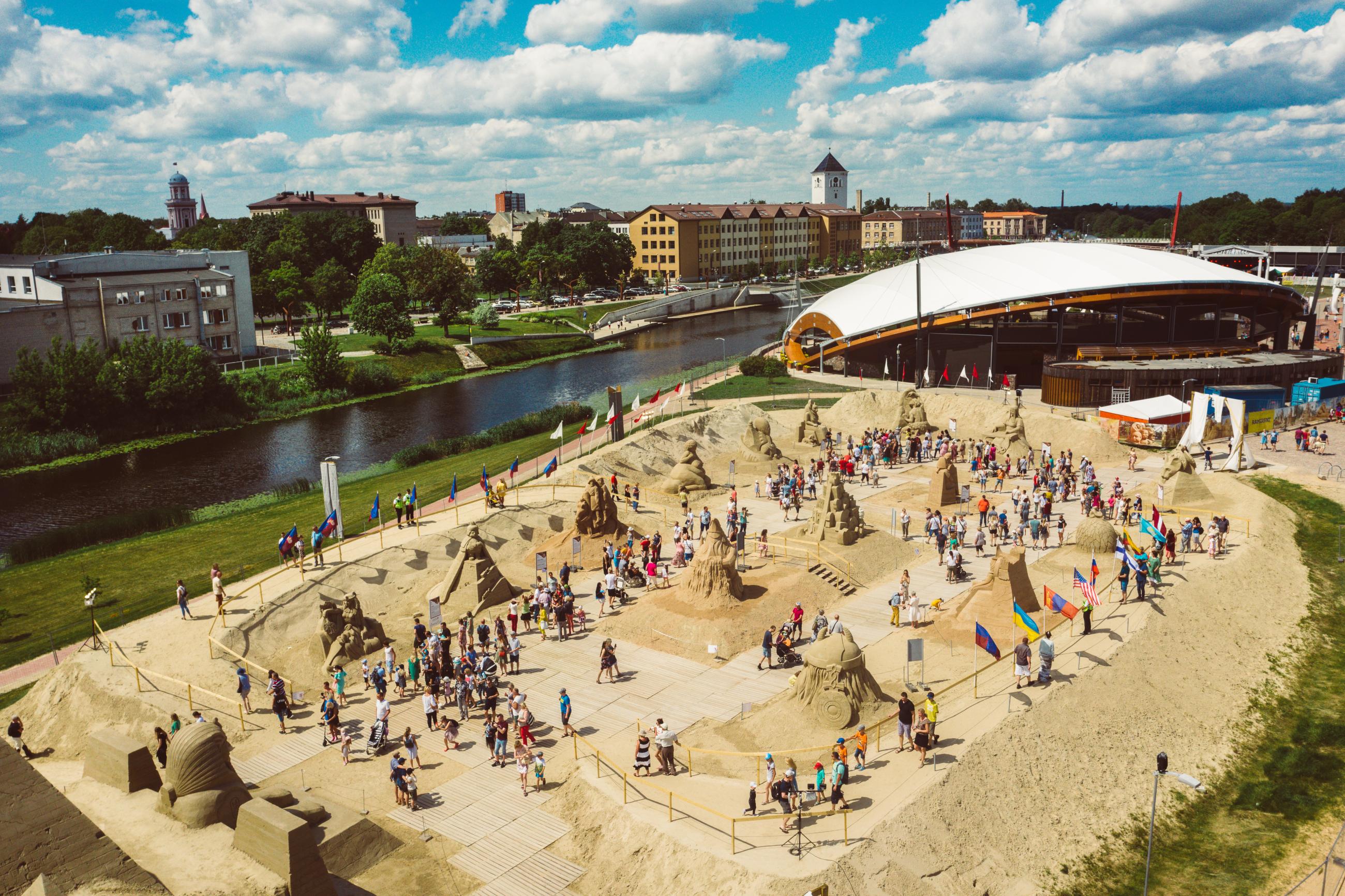
The logistical preparation for such an event is substantial, particularly regarding the site management of Pasta Sala. As documented in municipal notices, the area underwent specific access modifications to facilitate the construction of the sculptures and ensure the safety of both the artists and the eventual influx of visitors. Detailed information regarding the historical context and the development of this event can be found through the official tourism portal for Jelgava, which tracks the evolution of the city’s major public events.
Key Takeaways from the 20th International Sand Sculpture Competition
- Theme: The 20th edition focused exclusively on the “Jurassic Era,” challenging artists to depict prehistoric life with scientific and aesthetic accuracy.
- Location: The event was hosted at Pasta Sala, a key public space in Jelgava known for hosting large-scale outdoor installations.
- Competition Standard: The event maintains international standards, inviting professional sculptors from various countries to compete for top honors.
- Public Access: The site is managed by the local municipality, which regulates access during the construction and exhibition phases to preserve the integrity of the works.
What Happens Next?
With the winners now announced and the sculptures finalized, the exhibition remains open to the public for a limited duration, weather permitting. Visitors are encouraged to monitor the official Jelgava City website for updates regarding the specific closing dates for the exhibition, as the lifespan of sand sculptures is inherently tied to local weather conditions. Future planning for the 21st competition is expected to be announced by the municipal culture department in the coming months. If you have had the chance to visit this year’s Jurassic display, I invite you to share your thoughts and photos in the comments below—it is always a pleasure to hear how these ephemeral works of art resonate with our global audience.
