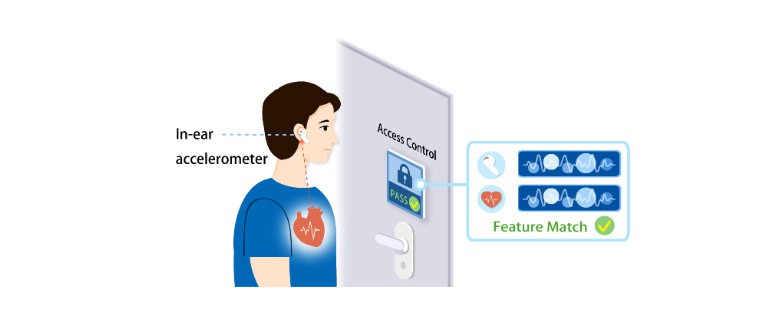
As smartphone manufacturers continue to push the boundaries of biometric security, the industry is increasingly exploring unconventional methods to verify user identity. One of the most intriguing concepts currently surfacing in tech discourse involves the potential for ear-based authentication, a technology that could theoretically allow users to unlock their devices simply by pressing their phone against their ear. While traditional methods like facial recognition and fingerprint scanning have become industry standards, the unique anatomical features of the human ear are now being evaluated as a viable alternative for the next generation of personal security.
The human ear is a complex organ, comprising the outer ear, middle ear, and inner ear, each with distinct structural characteristics that could serve as individual identifiers. According to anatomical data, the outer ear features intricate ridges and valleys, such as the helix, the antihelix, and the concha, which provide a unique physical signature for every individual. Researchers and developers are looking at how these specific shapes—combined with the unique way an ear interacts with sound waves—could be captured by sensors to create a secure, passive authentication method.
From a technical standpoint, integrating ear-based biometric authentication into consumer electronics would require sophisticated hardware. Current smartphone designs utilize various sensors to capture data for security, but the transition to an ear-based system would necessitate high-precision imaging or acoustic sensing capabilities. While the concept of an “Ear ID” remains speculative, the evolution of biometric systems, as documented by Britannica’s overview of human ear anatomy and function, highlights the biological complexity that makes such identification theoretically possible.
The Anatomy of Potential Authentication
The external ear, or pinna, acts as the primary gateway for sound reception, and its structure is remarkably detailed. The helix, which forms the outermost rim, and the tragus, a small cartilaginous projection in front of the ear canal, are just two of the many features that contribute to the ear’s characteristic shape. In a hypothetical authentication scenario, these ridges and depressions would be mapped to create a digital template, much like how existing facial recognition software creates a depth map of a user’s features.
Beyond simple imaging, the ear’s role in sound localization and amplification is well-documented. As noted in anatomical studies of the external ear, the concha acts as a natural resonator, funneling sound waves toward the external auditory canal. If a future device were to emit a low-frequency, inaudible sound pulse, the way that sound reflects off the user’s specific ear anatomy could provide a unique “acoustic fingerprint,” adding an extra layer of security that would be difficult to replicate.
Challenges in Biometric Implementation
While the concept is theoretically sound, moving from biological observation to consumer-grade hardware presents significant hurdles. Unlike a fingerprint or a face, which are usually exposed and easily scanned, the ear is often obstructed by hair, jewelry, or head coverings. The ear is subject to physical changes over time, though it remains relatively stable compared to other parts of the body. Any system designed for mass-market use would need to account for these environmental variables to ensure the low false-rejection rates that users have come to expect from modern devices.
There is also the matter of user experience. The convenience of current authentication methods lies in their speed and the fact that they often work at a distance or with a simple touch. An ear-based system would require a specific, intentional gesture—pressing the phone to the ear—which might be seen as a step backward in terms of accessibility. However, for specific use cases, such as authenticating during a phone call, this method could offer a seamless, invisible security layer that triggers automatically without requiring a separate login step.
The Future of Mobile Security
As we look toward future hardware iterations, the industry is not content with the status quo. Whether through advanced software algorithms or new sensor arrays, the goal remains the same: to make security as invisible and frictionless as possible. While there is no official confirmation that any major manufacturer is ready to deploy an ear-based biometric system, the patents and research surrounding the topic suggest that we are only in the early stages of exploring what our ears can do for our digital security.

As of May 2026, major consumer tech companies have not announced any official plans for ear-based biometric hardware. Readers interested in the latest developments in biometric security should monitor official manufacturer press releases and regulatory filings from organizations like the Federal Communications Commission (FCC), which often provides the first public look at new radio-frequency or sensing technologies being tested for consumer devices. We will continue to track these developments as they emerge.
What are your thoughts on the future of biometric authentication? Would you feel more secure with a system that recognizes your ear anatomy, or do you prefer the current standard of facial and fingerprint recognition? Join the conversation in the comments section below and share your perspective on the next massive leap in mobile tech.
Related reading